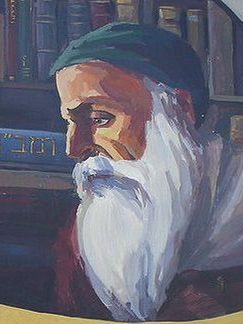
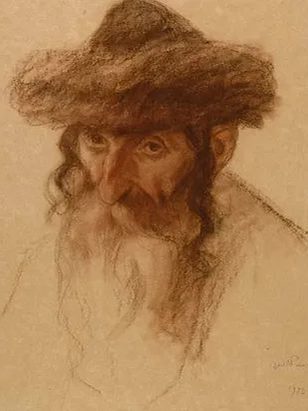
An archive of contribution · updated 2026-08-21

Primary sources only

The Tribe

הַשֵּׁבֶט

What one people built, across 12 fields and 153 lives over 2086 years — each one quoted rather than described, 121 of them photographed, and the Hebrew taken verbatim from the source.

12Fields
153Lives
28Laureates
46Verified sources
2C BCE–20CRange
See what they built

Twelve fields · what was built, and who built it

What one
people
actually built.

Twelve fields. Each rectangle names the contribution, shows you where you already meet it, and then hands you the people who made it. Follow any name down into the archive.

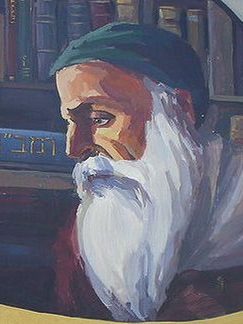
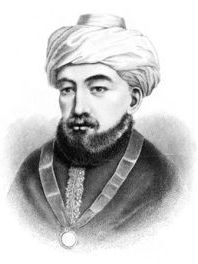
Maimonides

Torah · law

The whole of Jewish law, written down four times over

Where you meet itOpen a Shulchan Arukh in any community on earth and you are reading the same page — the codification project is the reason Jewish practice held its shape across a thousand years and four continents without a central authority.

Who built it

Saadia Gaon wrote the first ordered siddur and the first Hebrew dictionary. Maimonides then did the thing nobody had attempted: fourteen books covering every law, including the ones inapplicable without a Temple, in Hebrew, without citing a source, so a reader would need nothing else. Yosef Karo surveyed every opinion since the Talmud and distilled it into the Set Table; Moshe Isserles added the Ashkenazi practice as a tablecloth over it. The Chofetz Chaim and Yechiel Michel Epstein each rewrote the whole thing again in the same decades, from opposite directions.

Rashi

Torah · reading

A page of Chumash is unreadable without the people around it

Where you meet itThe Mikraos Gedolos page — text in the middle, six centuries of readers in the margins — is one of the oldest working hypertexts anywhere, and it is still how the text is taught.

Who built it

Rashi wrote the running commentary on the whole Tanach and almost the whole Talmud, knowing exactly which word a reader would stumble on and answering in as few as possible; the first dated printed Hebrew book was his. Ramban read for the plain sense and the secret at once. Rabbeinu Bachya ben Asher formalised four levels of reading a generation before PaRDeS became the standard acronym. The Malbim proved from inside the grammar that no word is redundant, and the Kli Yakar turned each verse into an argument with the reader.

Rabbi Moshe Cordovero

Torah · the inner life

A literature about what happens inside a person

Where you meet itMussar and Chassidus built a vocabulary for self-examination, joy as an obligation, and the worth of an ordinary person — several hundred years before anyone called it psychology.

Who built it

Bachya ibn Pakuda argued in the eleventh century that the commandments of the limbs are the smaller half, and mapped the other half. Cordovero read the thirteen attributes of mercy as a specification for how to behave. Ramchal built the ladder from watchfulness to holiness. The Baal Shem Tov taught that the unlettered Jew's sincerity reaches where learning does not, and the Alter Rebbe wrote the Tanya to make that rigorous enough to argue with. Rabbi Nachman prescribed an hour a day alone, speaking in your own language.

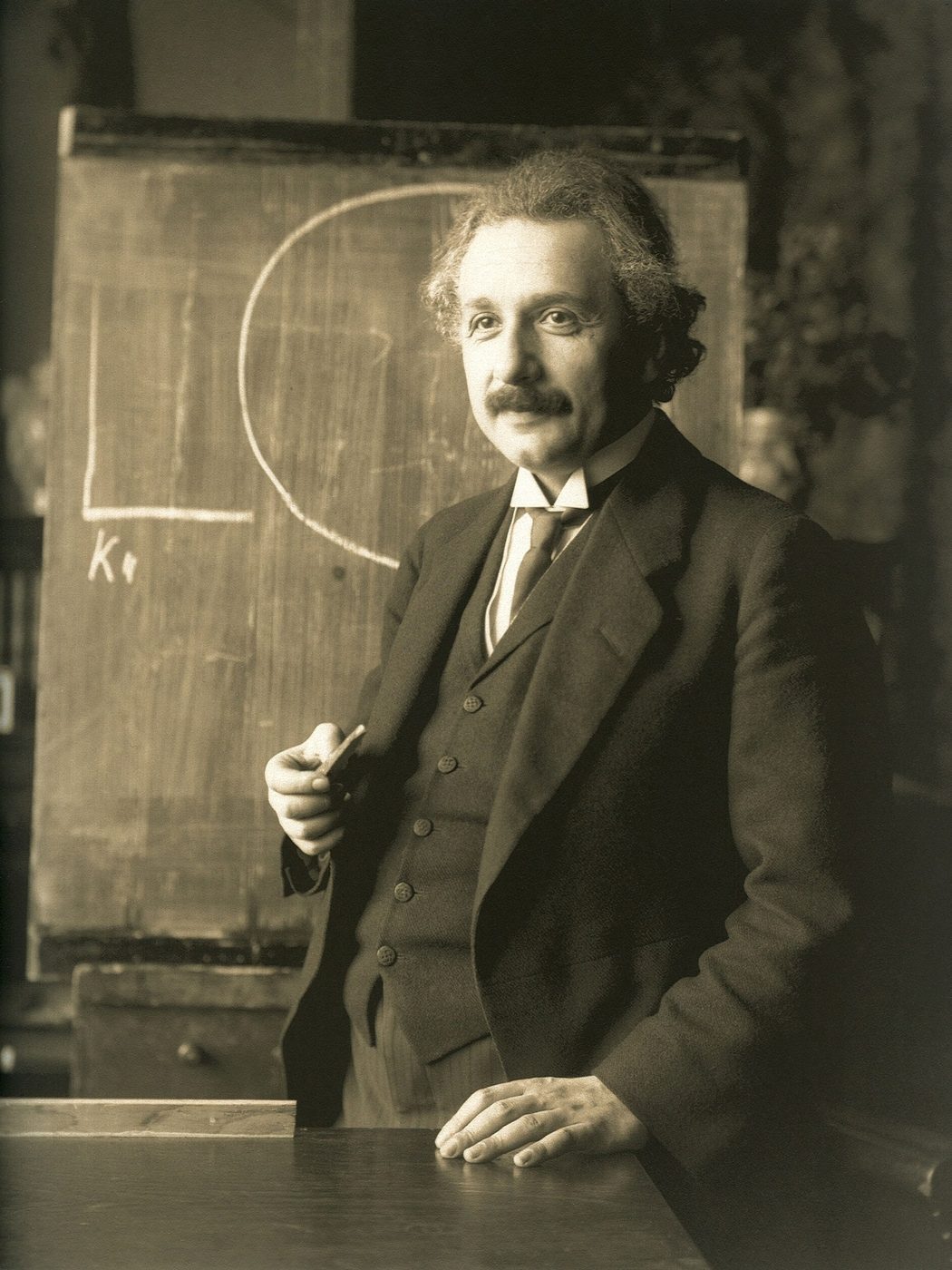
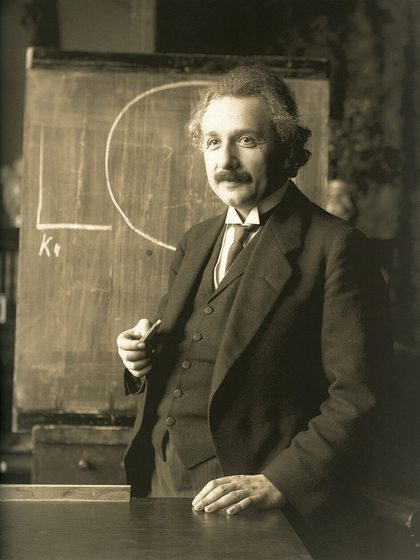
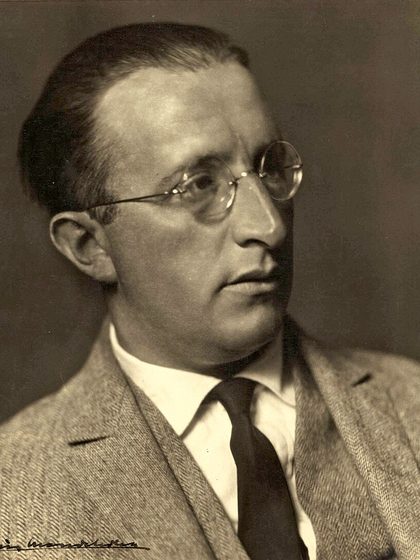
Albert Einstein

Physics

Space, time, and what the atom turned out to be

Where you meet itGPS corrects for relativity every second of the day, and every smoke detector, PET scan and reactor descends from the same twenty years of work.

Who built it

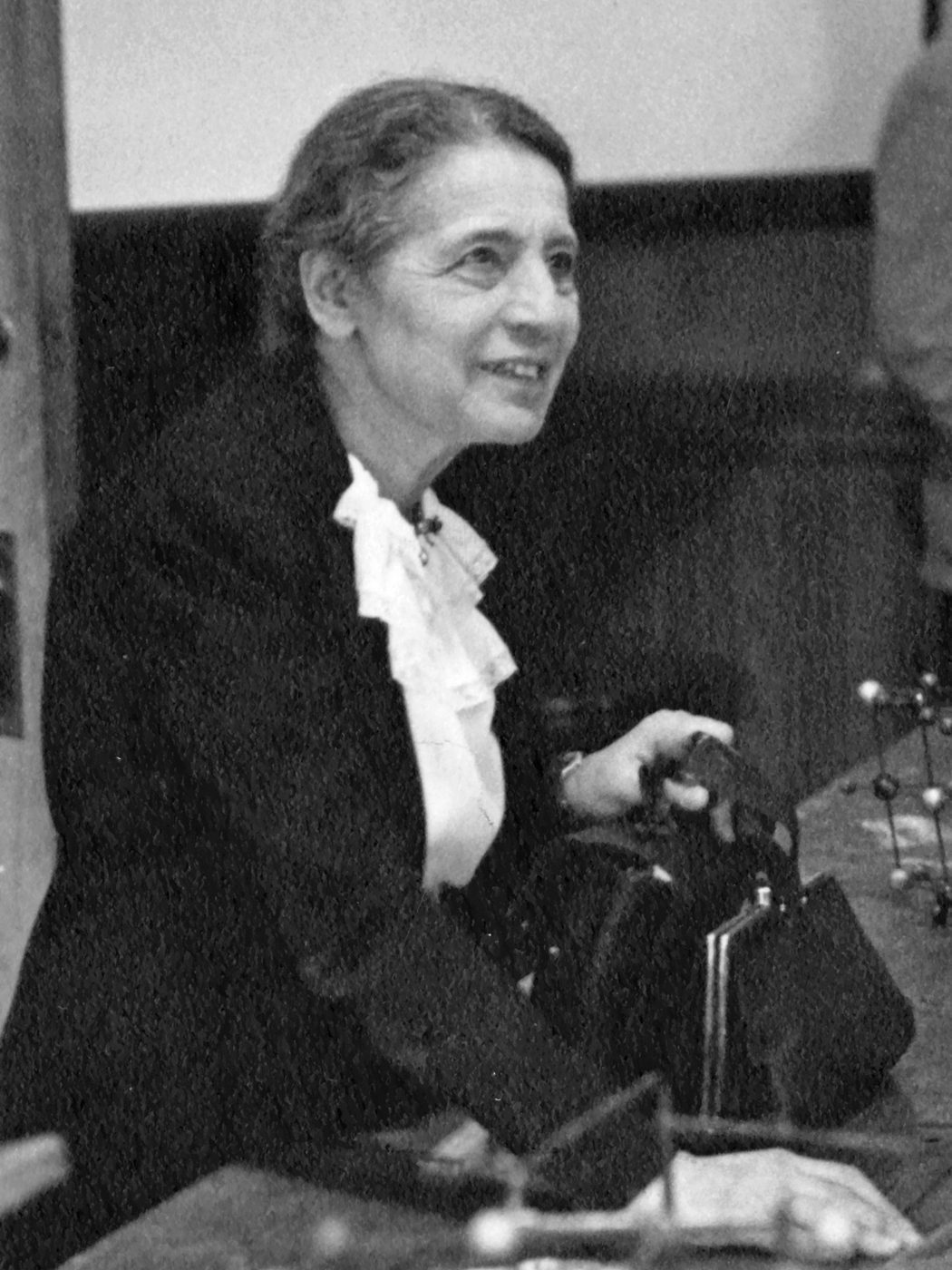
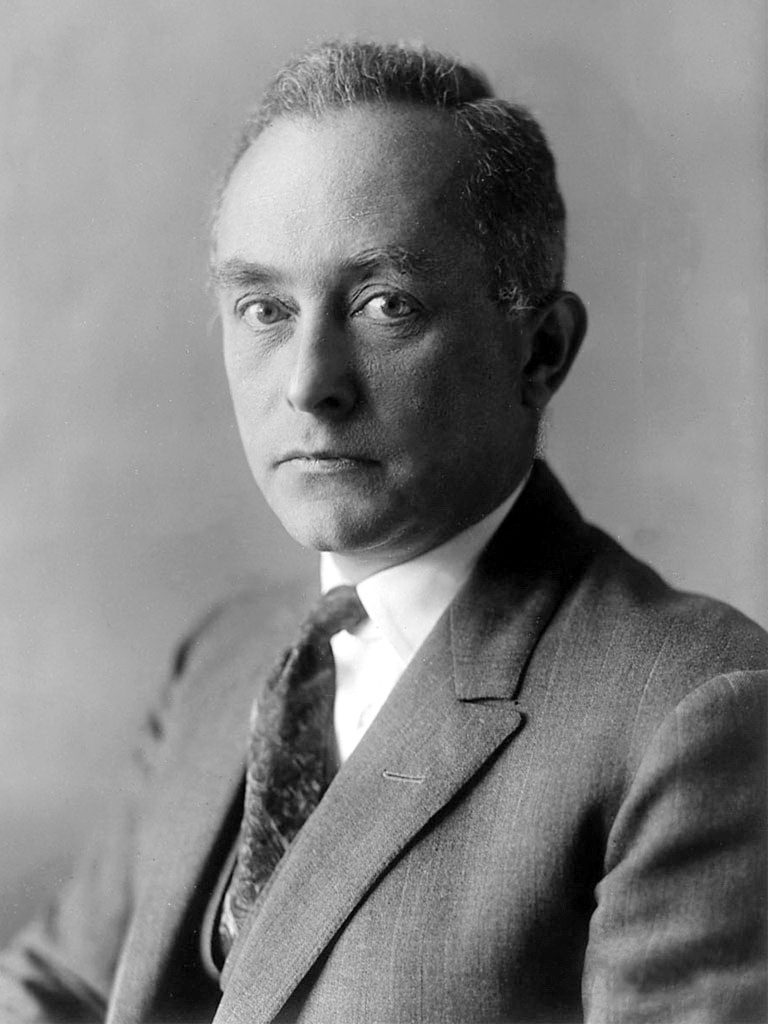
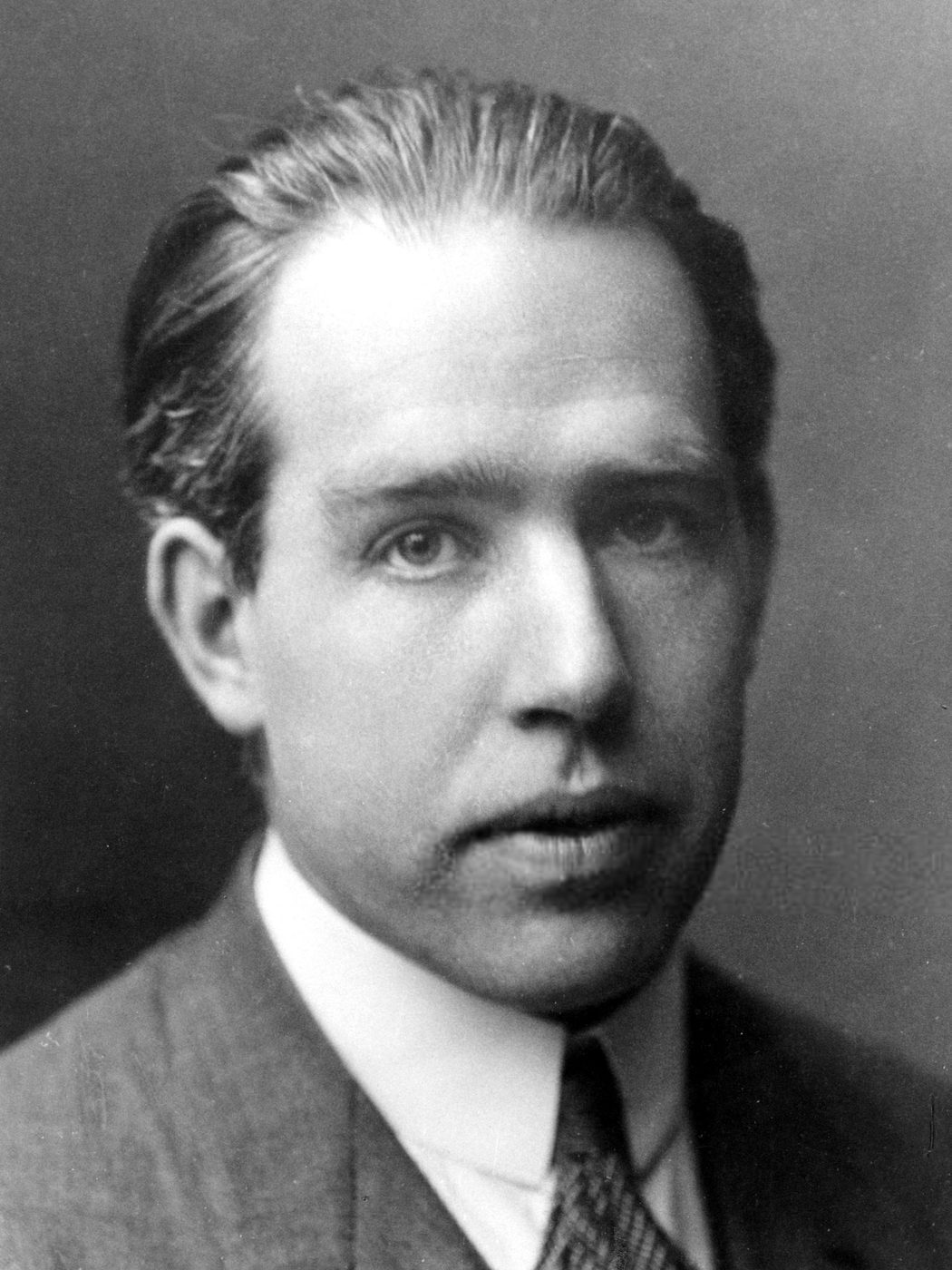
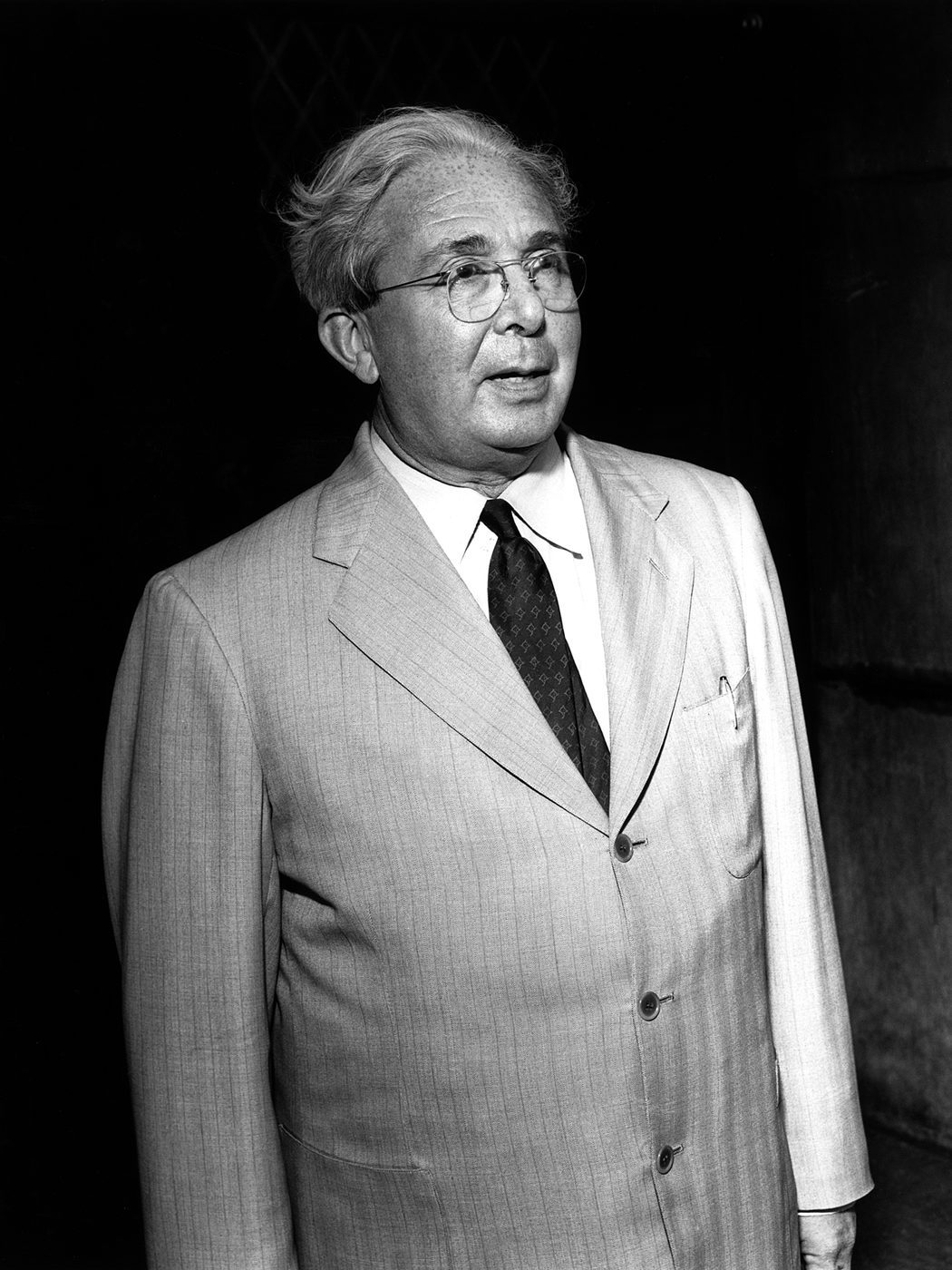
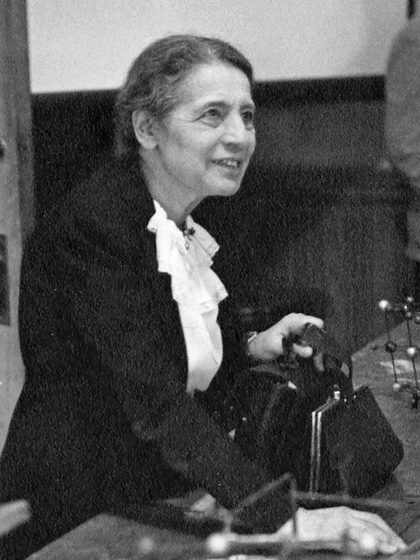
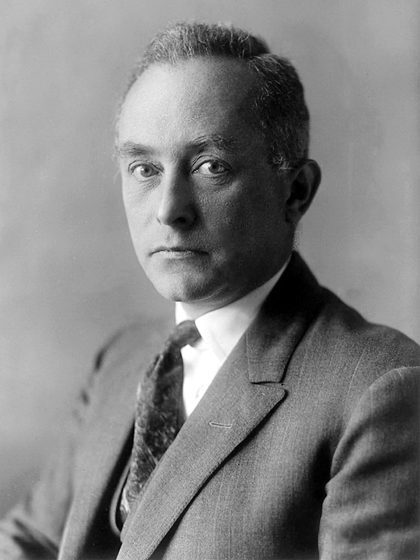
Einstein rewrote gravity as the curvature of spacetime, confirmed by an eclipse in 1919 and by gravitational waves a century later. Bohr quantised the electron's orbit and then built the institute where the rest was argued out. Max Born read the wave function as a probability, which is how any of it connects to a measurement at all. Lise Meitner worked out nuclear fission in exile in Sweden and was left off the prize for it; Leo Szilard conceived the chain reaction crossing a London street in 1933 and patented it to the Admiralty to keep it out of German hands.

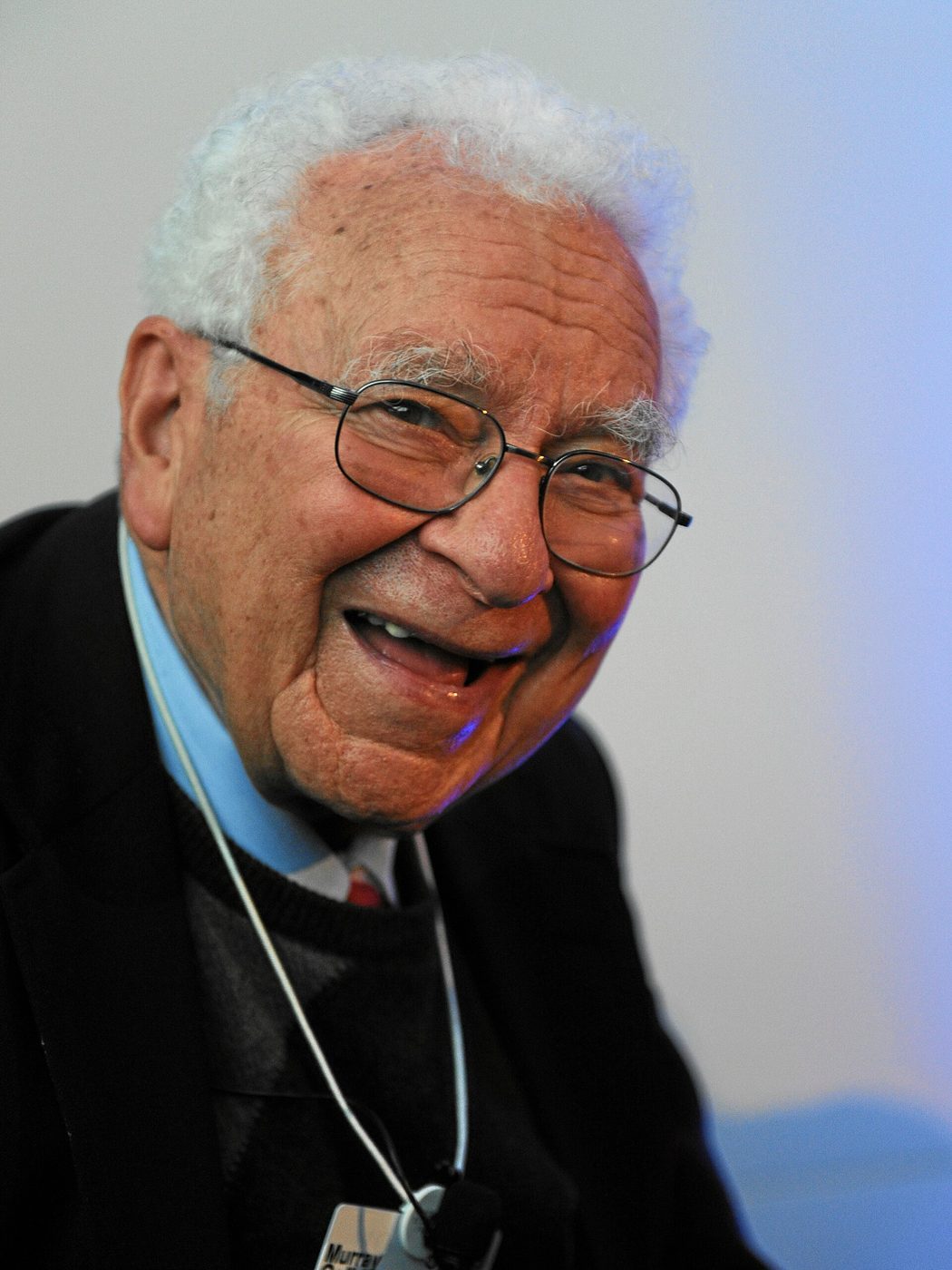
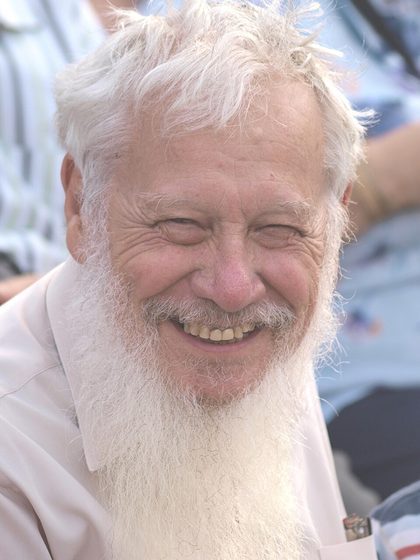
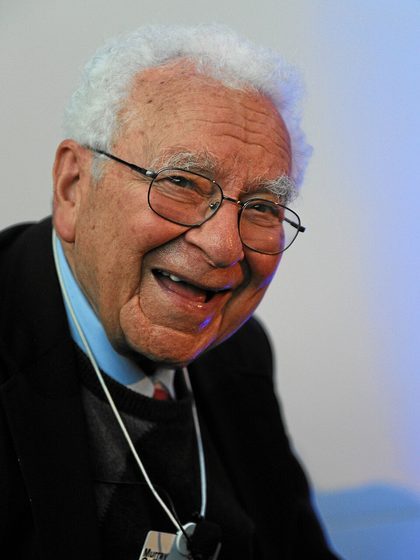
Murray Gell-Mann

Cosmology

Sorting the particles, and reading a black hole's surface

Where you meet itThe Standard Model and the holographic principle are the two frames every physics department still works inside.

Who built it

Murray Gell-Mann arranged the particle zoo into geometric families, predicted a missing one, and was proved right at Brookhaven in 1964 — the pattern implied quarks, and he took their name from Joyce. Jacob Bekenstein argued as a graduate student that a black hole's entropy scales with the area of its horizon rather than its volume: the information is written on the surface. Hawking objected, then derived the radiation that proved it.

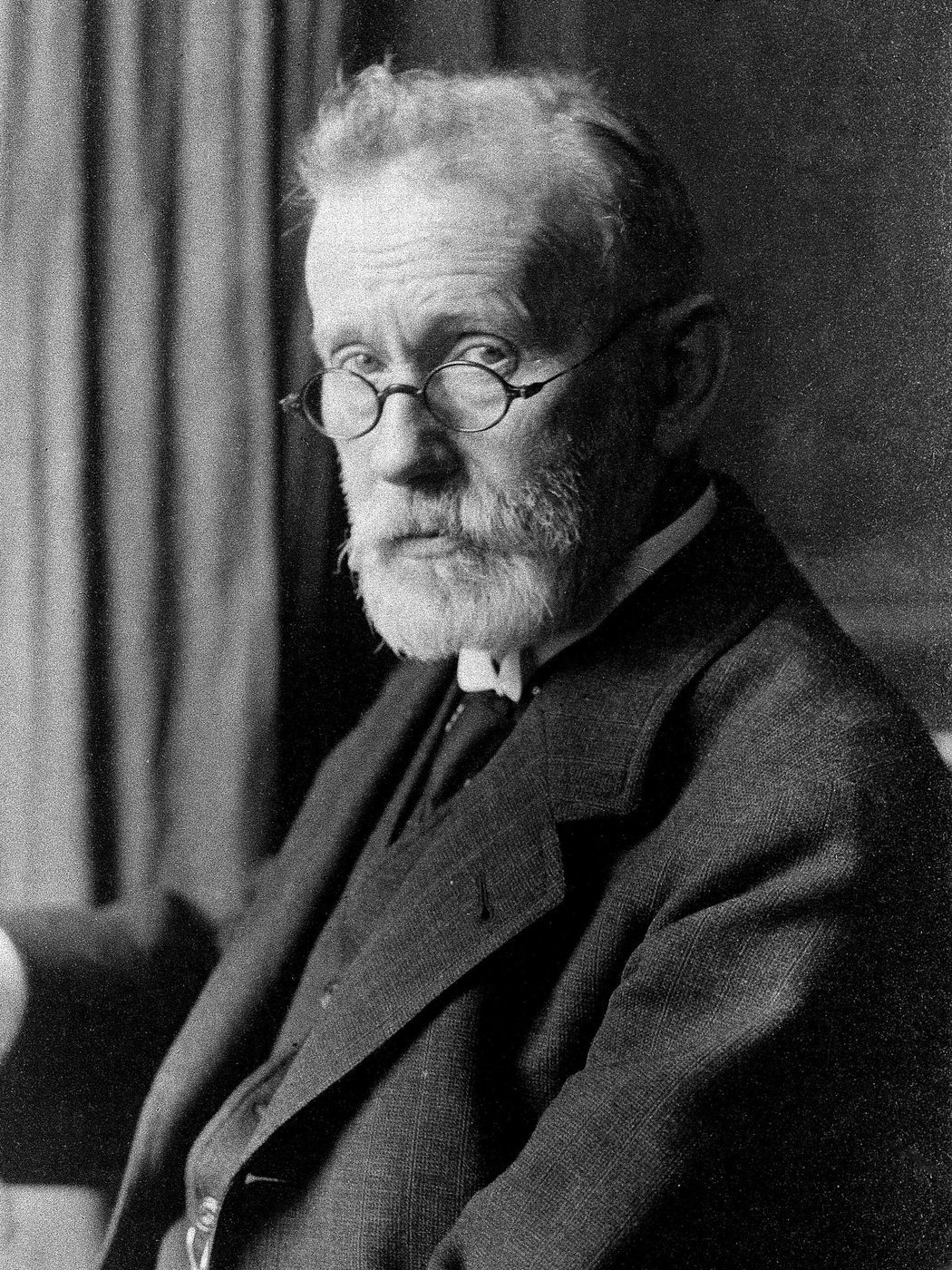
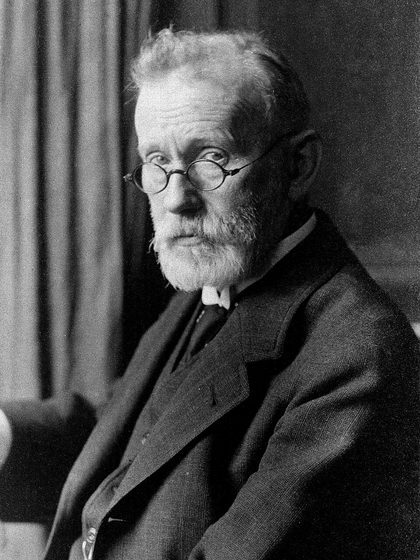
Paul Ehrlich

Medicine

The diseases that stopped happening

Where you meet itPolio, syphilis, tuberculosis, childhood leukaemia, transplant rejection, hepatitis B, shingles. Each stopped being a death sentence because of somebody on this list.

Who built it

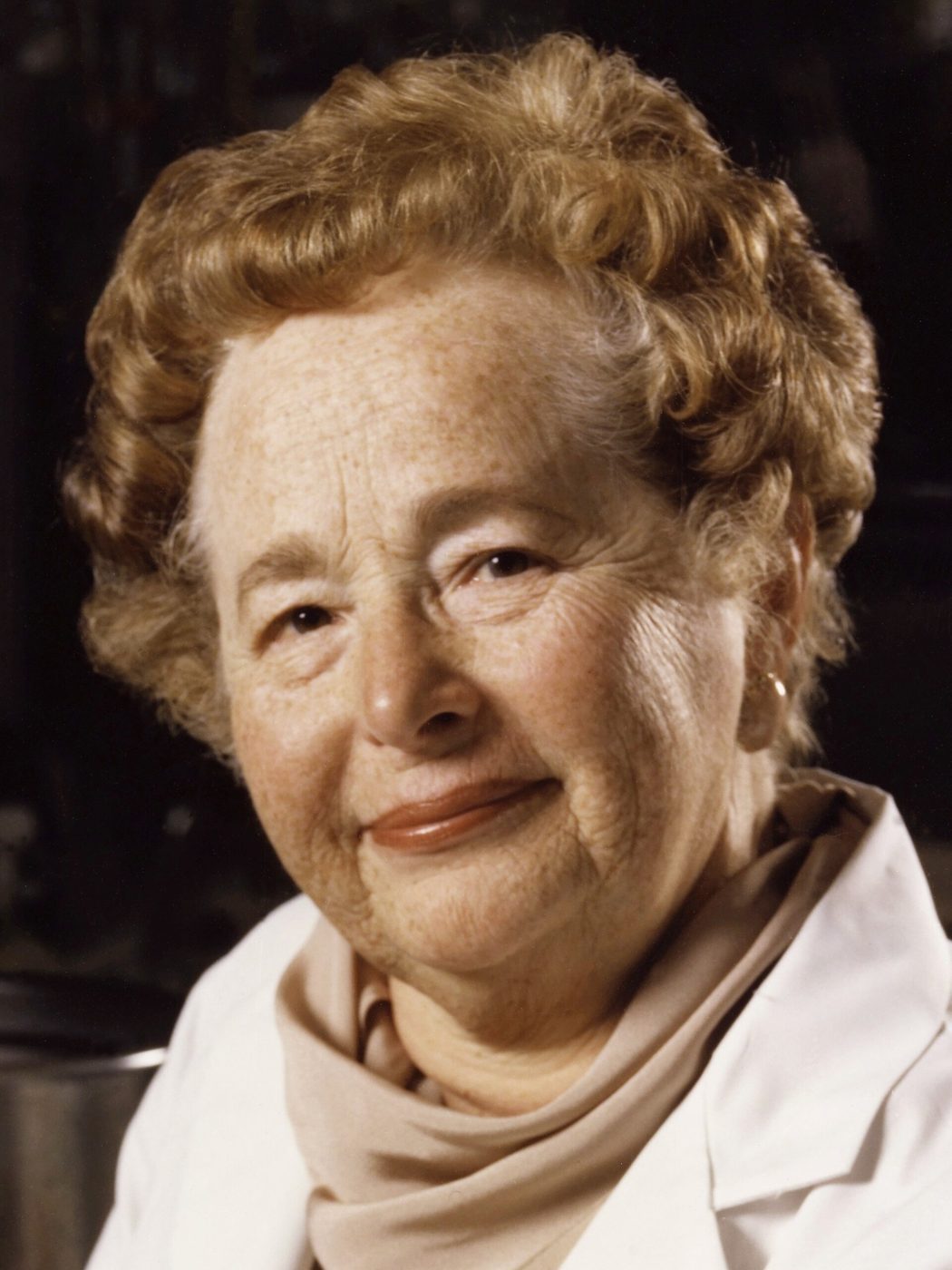
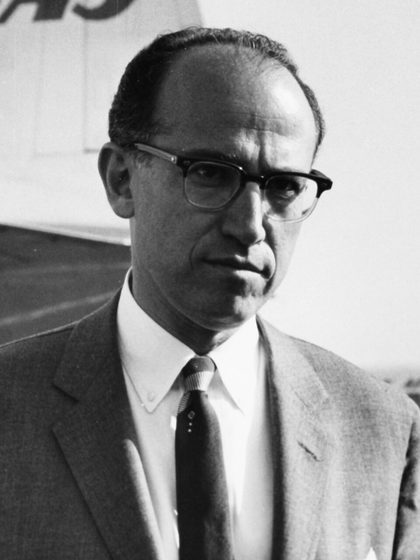
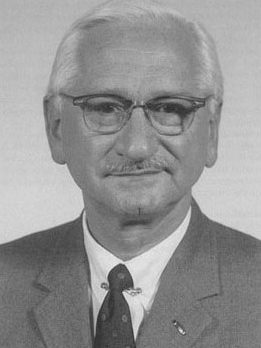
Paul Ehrlich invented chemotherapy — a compound aimed at the pathogen and not the patient — and failed 605 times before Salvarsan. Selman Waksman dug antibiotics out of soil and named the class. Jonas Salk refused to patent the polio vaccine and Albert Sabin gave his away. Gertrude Elion, rejected by fifteen graduate programmes, designed drugs from the biochemistry up and produced six that are still in use. Rita Levi-Montalcini found nerve growth factor working on chick embryos in her bedroom with sharpened sewing needles.

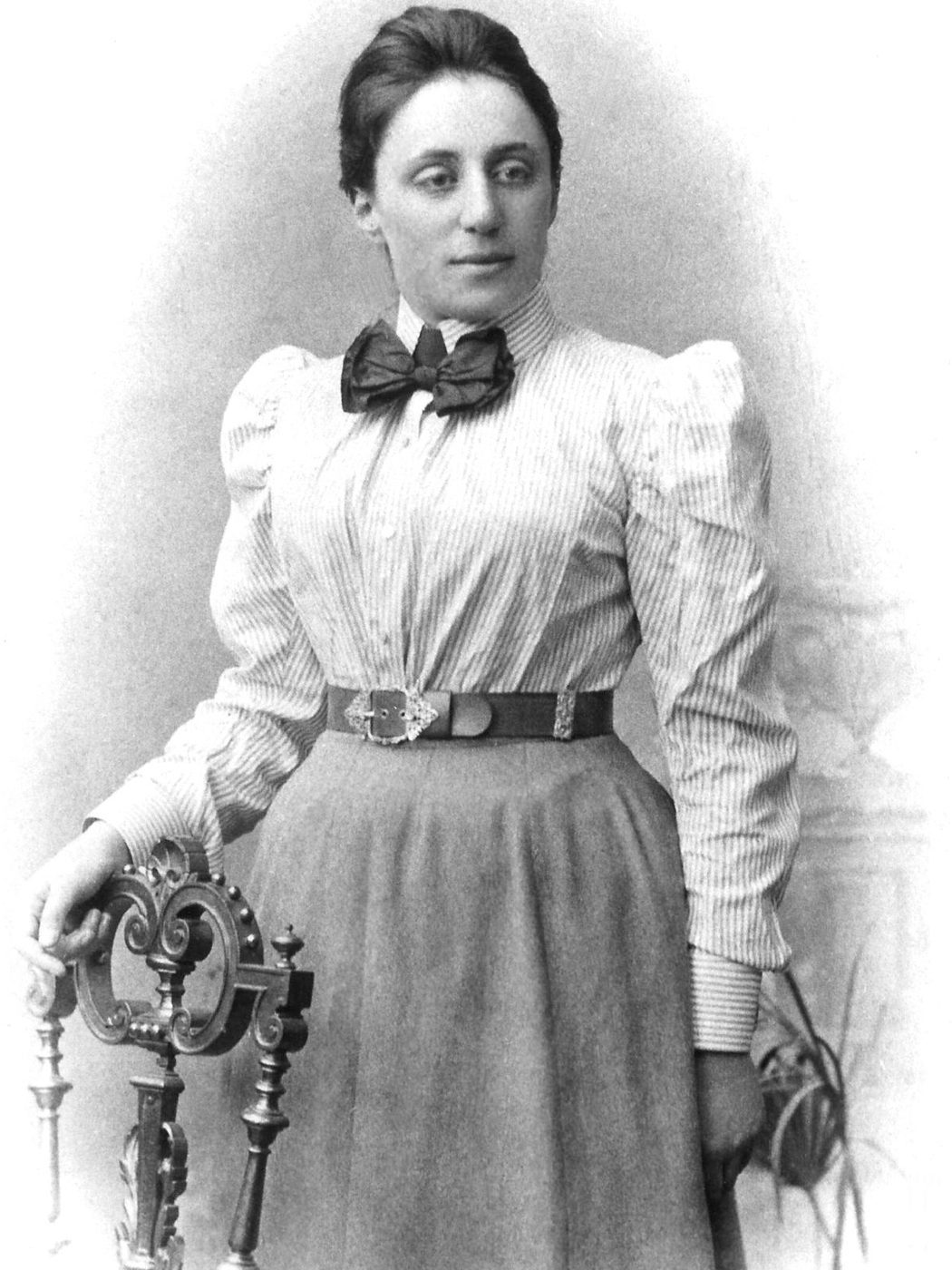
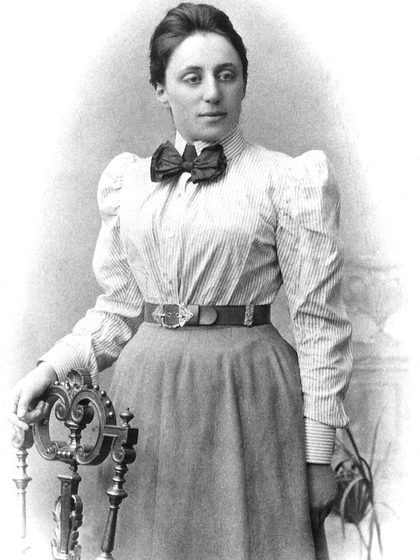
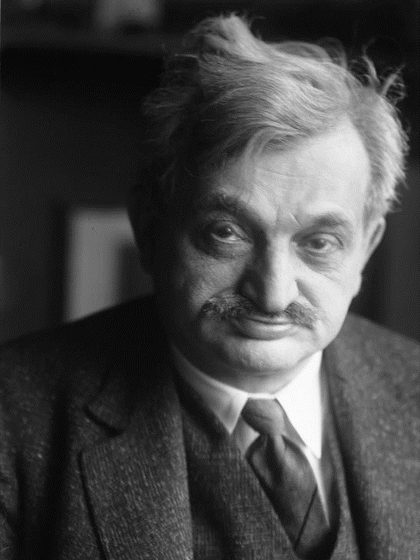
Emmy Noether

Mathematics & machines

Symmetry, and the architecture inside every computer

Where you meet itThe device you are reading this on stores its instructions in the same memory as its data, because of a report written in 1945.

Who built it

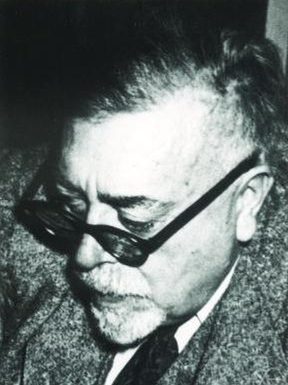
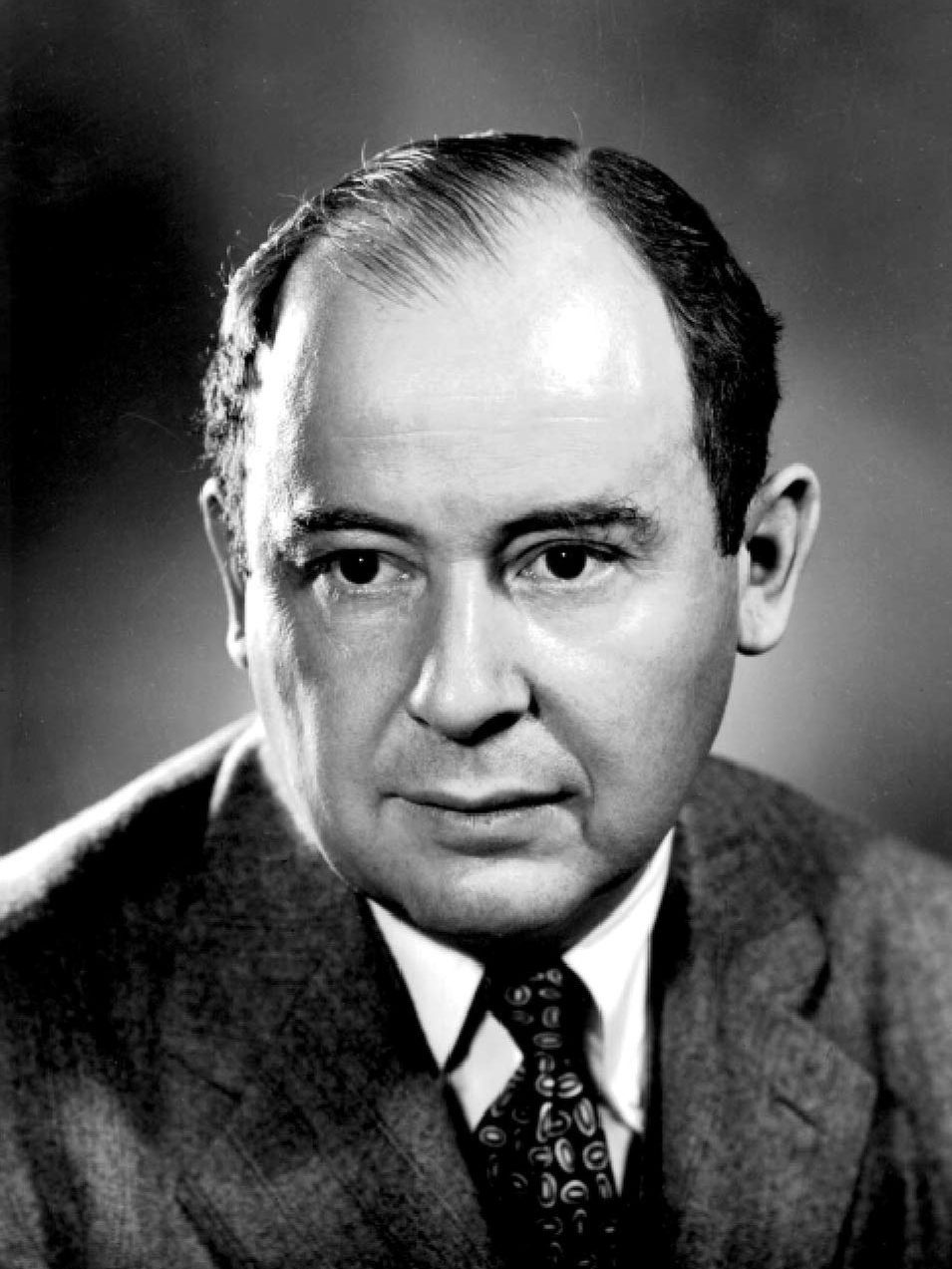
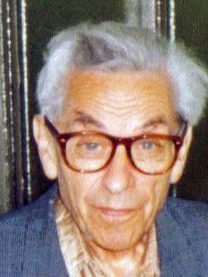
Emmy Noether proved that every symmetry in nature hides a conservation law — the organising principle beneath modern physics — while lecturing unpaid at Göttingen under someone else's name because the faculty would not appoint a woman. Von Neumann wrote both the founding text of game theory and the computer architecture still in use. Norbert Wiener named cybernetics and wrote the first serious warning about what automation would do to labour. Erdős published 1,500 papers with 500 collaborators and never kept a home. Perelman solved the Poincaré conjecture and turned down a million dollars.

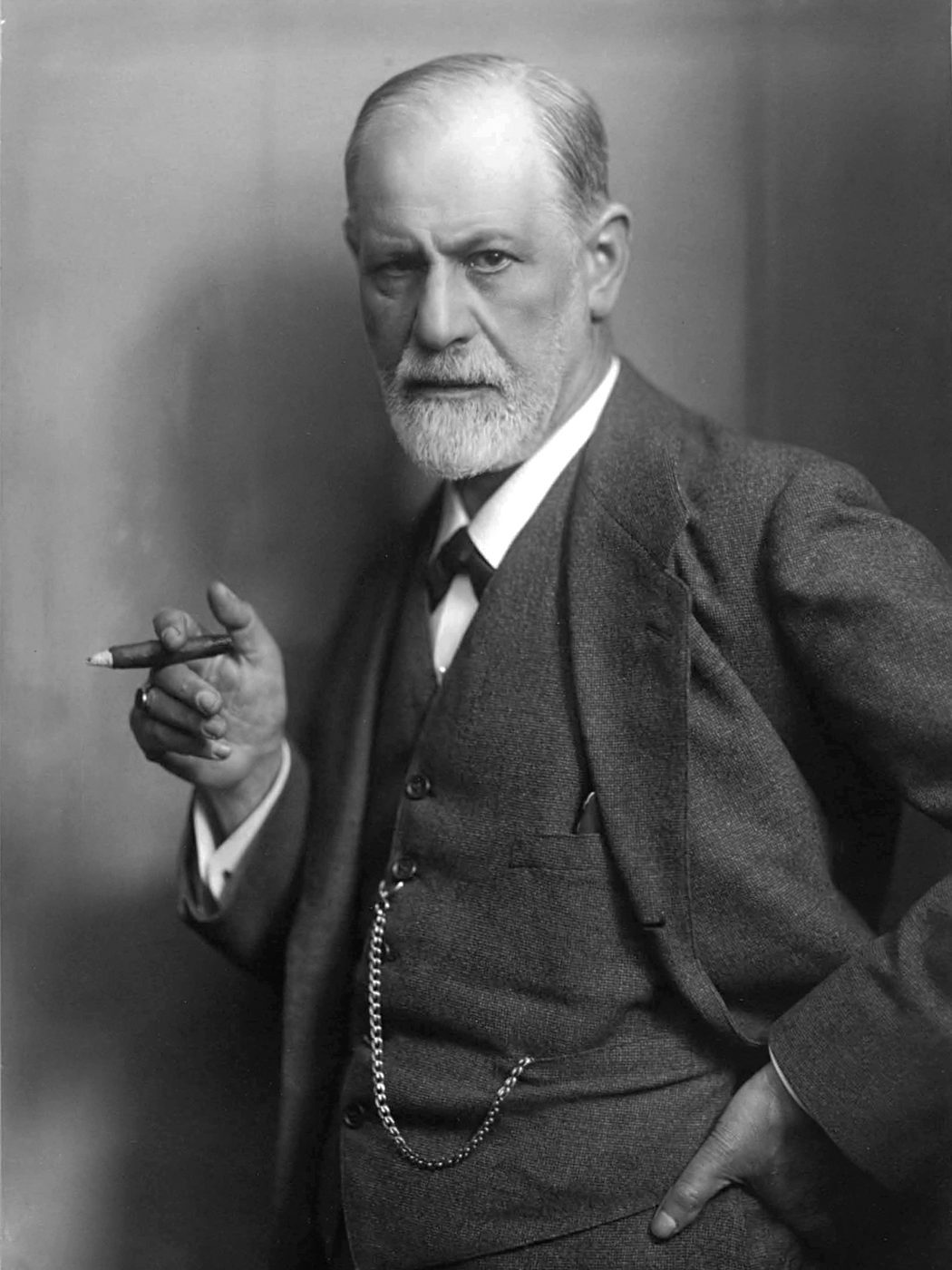
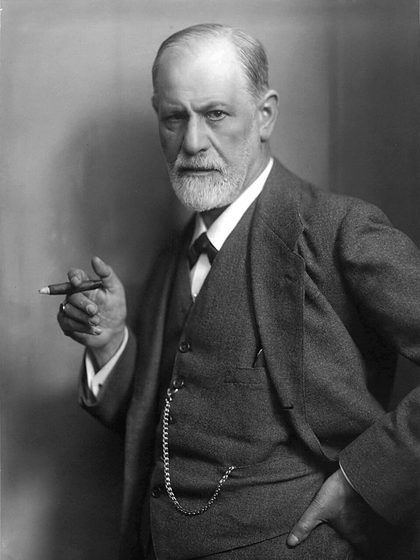
Sigmund Freud

The mind

The vocabulary you use to describe yourself

Where you meet itUnconscious, identity crisis, self-actualisation, cognitive bias, conformity, the search for meaning — six phrases in ordinary English, all of them coined or established here.

Who built it

Freud proposed that most of the mind is hidden from the person who has it. Erikson extended development across a whole life and named the identity crisis. Maslow insisted psychology should study health rather than only illness. Lewin turned group behaviour into something measurable. Asch found that three quarters of people will call white black if the room does first, and Milgram found what an instruction is worth. Kahneman and Tversky showed judgment is wrong in ways you can predict. Frankl wrote the case for meaning from inside four camps.

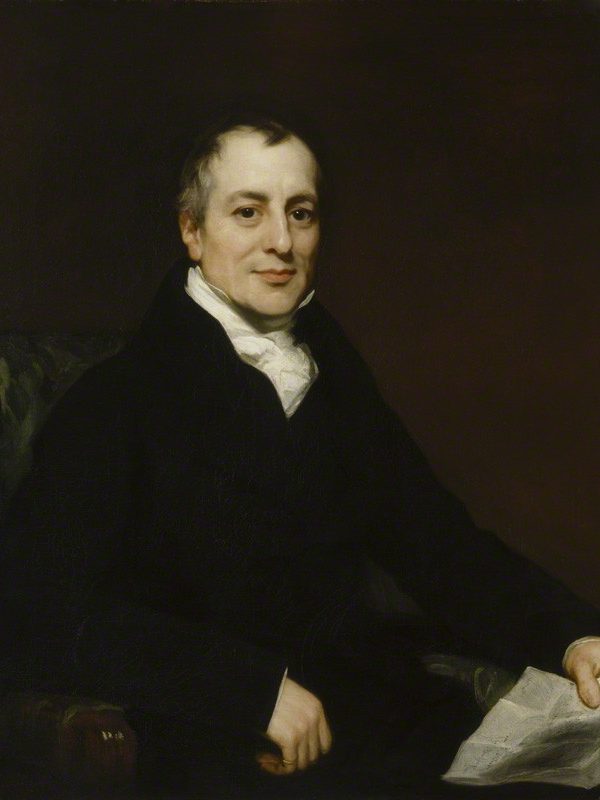
David Ricardo

Economics

Comparative advantage, impossibility, and why your pension is opt-out

Where you meet itTrade policy, voting systems, central banking and retirement defaults all rest on results first proved by the people below.

Who built it

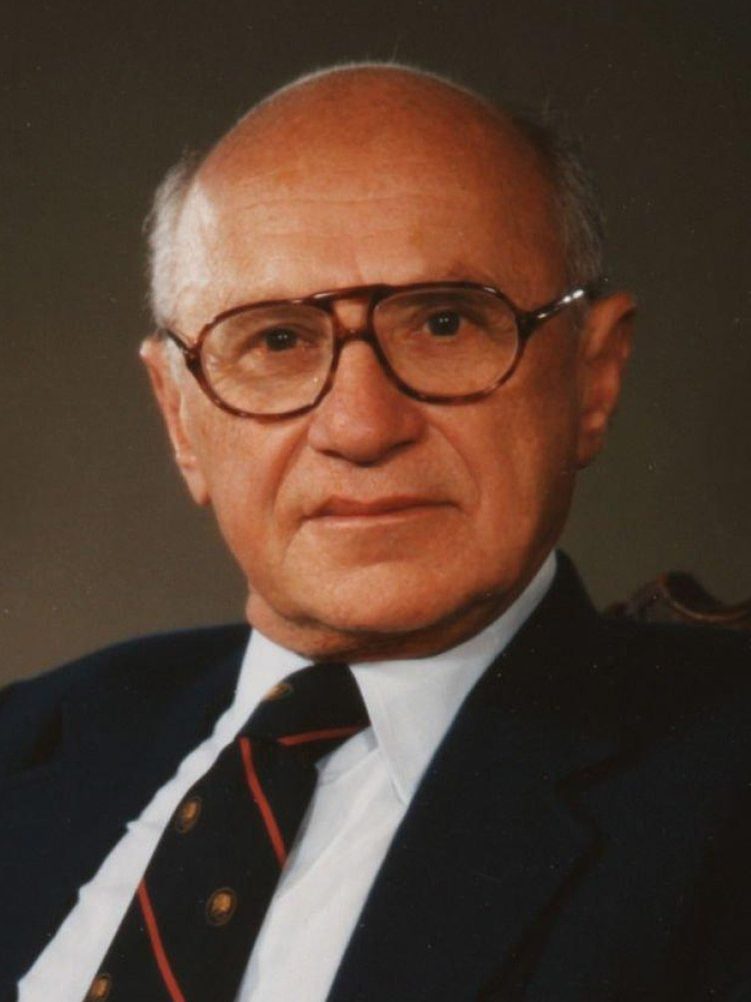
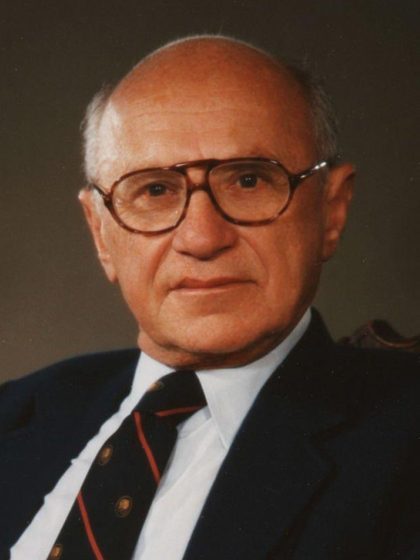
Ricardo showed that trade benefits both parties even when one side is better at everything — still the least intuitive true idea in the field. Samuelson turned economics into mathematics. Friedman argued the Depression was made by a monetary contraction, and lived to see conscription end on his argument. Arrow proved as a doctoral student that no voting rule can be fair in every sense at once. Aumann showed why cooperation survives repetition — and that the division rule in Mishnah Ketubot 10:4 is exactly the nucleolus of the matching cooperative game.

Louis Brandeis

Law

Privacy, product liability, and the words international law is written in

Where you meet it‘The right to be let alone’, ‘genocide’, ‘crimes against humanity’, the duty a manufacturer owes a stranger — none of these were legal concepts before the people below wrote them.

Who built it

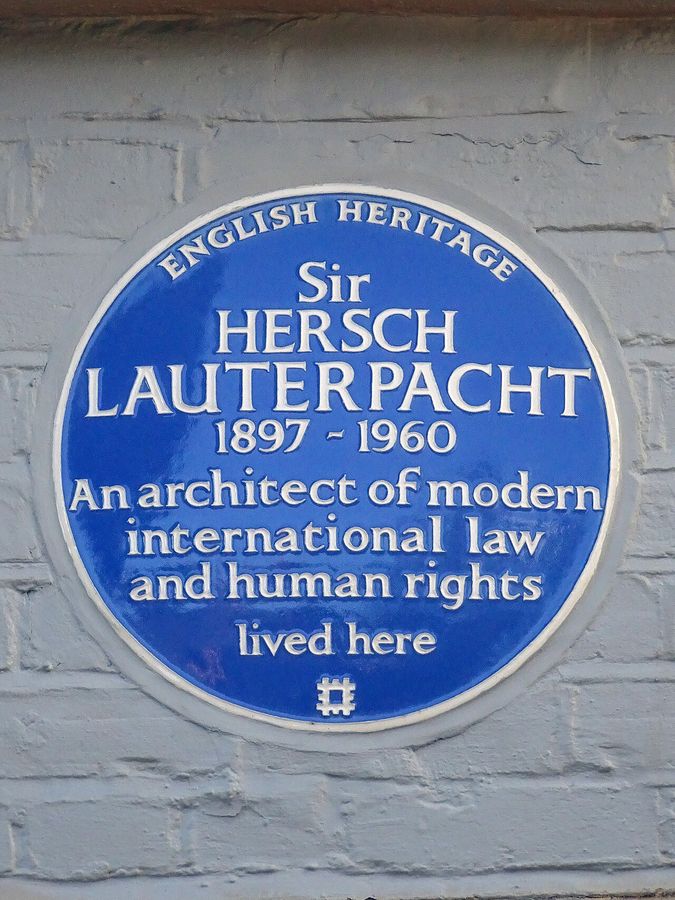
Brandeis argued privacy into existence in an 1890 article and then put social fact into constitutional reasoning. Cardozo swept away the requirement of a contract before you could sue over a defective product. Ginsburg dismantled sex discrimination one chosen case at a time, five wins from six. Raphael Lemkin coined ‘genocide’ because he had asked since 1933 why the destruction of a people had no name; Lauterpacht put ‘crimes against humanity’ into the Nuremberg indictment; René Cassin drafted the Universal Declaration.

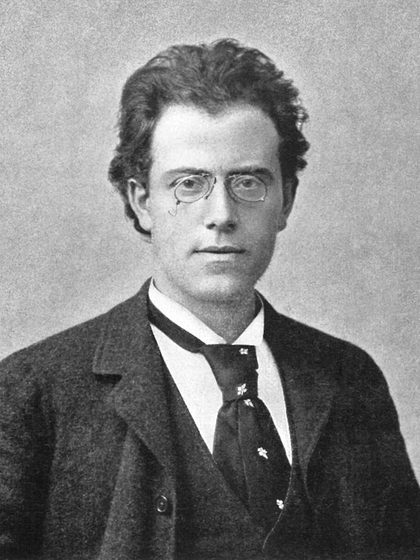
Felix Mendelssohn

Music & image

The symphony made to hold everything, and the picture that kept the shtetl

Where you meet itBach's St Matthew Passion was unperformed for a century until a twenty-year-old revived it, and the concert repertoire has not been the same since.

Who built it

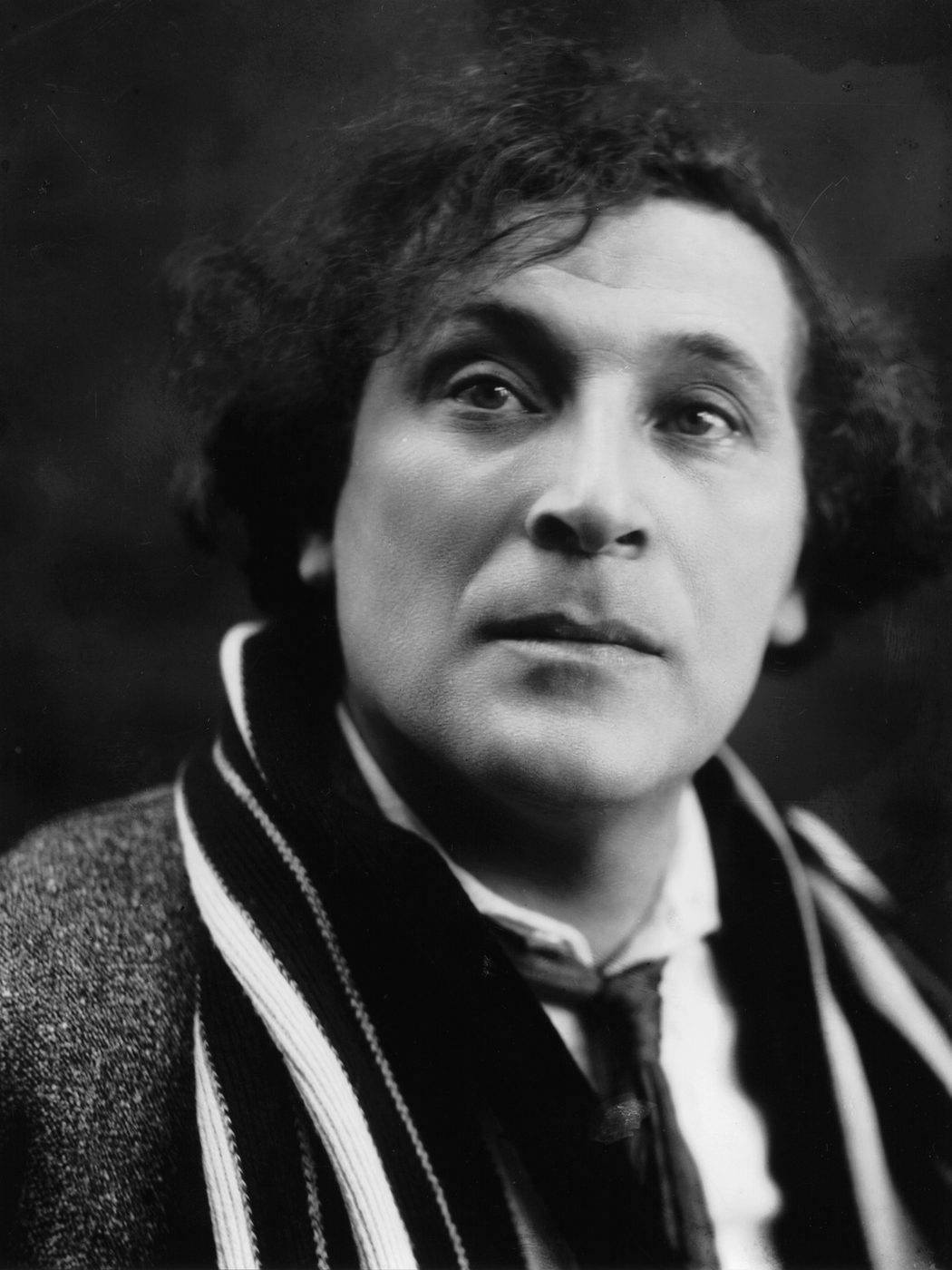
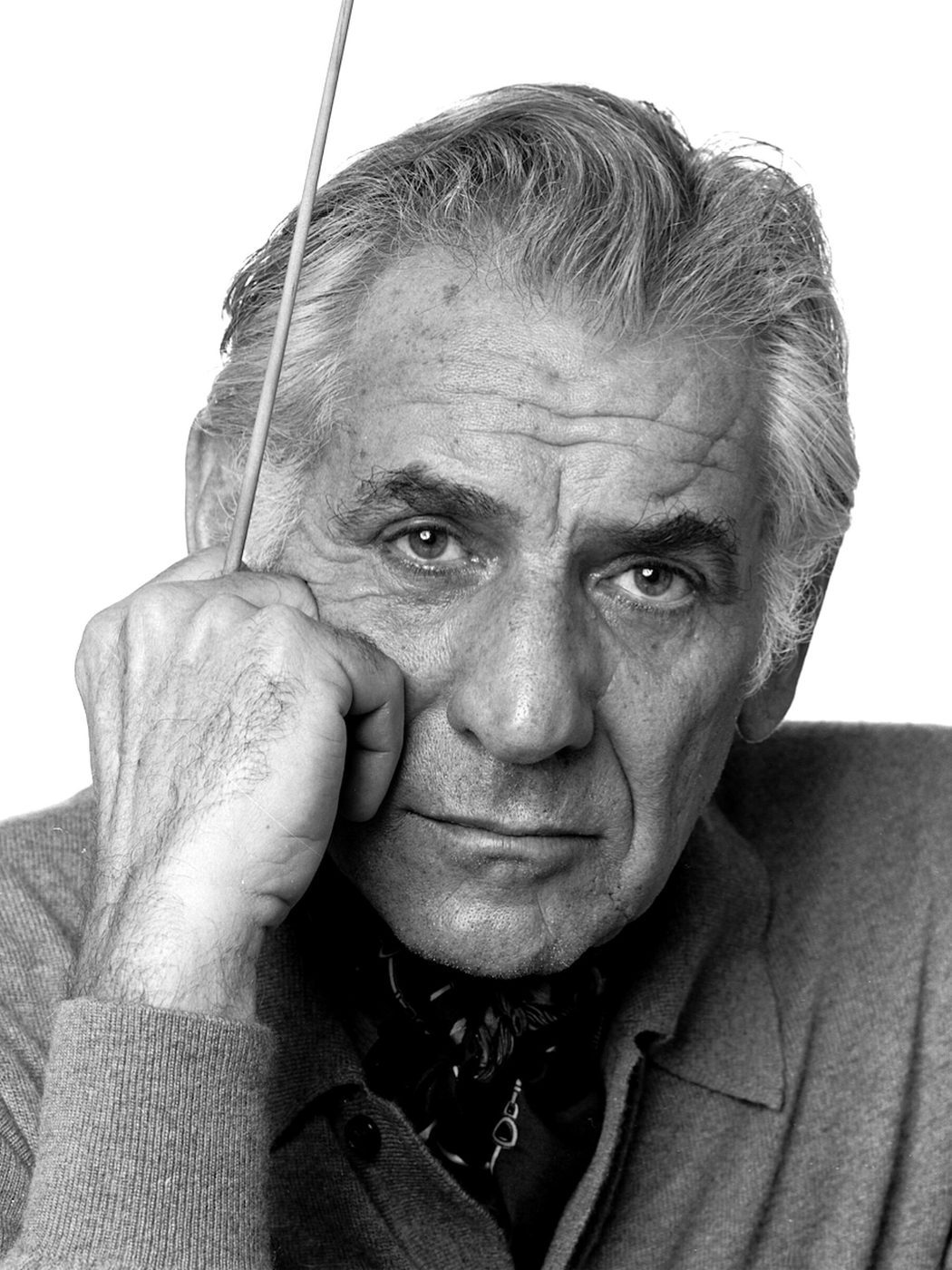
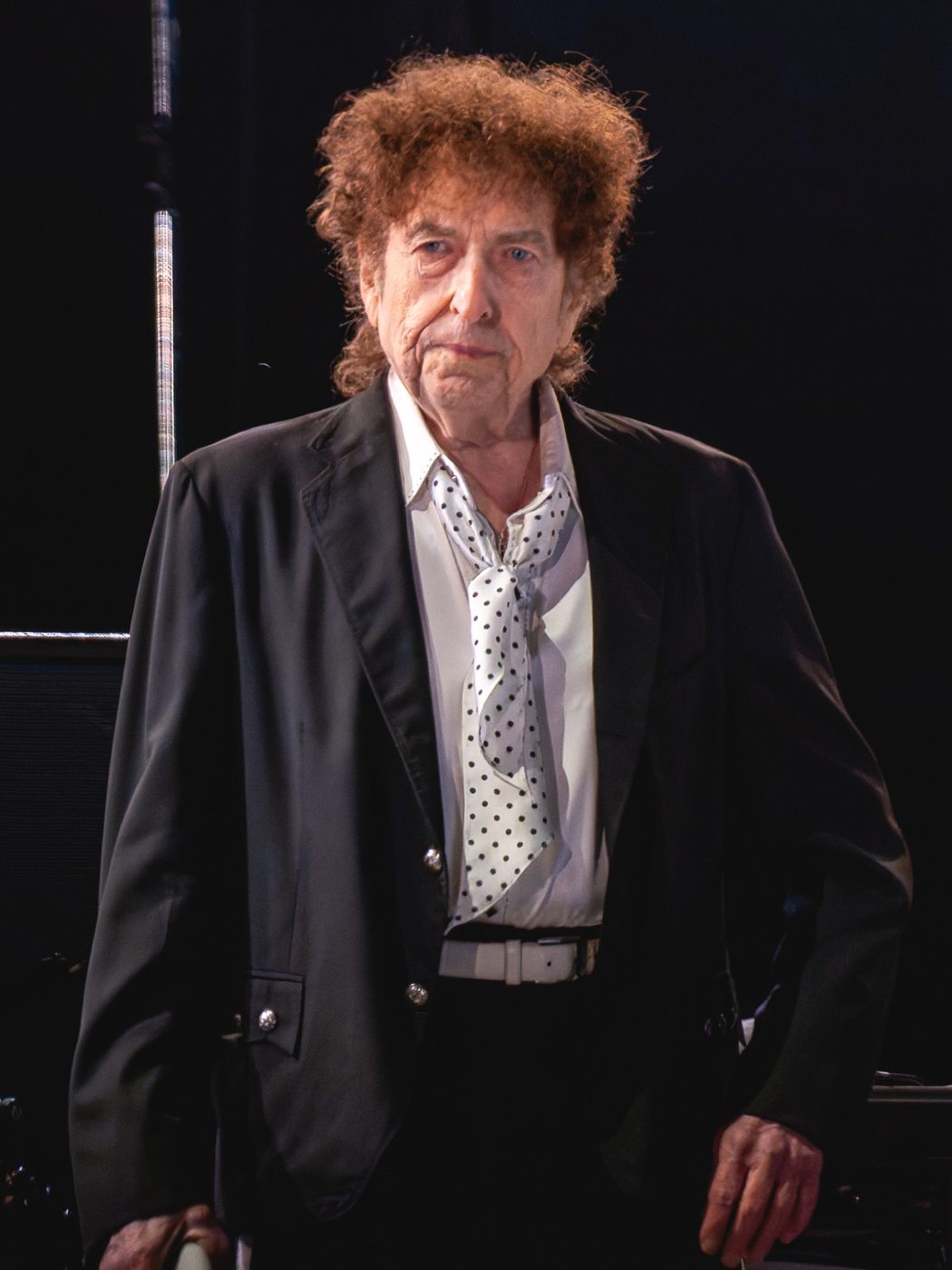
Felix Mendelssohn conducted that revival at twenty and founded the Leipzig Conservatory. Mahler pulled folk tunes, military bands and funeral marches into a form that had refused them, and said he was thrice homeless. Schoenberg broke tonality and then built a new law for what replaced it, returning formally to Judaism in 1933 with Chagall as witness. Bernstein refused to choose between the concert hall and Broadway. Chagall carried the fiddler and the flying bride through five countries and a world war. Dylan took the literature Nobel.

Eliezer Ben-Yehuda

Letters & language

A dead language brought back, and the books that came after

Where you meet itHebrew is the only liturgical language ever returned to daily speech — every revitalisation programme on earth cites it, and nobody has repeated it.

Who built it

Ben-Yehuda raised his son as the first child in eighteen centuries to hear only Hebrew, compiled seventeen volumes, and coined the ordinary words the language lacked — ice cream, jam, newspaper, dictionary. Agnon then won a Nobel writing in it. Around that: Moses Mendelssohn arguing for a state that could coerce neither church nor synagogue; Kafka writing the century's bureaucracy before it happened; Primo Levi turning a chemist's precision on Auschwitz without raising his voice; Buber separating the world you use from the world you meet; Levinas putting obligation before metaphysics.

Trails · 12 routes that ignore the categories

Or wander
sideways.

A field filter answers "show me the physicists". These answer better questions — who refused the money, who started late, who was left off the prize, who paid for it in full. Pick one and follow it.

The archive · 153 lives, oldest first

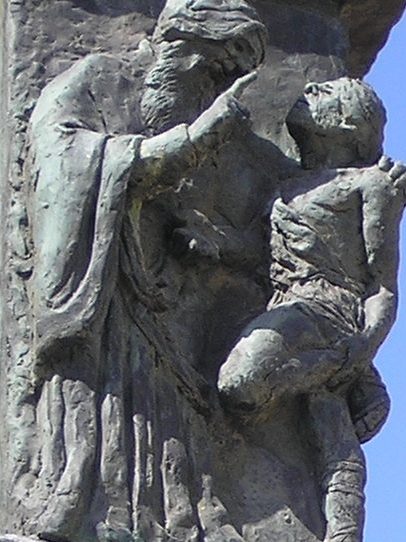
A later artist’s depiction of Hillel the Elder — no contemporary likeness existsDepiction · not a likenessc. 110 BCE – 10 CE
Deror avi · CC BY-SA 3.0source
Torah

Hillel the Elder

הלל הזקן

Set the terms of Jewish ethics in three questions that have never been improved on.

הוּא הָיָה אוֹמֵר, אִם אֵין אֲנִי לִי, מִי לִי. וּכְשֶׁאֲנִי לְעַצְמִי, מָה אֲנִי. וְאִם לֹא עַכְשָׁיו, אֵימָתָי:

Pirkei Avot 1:14

“He [also] used to say: If I am not for myself, who is for me? But if I am for my own self [only], what am I? And if not now, when?”

He came from Babylonia poor enough that the story has him hearing Torah through a skylight, and became the head of the Sanhedrin and founder of the school whose rulings the halacha follows in almost every dispute with Beit Shammai. The prosbul, his enactment allowing loans to survive the sabbatical year, kept credit available to the poor when the Torah's own release would have closed it off.

Bavel → JerusalemBeit Hillel
Torah

Rabban Yochanan ben Zakkai

רבן יוחנן בן זכאי

Asked for a school when the Temple was falling, and thereby saved Judaism.

רַבָּן יוֹחָנָן בֶּן זַכַּאי קִבֵּל מֵהִלֵּל וּמִשַּׁמָּאי. הוּא הָיָה אוֹמֵר, אִם לָמַדְתָּ תוֹרָה הַרְבֵּה, אַל תַּחֲזִיק טוֹבָה לְעַצְמְךָ, כִּי לְכָךְ נוֹצָרְתָּ. חֲמִשָּׁה תַלְמִידִים הָיוּ לוֹ לְרַבָּן יוֹחָנָן בֶּן זַכַּאי, וְאֵלּוּ הֵן, רַבִּי אֱלִיעֶזֶר בֶּן הוֹרְקְנוֹס, וְרַבִּי יְהוֹשֻׁעַ בֶּן חֲנַנְיָה, וְרַבִּי יוֹסֵי הַכֹּהֵן, וְרַבִּי שִׁמְעוֹן בֶּן נְתַנְאֵל, וְרַבִּי אֶלְעָזָר בֶּן עֲרָךְ. הוּא הָיָה מוֹנֶה שִׁבְחָן. רַבִּי אֱלִיעֶזֶר בֶּן הוֹרְקְנוֹס, בּוֹר סוּד שֶׁאֵינוֹ מְאַבֵּד טִפָּה. רַבִּי יְהוֹשֻׁעַ בֶּן חֲנַנְיָה, אַשְׁרֵי יוֹלַדְתּוֹ. רַבִּי יוֹסֵי הַכֹּהֵן, חָסִיד. רַבִּי שִׁמְעוֹן בֶּן נְתַנְאֵל, יְרֵא חֵטְא. וְרַבִּי אֶלְעָזָר בֶּן עֲרָךְ, מַעְיָן הַמִּתְגַּבֵּר. הוּא הָיָה אוֹמֵר, אִם יִהְיוּ כָל חַכְמֵי יִשְׂרָאֵל בְּכַף מֹאזְנַיִם, וֶאֱלִיעֶזֶר בֶּן הוֹרְקְנוֹס בְּכַף שְׁנִיָּה, מַכְרִיעַ אֶת כֻּלָּם. אַבָּא שָׁאוּל אוֹמֵר מִשְּׁמוֹ, אִם יִהְיוּ כָל חַכְמֵי יִשְׂרָאֵל בְּכַף מֹאזְנַיִם וְרַבִּי אֱלִיעֶזֶר בֶּן הוֹרְקְנוֹס אַף עִמָּהֶם, וְרַבִּי אֶלְעָזָר בֶּן עֲרָךְ בְּכַף שְׁנִיָּה, מַכְרִיעַ אֶת כֻּלָּם:

Pirkei Avot 2:8

“Rabban Yohanan ben Zakkai received [the oral tradition] from Hillel and Shammai. He used to say: if you have learned much Torah, do not claim credit for yourself, because for such a purpose were you created. Rabban…”

Carried out of besieged Jerusalem in a coffin, he asked Vespasian for Yavneh and its sages. The academy he founded there transferred the centre of Jewish life from sacrifice to study and prayer, fixed the calendar and the liturgy after the Temple's destruction, and made the religion portable enough to survive nineteen centuries without a state.

Jerusalem → Yavneh70 CE
A later artist’s depiction of Rabbi Akiva — no contemporary likeness existsDepiction · not a likenessc. 50 – 135 CE
Unknown authorUnknown author · Public domainsource
Torah

Rabbi Akiva

רבי עקיבא

Began learning aleph-beis at forty and left the structure of the Oral Law behind him.

הוּא הָיָה אוֹמֵר, חָבִיב אָדָם שֶׁנִּבְרָא בְצֶלֶם. חִבָּה יְתֵרָה נוֹדַעַת לוֹ שֶׁנִּבְרָא בְצֶלֶם, שֶׁנֶּאֱמַר (בראשית ט) כִּי בְּצֶלֶם אֱלֹהִים עָשָׂה אֶת הָאָדָם. חֲבִיבִין יִשְׂרָאֵל שֶׁנִּקְרְאוּ בָנִים לַמָּקוֹם. חִבָּה יְתֵרָה נוֹדַעַת לָהֶם שֶׁנִּקְרְאוּ בָנִים לַמָּקוֹם, שֶׁנֶּאֱמַר (דברים יד) בָּנִים אַתֶּם לַה' אֱלֹהֵיכֶם. חֲבִיבִין יִשְׂרָאֵל שֶׁנִּתַּן לָהֶם כְּלִי חֶמְדָּה. חִבָּה יְתֵרָה נוֹדַעַת לָהֶם שֶׁנִּתַּן לָהֶם כְּלִי חֶמְדָּה שֶׁבּוֹ נִבְרָא הָעוֹלָם, שֶׁנֶּאֱמַר (משלי ד) כִּי לֶקַח טוֹב נָתַתִּי לָכֶם, תּוֹרָתִי אַל תַּעֲזֹבוּ:

Pirkei Avot 3:14

“He used to say: Beloved is man for he was created in the image [of God]. Especially beloved is he for it was made known to him that he had been created in the image [of God], as it is said: “for in the image of God He…”

An unlettered shepherd until his wife Rachel sent him to study, he built the organising system that Rabbi Meir and then Rabbi Yehuda HaNasi turned into the Mishnah, and he read every crown on every letter as carrying law. He supported Bar Kochba, and was executed by the Romans reciting Shema. ‘Love your neighbour as yourself’, he said, is the great principle of the Torah.

Bnei Brakthe Mishnah's frame
PikiWiki Israel 3953 rabi tarfons grave — connected to Rabbi Tarfon, 1st–2nd century CEKever · not a likeness1st–2nd century CE
אבישי טייכר · CC BY 2.5source
Torah

Rabbi Tarfon

רבי טרפון

It is not on you to finish the work — and you are not free to walk away from it.

הוּא הָיָה אוֹמֵר, לֹא עָלֶיךָ הַמְּלָאכָה לִגְמֹר, וְלֹא אַתָּה בֶן חוֹרִין לִבָּטֵל מִמֶּנָּה. אִם לָמַדְתָּ תוֹרָה הַרְבֵּה, נוֹתְנִים לְךָ שָׂכָר הַרְבֵּה. וְנֶאֱמָן הוּא בַעַל מְלַאכְתְּךָ שֶׁיְּשַׁלֵּם לְךָ שְׂכַר פְּעֻלָּתֶךָ. וְדַע מַתַּן שְׂכָרָן שֶׁל צַדִּיקִים לֶעָתִיד לָבֹא:

Pirkei Avot 2:16

“He [Rabbi Tarfon] used to say: It is not your duty to finish the work, but neither are you at liberty to neglect it; If you have studied much Torah, you shall be given much reward. Faithful is your employer to pay you…”

A kohen who served in the Second Temple before its destruction and lived to argue with Rabbi Akiva in Yavneh, he was known for a generosity that the Talmud reports as almost reckless. His line about the unfinished work is quoted more often outside Jewish sources than inside them, and is usually cited without knowing where it comes from.

LodPirkei Avot 2:16
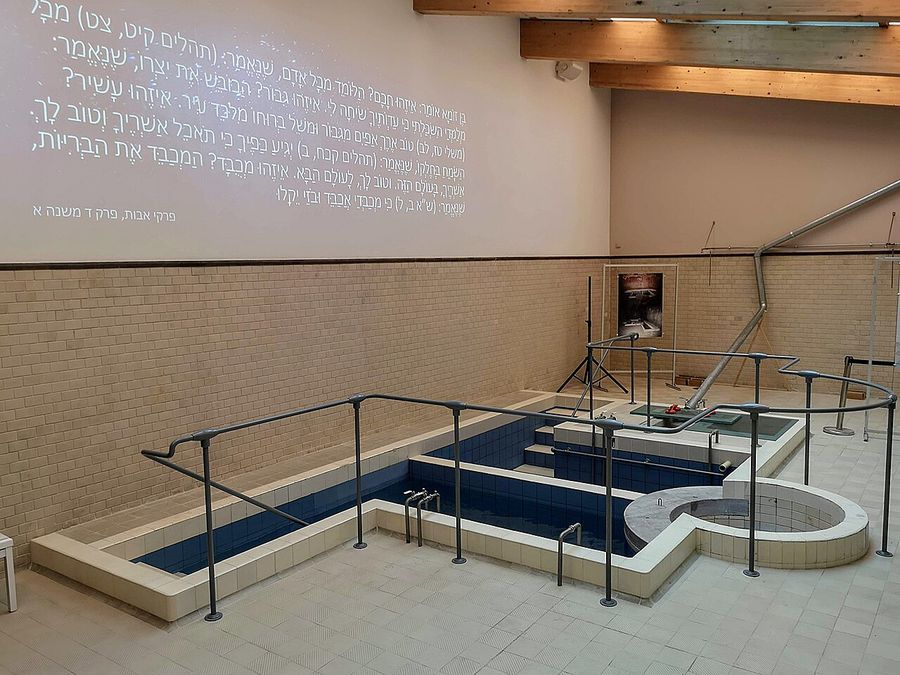
Mikveh — connected to Ben Zoma, 2nd century CEDocument · not a likeness2nd century CE
Stefan Walkowski · CC BY-SA 4.0source
Torah

Ben Zoma

בן זומא

Defined wisdom, strength, wealth and honour in four lines that reversed all four.

בֶּן זוֹמָא אוֹמֵר, אֵיזֶהוּ חָכָם, הַלּוֹמֵד מִכָּל אָדָם, שֶׁנֶּאֱמַר (תהלים קיט) מִכָּל מְלַמְּדַי הִשְׂכַּלְתִּי כִּי עֵדְוֹתֶיךָ שִׂיחָה לִּי. אֵיזֶהוּ גִבּוֹר, הַכּוֹבֵשׁ אֶת יִצְרוֹ, שֶׁנֶּאֱמַר (משלי טז) טוֹב אֶרֶךְ אַפַּיִם מִגִּבּוֹר וּמשֵׁל בְּרוּחוֹ מִלֹּכֵד עִיר. אֵיזֶהוּ עָשִׁיר, הַשָּׂמֵחַ בְּחֶלְקוֹ, שֶׁנֶּאֱמַר (תהלים קכח) יְגִיעַ כַּפֶּיךָ כִּי תֹאכֵל אַשְׁרֶיךָ וְטוֹב לָךְ. אַשְׁרֶיךָ, בָּעוֹלָם הַזֶּה. וְטוֹב לָךְ, לָעוֹלָם הַבָּא. אֵיזֶהוּ מְכֻבָּד, הַמְכַבֵּד אֶת הַבְּרִיּוֹת, שֶׁנֶּאֱמַר (שמואל א ב) כִּי מְכַבְּדַי אֲכַבֵּד וּבֹזַי יֵקָלּוּ:

Pirkei Avot 4:1

“Ben Zoma said: Who is wise? He who learns from every man, as it is said: “From all who taught me have I gained understanding” (Psalms 119:99). Who is mighty? He who subdues his [evil] inclination, as it is said: “He…”

One of the four who entered the pardes, he is the source of the most quoted definition of wealth in Jewish thought: rich is the one who is happy with his portion. The Talmud says he never recovered from what he saw there. His teachings survive mostly as aphorism, and the aphorisms have outlasted whole treatises.

Pirkei Avot 4:1the four in the pardes
Torah

Shmuel of Nehardea

שמואל

Amora, astronomer and physician — and the source of the rule that the law of the land is law.

מַאי ״כִּימָה״? אָמַר שְׁמוּאֵל: כִּמְאָה כֹּכְבֵי. אָמְרִי לַהּ דִּמְכַנְּפִי, וְאָמְרִי לַהּ דִּמְבַדְּרָן.

Berakhot 58b:14

“With regard to Pleiades, the Gemara asks: What is Pleiades [Kima]? Why is it called by that name? Shmuel said: Because it is approximately a hundred [keme’a] stars, as that is the number of stars in that constellation;…”

Head of the academy at Nehardea, he computed the Jewish calendar's intercalations, prepared eye salves, and said the paths of the heavens were as clear to him as the streets of his city. Dina d'malchuta dina — the ruling that a state's civil law binds Jews within it — is his, and it is the hinge on which nineteen centuries of diaspora legal life turned.

Nehardeadina d'malchuta dina
Torah

Rav Saadia Gaon

רב סעדיה גאון

First to argue Judaism systematically as philosophy, and first to translate the Torah into Arabic.

ואחר מה שפתחנו בו מתהלת אלהינו ושבחו במאמר קצר, אני מקדים לספר הזה אשר כוונתי לחברו, הודעת סבת נפילת הספקות לבני אדם בדרושיהם ואופני הסרתם, עד שתשלם הגעתם אל הדרוש ושלוט קצתם על קצתם, עד אשר קיימו אותו אמתית כפי מחשבתם וסברתם. ובאלהים אעזר לגלותם מעלי עד אשר ישלם לי מה שאגיע בו אל עבודתו, כאשר שאל אותו חסידו באמרו (תהלים קי"ט י"ח) גל עיני ואביטה נפלאות מתורתך. ורצוני לשום את זה עם דברי הספר כלו מאמר קרוב ולא רחוק, מהדברים הקלים ולא הקשים, משרשי הראיות והטעם ולא מסעפותם, לבעבור יקרב דרכו ויקל טרחו ויישר למודו ויגיע בו מבקשו אל הצדק והאמת, כמו שאמר החכם על החכמה כשהיא קרובה (משלי ב' ט') אז תבין צדק ומשפט ומישרים כל מעגל טוב:

HaEmunot veHaDeot, Introduction 2:1

“After having opened with praise and lauding for our God in a short expression [of such]; I will preface this book that I intend to author by making known the causes of doubts among men in their searches and the causes…”

Born in Fayyum, head of the academy at Sura, he wrote the first Hebrew dictionary, the first ordered siddur, a full Arabic translation of the Tanach that Yemenite communities still read alongside the Hebrew, and Emunot v'Deot — reason and revelation, argued to agree. He also broke the Karaite challenge on textual ground rather than by decree.

Fayyum → SuraEmunot v'Deot
A later artist’s depiction of Shlomo ibn Gabirol — no contemporary likeness existsDepiction · not a likenessc. 1021–1058
Hamilton Reed Armstrong · CC BY-SA 3.0source
Torah

Shlomo ibn Gabirol

שלמה אבן גבירול

Wrote Keter Malchut, and a philosophy that Christian Europe studied for centuries without knowing he was a Jew.

ואמר אם בני אדם יכבדוך לעושר או לשררה. אל יערב לך. כי הכבוד ההוא יפנה בפנותם. אבל יערב לך אם יכבדוך בשביל החכמה או בעבור יראה או בעבור מוסר:

Mivchar HaPeninim 1:34

“34. Let not the honour bestowed on thy wealth and power elate thee, for that honour vanishes when they disappear; but gratifying indeed is that honour elicited by wisdom, fear of the Lord, and morality.”

Orphaned early and dead before forty, he wrote the liturgical poetry that entered the Sephardic and then the universal machzor. His philosophical work, Mekor Chaim, was translated into Latin as Fons Vitae and attributed to an Arab or Christian ‘Avicebron’; only in 1846 did Solomon Munk identify the author as the Hebrew poet.

Málaga → ValenciaFons Vitae
A later artist’s depiction of Rashi — no contemporary likeness existsDepiction · not a likeness1040–1105
Unknown authorUnknown author · Public domainsource
Torah

Rashi

רש"י

The commentary without which the Chumash and the Talmud are not readable.

בראשית. אָמַר רַבִּי יִצְחָק לֹֹֹֹֹא הָיָה צָרִיךְ לְהַתְחִיל אֶת הַתּוֹרָה אֶלָּא מֵהַחֹדֶשׁ הַזֶּה לָכֶם, שֶׁהִיא מִצְוָה רִאשׁוֹנָה שֶׁנִּצְטַוּוּ בָּהּ יִשׂרָאֵל, וּמַה טַּעַם פָּתַח בִּבְרֵאשִׁית? מִשׁוּם כֹּחַ מַעֲשָׂיו הִגִּיד לְעַמּוֹ לָתֵת לָהֶם נַחֲלַת גּוֹיִם (תהילים קי"א), שֶׁאִם יֹאמְרוּ אֻמּוֹת הָעוֹלָם לְיִשְׁרָאֵל לִסְטִים אַתֶּם, שֶׁכְּבַשְׁתֶּם אַרְצוֹת שִׁבְעָה גוֹיִם, הֵם אוֹמְרִים לָהֶם כָּל הָאָרֶץ שֶׁל הַקָּבָּ"ה הִיא, הוּא בְרָאָהּ וּנְתָנָהּ לַאֲשֶׁר יָשַׁר בְּעֵינָיו, בִּרְצוֹנוֹ נְתָנָהּ לָהֶם, וּבִרְצוֹנוֹ נְטָלָהּ מֵהֶם וּנְתָנָהּ לָנוּ:

Rashi on Genesis 1:1:1

Shlomo Yitzchaki of Troyes made his living from vineyards and wrote the running commentary on the entire Tanach and almost the entire Bavli — knowing exactly which word a reader would stumble on, and answering in as few as possible. His granddaughters' husbands and sons became the Tosafists. The first dated printed Hebrew book, Reggio di Calabria 1475, was his Torah commentary.

Troyes1075 words that opened the Talmud
Torah

Rabbeinu Bachya ibn Pakuda

רבינו בחיי אבן פקודה

Wrote the first systematic Jewish work on the inner life.

אָמַר הַמְחַבֵּר בָּרוּךְ ה׳ אֱלֹהֵי יִשְׂרָאֵל אֲשֶׁר לוֹ יֵאוֹת עִנְיַן הָאֶחָד הָאֲמִתִּי. הַקַּדְמוֹן בִּמְצִיאוּתוֹ הַמַּתְמִיד טוֹבָתוֹ. אֲשֶׁר בָּרָא כָּל הַנִּמְצָאוֹת לְאוֹת עַל אַחְדוּתוֹ. וְיָצַר יְצִירוֹת לְעֵד עַל גְּבוּרָתוֹ. וְהֵחֵל חֲדָשׁוֹת לְהָעִיד עַל חָכְמָתוֹ וְגֹדֶל טוּבוֹ. כְּדִכְתִיב (תהלים קמה) דּוֹר לְדוֹר יְשַׁבַּח מַעֲשֶׂיךָ וּגְבוּרֹתֶיךָ יַגִּידוּ. וּכְתִיב (שם) יוֹדוּךָ ה׳ כָּל מַעֲשֶׂיךָ וַחֲסִידֶיךָ יְבָרֲכוּכָה. כְּבוֹד מַלְכוּתְךָ יֹאמֵרוּ וּגְבוּרָתְךָ יְדַבֵּרוּ. לְהוֹדִיעַ לִבְנֵי הָאָדָם גְּבוּרֹתָיו כוּ׳.

Duties of the Heart, Introduction of the Author 1

“Blessed be the L-ord, G-d of Israel, to Whom true Unity can be fittingly ascribed, whose existence is Eternal, whose beneficence is unceasing, who created all that is found as a sign of His Unity, who formed beings to…”

Chovot HaLevavot — Duties of the Heart — argued that the commandments of the limbs are the smaller half of the obligation, and mapped the other half: unity, examination of creation, service, trust, sincerity, humility, repentance, accounting of the soul, and love. Written in Judaeo-Arabic in Zaragoza and translated by Yehuda ibn Tibbon, it has never gone out of print in eight hundred years.

ZaragozaChovot HaLevavot
Torah

Rabbi Yehuda HaLevi

רבי יהודה הלוי

The greatest Hebrew poet since the Bible, and the philosopher who argued against philosophy.

(א) אָמַר יְהוּדָה בֶן שָׁאוּל ז"ל, אָמַר הַמְחַבֵּר: שָׁאוֹל שָׁאֲלוּ אוֹתִי עַל מַה שֶּׁיֵשׁ אִתִּי מִן הַטְּעָנוֹת וְהַתְּשׁוּבוֹת עַל הַחוֹלְקִים עָלֵינוּ מִן הַפִּילוֹסוֹפִים וְאַנְשֵׁי הַתּוֹרוֹת, וְעַל הַמִּינִים הַחוֹלְקִים עַל הֲמוֹן יִשְׂרָאֵל, וְזָכַרְתִּי מַה שֶּׁשְּׁמַעְתִּיו כְּבַר מִטַּעֲנוֹת הֶחָבֵר אֲשֶׁר הָיָה אֵצֶל מֶלֶךְ כּוּזָר הַנִּכְנַס בְּדַת הַיְּהוּדִים הַיּוֹם כְּאַרְבַּע מֵאוֹת שָׁנָה כַּאֲשֶׁר נִזְכָּר וְנוֹדָע בְּסִפְרֵי דִבְרֵי הַיָּמִים, כִּי נִשְׁנָה עָלָיו חֲלוֹם פְּעָמִים רַבּוֹת כְּאִלּוּ מַלְאָךְ מְדַבֵּר עִמּוֹ וְאוֹמֵר לוֹ: "כַּוָּנָתְךָ רְצוּיָה אֵצֶל הַבּוֹרֶא אֲבָל מַעַשְׂךָ אֵינָנּוּ רָצוּי". וְהוּא הָיָה מִשְׁתַּדֵּל מְאֹד בְּתוֹרַת הַכּוּזָר עַד שֶׁהָיָה מְשַׁמֵּש בַּעֲבוֹדַת הַהֵיכָל וְהַקָּרְבָּנוֹת בְּעַצְמוֹ בְּלֵב שָׁלֵם, וְכָל אֲשֶׁר הָיָה מִשְׁתַּדֵּל בַּמַּעֲשִׂים הָהֵם, הָיָה הַמַּלְאָךְ בָּא אֵלָיו בַּלַּיְלָה וְאוֹמֵר לוֹ: "כַּוָּנָתְךָ רְצוּיָה וּמַעַשְׂךָ אֵינֶנּוּ רָצוּי", וְגָרַם לוֹ זֶה לַחֲקֹר עַל הָאֱמוּנוֹת וְהַדָּתוֹת וְהִתְיַהֵד בַּסּוֹף הוּא וְעַם רָב מֵהַכּוּזָרִים, וְהָיוּ מִטַּעֲנוֹת הֶחָבֵר מַה שֶּׁנִּתְיַשְּׁבָה נַפְשִׁי עֲלֵיהֶם וְהִסְכִּימוּ לְדַעְתִּי. וְרָאִיתִי לִכְתֹּב הַדְּבָרִים הָהֵם כַּאֲשֶׁר נָפְלוּ וְהַמַּשְׂכִּילִים יָבִינוּ. – אָמְרוּ כִּי כַאֲשֶׁר רָאָה מֶלֶךְ כּוּזָר בַּחֲלוֹמוֹ כִּי כַוָּנָתוֹ רְצוּיָה אֵצֶל הַבּוֹרֵא אֲבָל מַעֲשֵׂהוּ אֵינוֹ נִרְצֶה וְצִוָּהוּ בַחֲלוֹם לְבַקֵּשׁ הַמַּעֲשֶׂה הַנִּרְצֶה אֵצֶל הַבּוֹרֵא, שָׁאַל פִּילוֹסוֹף אֶחָד עַל אֱמוּנָתוֹ.

Kuzari 1:1

“Introduction: I WAS asked to state what arguments and replies I could bring to bear against the attacks of philosophers and followers of other religions, and also against [Jewish] sectarians who attacked the rest of…”

Physician in Toledo and Córdoba, author of some eight hundred surviving poems including the Zionides — ‘my heart is in the east and I am at the ends of the west’ — and of the Kuzari, which argues from the shared experience of a nation at Sinai rather than from Aristotle. In his sixties he left Spain for the Land of Israel. The Cairo Geniza documents place him in Alexandria in 1141; after that, nothing.

Tudela → Alexandriathe Kuzari
A later artist’s depiction of Maimonides — no contemporary likeness existsDepiction · not a likeness1138–1204
Blaisio Ugolino · Public domainsource
Torah

Maimonides

רמב"ם

Codified the whole of Jewish law, and wrote the book that forced philosophy and Torah into one room.

רְשׁוּת לְכָל אָדָם נְתוּנָה. אִם רָצָה לְהַטּוֹת עַצְמוֹ לְדֶרֶךְ טוֹבָה וְלִהְיוֹת צַדִּיק הָרְשׁוּת בְּיָדוֹ. וְאִם רָצָה לְהַטּוֹת עַצְמוֹ לְדֶרֶךְ רָעָה וְלִהְיוֹת רָשָׁע הָרְשׁוּת בְּיָדוֹ. הוּא שֶׁכָּתוּב בַּתּוֹרָה (בראשית ג כב) "הֵן הָאָדָם הָיָה כְּאַחַד מִמֶּנּוּ לָדַעַת טוֹב וָרָע". כְּלוֹמַר הֵן מִין זֶה שֶׁל אָדָם הָיָה יָחִיד בָּעוֹלָם וְאֵין מִין שֵׁנִי דּוֹמֶה לוֹ בְּזֶה הָעִנְיָן שֶׁיְּהֵא הוּא מֵעַצְמוֹ בְּדַעְתּוֹ וּבְמַחֲשַׁבְתּוֹ יוֹדֵעַ הַטּוֹב וְהָרַע וְעוֹשֶׂה כָּל מַה שֶּׁהוּא חָפֵץ וְאֵין מִי שֶׁיְּעַכֵּב בְּיָדוֹ מִלַּעֲשׂוֹת הַטּוֹב אוֹ הָרַע. וְכֵיוָן שֶׁכֵּן הוּא פֶּן יִשְׁלַח יָדוֹ:

Mishneh Torah, Repentance 5:1

“Free will is granted to all men. If one desires to turn himself to the path of good and be righteous, the choice is his. Should he desire to turn to the path of evil and be wicked, the choice is his.This is [the intent…”

Moshe ben Maimon fled Córdoba ahead of the Almohads, settled in Fustat, and served as physician to Saladin's vizier while writing the Mishneh Torah — fourteen books covering every law including those inapplicable without a Temple, in Hebrew, without citing a source, so that a reader would need nothing else. The Guide for the Perplexed was attacked and burned within decades of his death and never stopped being studied.

Córdoba → FustatMishneh Torah
A later artist’s depiction of Nachmanides — no contemporary likeness existsDepiction · not a likeness1194–1270
Chesdovi · CC BY-SA 3.0source
Torah

Nachmanides

רמב"ן

Read the Torah for its plain sense and its secret at once, and defended it in public before a king.

אֶל כָּל עֲדַת בְּנֵי יִשְׂרָאֵל כְּבָר אָמְרוּ רַבּוֹתֵינוּ (תו"כ ריש הפרשה) שֶׁהַפָּרָשָׁה הַזּוֹ נֶאֶמְרָה בְּהַקְהֵל מִפְּנֵי שֶׁרֹב גּוּפֵי תוֹרָה תְּלוּיִין בָּהּ, וְזֶה טַעַם "אֶל כָּל עֲדַת בְּנֵי יִשְׂרָאֵל". אֲבָל הֻזְכְּרָה כָּאן בְּתוֹרַת הַכֹּהֲנִים מִפְּנֵי שֶׁיְּדַבֵּר בָּהּ עַל קָרְבַּן הַשְּׁלָמִים, וּמִפְּנֵי שֶׁיַּזְכִּיר בָּהּ הַמִּשְׁפָּט שֶׁיְּצַוֶּה לַעֲשׂוֹת בְּעוֹשֵׂי הַתּוֹעֵבוֹת הַנִּזְכָּרוֹת. וְהָעֲרָיוֹת וְהַתּוֹעֵבוֹת הֻזְכְּרוּ בַּסֵּפֶר הַזֶּה מִפְּנֵי הַטַּעַם שֶׁכָּתַבְנוּ בִּתְחִלַּת הַסֵּפֶר:

Ramban on Leviticus 19:2:1

Moshe ben Nachman of Girona was physician, kabbalist, halachist and communal head. Compelled to the 1263 Barcelona disputation before James I of Aragon, he was granted freedom of speech, used it, and was driven out of Spain for having done so. He reached Jerusalem in 1267, found two Jews living there, and reestablished a community.

Girona → JerusalemBarcelona 1263
Torah

Sefer HaChinukh

ספר החינוך

The 613 commandments, each with its reason, written for a boy to learn one a week.

מִצְוַת פְּרִיָּה וּרְבִיָּה – בְּרֵאשִׁית יֵשׁ בָּהּ מִצְוַת עֲשֵׂה אַחַת, וְהִיא מִצְוַת פְּרִיָּה וּרְבִיָּה, שֶׁנֶּאֱמַר: (בראשית א כח) וַיְבָרֶךְ אֹתָם אֱלֹהִים וַיֹּאמֶר לָהֶם אֱלֹהִים פְּרוּ וּרְבוּ.

Sefer HaChinukh 1:1

“The commandment of procreation: [Parashat] Bereshit has one positive commandment and that is the commandment of procreation, as it is stated (Genesis 1:28), “And God blessed them and told them to procreate.””

Composed anonymously in Barcelona and traditionally ascribed to Rabbi Aharon HaLevi, it walks the mitzvot in the order of the weekly parsha, giving for each its source, its shoresh — the root purpose — its laws, and who is obligated. The line that a person's heart is drawn after his actions, rather than the reverse, has done more work in Jewish education than most whole systems.

Barcelona613
Torah

Rabbeinu Bachya ben Asher

רבינו בחיי בן אשר

Four levels of reading, held simultaneously, on every verse of the Torah.

וכבר הודיענו דוד המע"ה בפסוק אחר כי בשכר התמימות יזכה האדם להיותו קיים נצחי לעולם לפני השם ית' הוא שאמר (תהלים עא) ואני בתומי תמכת בי ותציבני לפניך לעולם, וידוע שאין אומה בעולם ראויה להמשך אחר האמת כמו ישראל לפי שהתורה שהיא תורת אמת לא נתנה אלא לישראל שכן כתוב (תהילים קמ״ז:י״ט-כ׳) מגיד דבריו ליעקב חקיו ומשפטיו לישראל לא עשה כן לכל גוי:

Kad HaKemach, Faith 1:2

A student of the Rashba in Zaragoza, he wrote his Torah commentary on an explicit four-fold method — plain sense, homiletic, rational and kabbalistic — a generation before the acronym PaRDeS became standard. Kad HaKemach, arranged alphabetically by subject from emunah to Torah, is the first Jewish encyclopaedia of ideas.

ZaragozaPaRDeS
Torah

Rabbi Yosef Albo

רבי יוסף אלבו

Reduced the principles of faith to three, at a disputation held to destroy them.

למה שהיתה ההצלחה האנושית נתלת בעיון ובמעשה כמו שבאר הפילוסוף בספר הנפש, והיו הדעות האמתיות והמעשים המשובחים אי אפשר שיושגו על נכון מצד השכל האנושי, להיות שכל האדם לואה מהשיג הדברים על אמתתם כמו שיבא, חוייב בהכרח שימצא דבר הוא למעלה מהשכל האנושי על ידו יוגבלו המעשים המשובחים ויושכלו הדעות האמתיות בענין שלא יהיה בהם שום ספק כלל, וזה לא יהיה אלא בהישרה אלהית, ועל כן היה ראוי ומחוייב על כל אדם להכיר הדת האלהית המישרת לזה מזולתה מן הדתות, וזה לא יתכן אלא בידיעת העקרים שאי אפשר שתמצא הדת האלהית זולתם. והיא היתה כוונת החבור הזה לבאר העקרים ההכרחיים לדת האלהית כמה הם, ובעבור זה נקרא שמו ספר העקרים. ויחלק להקדמה וארבעה מאמרים:

Sefer HaIkkarim, Forward 1

“Human happiness depends upon theoretical knowledge and practical conduct, as the Philosopher explains in the book On the Soul. But it is not possible by the human intellect alone to arrive at a proper knowledge of the…”

A student of Chasdai Crescas, he was one of the Jewish spokesmen compelled to the Tortosa disputation of 1413–14, a twenty-one-month ordeal staged by the antipope Benedict XIII. Sefer HaIkkarim, written after it, argues that any divine religion rests on three roots: God's existence, revelation, and reward and punishment — a deliberately minimal frame built for an age of forced conversion.

AragonTortosa 1413
A later artist’s depiction of Don Isaac Abarbanel — no contemporary likeness existsDepiction · not a likeness1437–1508
Unknown authorUnknown author · Public domainsource
Torah

Don Isaac Abarbanel

דון יצחק אברבנאל

Treasurer to three courts, and he walked out of Spain with his community rather than stay.

He financed Portuguese and then Castilian crowns and was offered exemption from the 1492 edict of expulsion. He refused it, left with the rest, and wrote his Torah commentary in exile in Naples, Corfu and Venice — the first to open each parsha with a list of the questions the text raises before answering any of them. His writing on Moshiach runs to three volumes.

Lisbon → Venice1492
Torah

Rabbi Yosef Karo

רבי יוסף קארו

Wrote the code that every Jewish community on earth still opens first.

דין השכמת הבוקר. ובו ט סעיפים:יתגבר כארי לעמוד בבוקר לעבודת בוראו שיהא הוא מעורר השחר: הגה ועכ"פ לא יאחר זמן התפלה שהצבור מתפללין (טור). הגה שויתי ה' לנגדי תמיד הוא כלל גדול בתורה ובמעלות הצדיקים אשר הולכים לפני האלהים כי אין ישיבת האדם ותנועותיו ועסקיו והוא לבדו בביתו כישיבתו ותנועותיו ועסקיו והוא לפני מלך גדול ולא דבורו והרחבת פיו כרצונו והוא עם אנשי ביתו וקרוביו כדבורו במושב המלך כ"ש כשישים האדם אל לבו שהמלך הגדול הקב"ה אשר מלא כל הארץ כבודו עומד עליו ורואה במעשיו כמו שנאמר אם יסתר איש במסתרים ואני לא אראנו נאום ה' מיד יגיע אליו הירא' וההכנעה בפחד הש"י ובושתו ממנו תמיד (מורה נבוכים ח"ג פ' נ"ב) ולא יתבייש מפני בני אדם המלעיגים עליו בעבודת הש"י גם בהצנע לכת ובשכבו על משכבו ידע לפני מי הוא שוכב ומיד כשיעור משנתו יקום בזריזות לעבודת בוראו יתברך ויתעלה (טור):

Shulchan Arukh, Orach Chayim 1:1

“One should strengthen himself like a lion to get up in the morning to serve his creator. He should get up early enough to welcome in the dawn. [And at least not after the Z'man Tefilah (time for praying) in which the…”

Exiled from Spain as a child, he settled in Tzfat among the kabbalists and produced the Beit Yosef — a survey of every halachic opinion since the Talmud — and then distilled it into the Shulchan Arukh, the Set Table. Moshe Isserles of Kraków added the Ashkenazi practice as a mapah, a tablecloth, and the two together became the operative law for the whole Jewish world.

Toledo → TzfatShulchan Arukh
Torah

The Maharal of Prague

מהר"ל מפראג

Built a whole metaphysics out of aggadah, and reformed how children were taught.

ושם החבור הזה "נתיבות עולם", כי ההולך נתיבות אלו אל מות יגיע לו. וחלקנו אותו אל* ל"ב נתיבות, והם כולם מן דברי מוסר. ועוד נתיב אחד בהנהגת למוד התורה, כי "אם אין תורה אין דרך ארץ" (אבות פ"ג מי"ז), ובכללם הם שלשים ושלשה נתיבות. הוא יתברך יאיר עינינו, וידריך אותנו בנתיב אמת ויושר, אמן.

Netivot Olam, Introduction to Netivot Olam 9

Yehuda Loew ben Bezalel wrote thirty-two paths of mussar in Netivot Olam and a systematic reading of rabbinic legend that the Chassidic movement, and later Rav Kook and Rav Hutner, all drew from. He argued that boys should be taught Mishnah before Talmud and at an age they could follow, against the practice of his day. The golem story attached itself to him two centuries after his death.

Poznań → PragueNetivot Olam
A later artist’s depiction of Rabbi Moshe Cordovero — no contemporary likeness existsDepiction · not a likeness1522–1570
אריאל פלמון Ariel Palmon · CC BY 3.0source
Torah

Rabbi Moshe Cordovero

רבי משה קורדוברו

Turned Kabbalah from a scattered tradition into a system — and into a manual of character.

הֲרֵי זוֹ מִדָּה שֶׁצָּרִיךְ הָאָדָם לְהִתְנַהֵג בָּהּ רְצוֹנִי הַסַּבְלָנוּת וְכֵן הֱיוֹתוֹ נֶעֱלַב אֲפִלּוּ לְמַדְרֵגָה זוֹ וְעִם כָּל זֹאת לֹא יֶאֱסֹף טוֹבָתוֹ מִן הַמְּקַבֵּל:

Tomer Devorah 1:3

“Behold, this is a ‎trait that a person must practice - I mean tolerance; and, so, to be insulted, even to this extent, and nonetheless not to ‎withhold one’s goodness from the recipient.‎”

The Ramak's Pardes Rimonim organised the whole received Kabbalah into an ordered structure, and his Tomer Devorah did something no kabbalistic book had done: it read the thirteen attributes of mercy as a specification for how a person should behave. He led Tzfat until the Ari arrived; the Ari attended his funeral.

TzfatTomer Devorah
Torah

The Kli Yakar

כלי יקר

A Torah commentary that argues with the reader rather than explaining to him.

נַעֲשֶׂה אָדָם בְּצַלְמֵנוּ כִּדְמוּתֵנוּ. הָרַמְבַּ״ן כָּתַב בְּשֵׁם רַבִּי דָּוִד קִמְחִי שֶׁהַקָּדוֹשׁ בָּרוּךְ הוּא אָמַר לָאָרֶץ ״נַעֲשֶׂה אֲנִי וְאַתְּ״, כִּי הָאָרֶץ נָתְנָה יְבוּל חָמְרָהּ כְּמוֹ שֶׁנָּתְנָה לִשְׁאָר בַּעֲלֵי חַיִּים, וְהַקָּדוֹשׁ בָּרוּךְ הוּא נָתַן בּוֹ הַחֵלֶק הָרוּחָנִי, וּ״בְצַלְמֵנוּ כִּדְמוּתֵנוּ״ הַיְנוּ שֶׁיִּדְמֶה לִשְׁנֵיהֶם – בְּגוּפוֹ לָאָרֶץ וּבְנִשְׁמָתוֹ לָעֶלְיוֹנִים.

Kli Yakar on Genesis 1:26:1

Rabbi Shlomo Ephraim Luntschitz was a darshan first — rav of Prague alongside the Maharal — and the commentary carries the shape of a sermon: a question sharp enough to sting, then an answer that turns on a moral point. It is printed in the Mikraos Gedolos and is often the only voice on the page a beginner finds immediately readable.

PragueMikraos Gedolos
Torah

The Baal Shem Tov

הבעל שם טוב

Founded Chassidus: that the unlettered Jew's sincerity reaches where learning does not.

מהבעש"ט ביאר הלואי אותי עזבו ותורתי שמרו (ירושלמי חגיגה א, ז). פי' כי הידיעה שלא נדע. אמנם יש ב' סוגים שלא נדע. א' מיד שאינו נכנס לחקור ולידע מאחר דא"א לידע. ב' שחוקר ודורש עד שידע שא"א לידע. והפרש בין זה לזה מלה"ד שנים שרוצים לידע את המלך וא' נכנס בכל חדרי המלך ונהנה מאוצרי והיכלי המלך ואח"כ לא יוכל לידע המלך והשני אמר מאחר שא"א לידע המלך לא נכנס כלל לחדרי המלך ולא נדע מיד. ובזה יובן ודאי בשני סוגים הנ"ל. אותי עזבו מלידע שא"א מ"מ הלואי אותי עזבו מתוך החקירה והידיעה אחר שתורתי שמרו:

Keter Shem Tov 1:1:1

“From the Besht there is an explanation (to Midrash: Eicha Rabba Pesichta Beis) "If only they would abandon me and [they] would watch my Torah". The explanation: For true knowledge is that one does not know. However,…”

Yisrael ben Eliezer worked as a shochet's assistant and a clay-digger in the Carpathians before revealing himself at thirty-six. He taught divine immanence in every created thing, joy as an avodah, and the worth of the simple Jew — against a scholarly establishment that read this as a threat. Within two generations his students' movement held most of Eastern European Jewry.

PodoliaChassidus
Torah

Rabbi Moshe Chaim Luzzatto

רמח"ל

Wrote the most widely learned mussar book in the world before he was thirty, and was hounded for the rest of his life.

בְּבֵאוּר כְּלַל חוֹבַת הָאָדָם בְּעוֹלָמוֹיְסוֹד הַחֲסִידוּת וְשֹׁרֶשׁ הָעֲבוֹדָה הַתְּמִימָה הוּא שֶׁיִּתְבָּרֵר וְיִתְאַמֵּת אֵצֶל הָאָדָם מָה חוֹבָתוֹ בְּעוֹלָמוֹ וּלְמָה צָרִיךְ שֶׁיָּשִׂים מַבָּטוֹ וּמְגַמָּתוֹ בְּכָל אֲשֶׁר הוּא עָמֵל כָּל יְמֵי חַיָּיו.

Mesillat Yesharim 1:1

“The foundation of piety and the root of perfect service [of G-d] is for a man to clarify and come to realize as truth what is his obligation in his world and to what he needs to direct his gaze and his aspiration in all…”

A prodigy in Padua whose kabbalistic writing drew rabbinic bans and forced him into exile in Amsterdam, where he ground lenses for a living. Mesillat Yesharim builds the ladder of character step by step from watchfulness to holiness and is learned in every yeshiva regardless of school. He died in a plague at thirty-nine, in the Land of Israel.

Padua → AkkoMesillat Yesharim
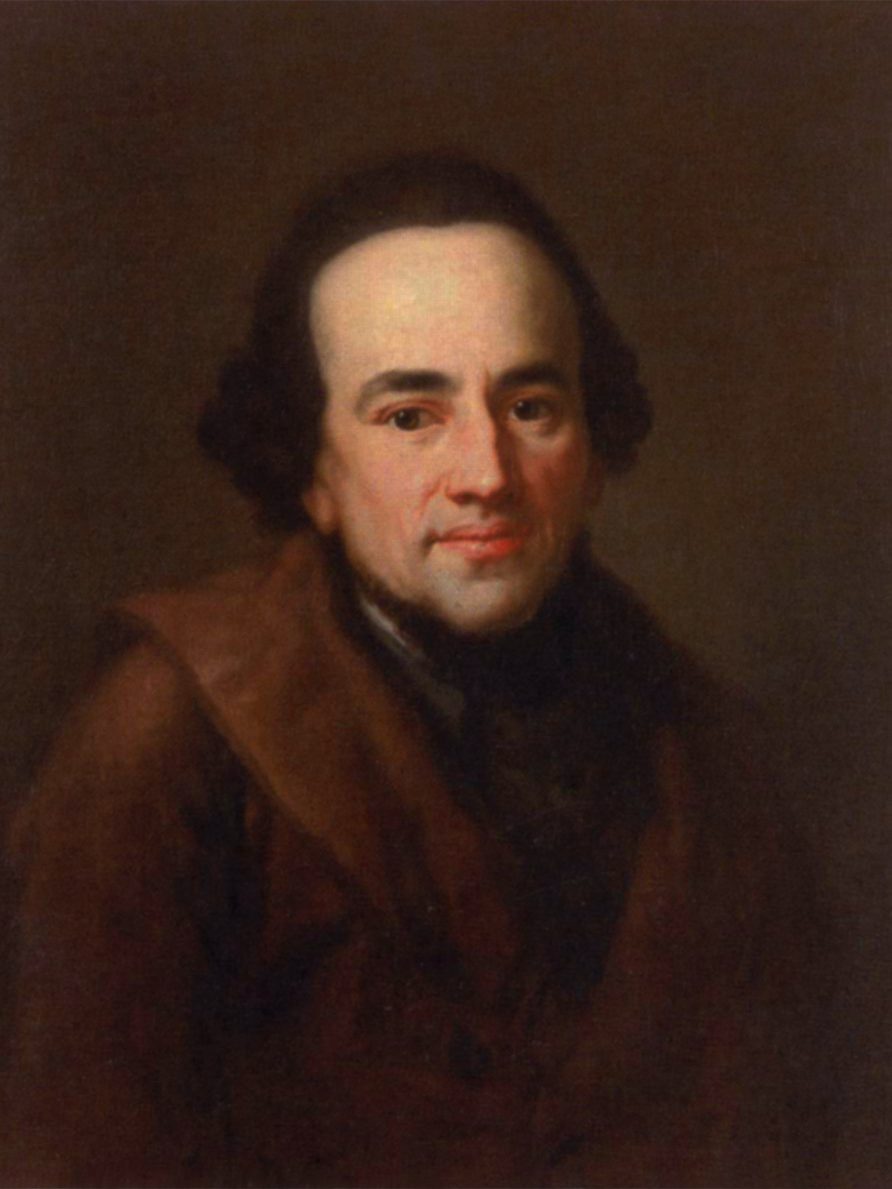
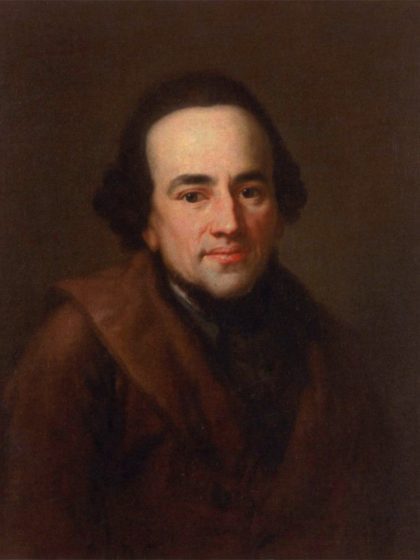
Moses Mendelssohn, 1729–1786 — Letters & Thought1729–1786
After Anton Graff · Public domainsource
Letters & Thought

Moses Mendelssohn

משה מנדלסון

Argued for a state that neither church nor synagogue could coerce.

“Let every man who does not disturb the public welfare, who obeys the law… be allowed to speak as he thinks, to invoke God after his own manner.”

‘Jerusalem, or on Religious Power and Judaism’, 1783

He walked to Berlin at fourteen through the gate reserved for cattle and Jews, taught himself German, Latin and philosophy, and became the leading German essayist of his generation. His Bible translation into German printed in Hebrew letters opened a door his grandchildren walked all the way through — Felix was baptised — which is the whole argument about emancipation in one family.

Dessau → BerlinHaskalah
Rabbi Levi Yitzchok of Berditchev, 1740–1809 — Torah1740–1809
Unknown authorUnknown author · CC BY-SA 2.5source
Torah

Rabbi Levi Yitzchok of Berditchev

רבי לוי יצחק מברדיטשוב

The defence attorney of the Jewish people, arguing with Heaven on their behalf.

Kedushat Levi reads the Torah as a case for Israel, and the stories about him — the tailor's accounting on Yom Kippur, the Din Torah with God — are the folk memory of a rabbi who refused to accept that his community's suffering was deserved. He was driven out of two towns for his Chassidic loyalties before Berditchev.

BerditchevKedushat Levi
Torah

The Alter Rebbe

אדמו"ר הזקן

Wrote the Tanya — Chassidus made rigorous enough to argue with.

וְהִנֵּה, עַל יְדֵי קִיּוּם הַדְּבָרִים הַנִּזְכָּרִים לְעֵיל, לִהְיוֹת גּוּפוֹ נִבְזֶה וְנִמְאָס בְּעֵינָיו, רַק שִׂמְחָתוֹ תִּהְיֶה שִׂמְחַת הַנֶּפֶשׁ לְבַדָּהּ, הֲרֵי זוֹ דֶּרֶךְ יְשָׁרָה וְקַלָּה לָבֹא לִידֵי קִיּוּם מִצְוַת ״וְאָהַבְתָּ לְרֵעֲךָ כָּמוֹךָ״ לְכָל נֶפֶשׁ מִיִּשְׂרָאֵל – לְמִגָּדוֹל וְעַד קָטָן.

Tanya, Part I; Likkutei Amarim 32:1

“Acting on the suggestion mentioned above—to view one’s body with scorn and contempt and finding joy only in the joy of the soul alone—is a direct and easy way to attain the fulfillment of the commandment “You shall love…”

Rabbi Schneur Zalman of Liadi founded Chabad on the premise that the emotions must be governed by comprehension, not bypassed. The Tanya, printed in 1796, maps the two souls and the intermediate man who never sins yet never stops struggling. He also wrote a revised Shulchan Arukh at twenty-five. Imprisoned in Petersburg in 1798 on informers' charges and released on 19 Kislev, still marked as the festival of Chassidus.

Liozna → LiadiTanya
Torah

Rabbi Chaim of Volozhin

רבי חיים מוולוז'ין

Invented the modern yeshiva, and wrote the Misnagdic answer to Chassidus.

כתיב ויברא אלקים את האדם בצלמו בצלם אלקים ברא אותו וכן כתיב כי בצלם אלקים עשה את האדם.

Nefesh HaChayim, Gate I 1:1

“It is written (Bereshit 1:27): “God-Elohi”m84While the English translation of all these names is usually rendered simply as “God,” in Hebrew God has many names, each of which denotes a specific Godly attribute or way of…”

The Vilna Gaon's foremost student founded Volozhin in 1803 as an institution funded by the whole Jewish people rather than one town — the template every yeshiva since has followed. Nefesh HaChayim argues that Torah study itself sustains the worlds, and engages the Chassidic claim of immanence seriously enough to concede much of it.

VolozhinNefesh HaChayim
Torah

Rabbi Nachman of Breslov

רבי נחמן מברסלב

Told stories no one could decode and taught a form of prayer with no fixed words.

דָּוִד הַמֶּלֶךְ ע"ה אָמַר: "כִּי אֲנִי יָדַעְתִּי", "אֲנִי יָדַעְתִּי" דַּיְקָא, כִּי גְּדֻלַּת הַבּוֹרֵא יִתְבָּרַךְ אִי אֶפְשָׁר לוֹמַר לַחֲבֵרוֹ, וַאֲפִלּוּ לְעַצְמוֹ אִי אֶפְשָׁר לְסַפֵּר מִיּוֹם לְיוֹם לְפִי מַה שֶּׁמַּזְרִיחַ לוֹ וּמִתְנוֹצֵץ לוֹ בְּאוֹתוֹ הַיּוֹם – אֵינוֹ יָכוֹל לְסַפֵּר לְעַצְמוֹ לְיוֹם שֵׁנִי הַזְּרִיחָה וְהַהִתְנוֹצְצוּת שֶׁל גְּדֻלַּת הַבּוֹרֵא יִתְבָּרַךְ שֶׁהָיָה לוֹ אֶתְמוֹל. וְעַל־כֵּן אָמַר: "כִּי אֲנִי יָדַעְתִּי", "אֲנִי יָדַעְתִּי" דַּיְקָא, כִּי אִי אֶפְשָׁר לְסַפֵּר כְּלָל.

Sichot HaRan 1:2

“These are King David’s words. “I know": I alone — for the vision of God’s greatness cannot be shared (cf. Alim LeTerufah #135). You may have a vision, but even with yourself you cannot share it. Today you may be…”

The Baal Shem Tov's great-grandson, dead of tuberculosis at thirty-eight, he left Likutei Moharan, thirteen enigmatic tales, and hitbodedut — an hour a day alone, speaking to God in one's own language. He appointed no successor. Two centuries on, tens of thousands travel to Uman for Rosh Hashanah, which he asked them to do.

Medzhybizh → Umanhitbodedut
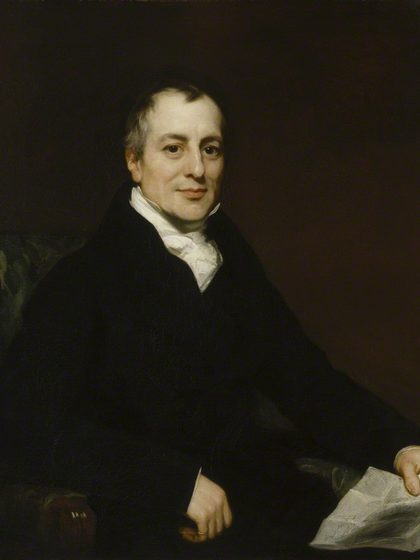
David Ricardo, 1772–1823 — Economics1772–1823
Thomas Phillips · Public domainsource
Economics

David Ricardo

דוד ריקרדו

Comparative advantage — the least intuitive true idea in economics.

“Under a system of perfectly free commerce, each country naturally devotes its capital and labour to such employments as are most beneficial to each.”

‘On the Principles of Political Economy and Taxation’, 1817

The third of seventeen children of a Sephardic broker who came to London from Amsterdam, he made a fortune on the Stock Exchange, retired at forty-two, bought a seat in Parliament, and produced the theory of rent, the labour theory of value that Marx would take up, and the demonstration that trade benefits both parties even when one is better at everything.

Londoncomparative advantage
Torah

Rabbi Eliezer Papo

רבי אליעזר פאפו

Alphabetical mussar for people with no time to learn mussar.

ואליכם אישים אקרא: אחי ועמי, לקוח את ספר התורה הזה ובזה וכזה למדו היטב לטוב לכם, שמעו ותחי נפשכם, ששון ושמחה תשיגו בעולם הזה ובעולם הבא גילה אחר גילה. חזק ונתחזק בעד אלקינו, נחוס על כבוד קונינו אשר בעונותינו הוא עומד בתוך הגולה. לכו ונשובה אל ה', נעבוד אותו בששון ושמחה כמשוש חתן על כלה. לעורר את האהבה ולחבר הדודים יחדיו בגילה. אולי יתעשת האלקים ויחיש לנו הגאולה. כן יהי רצון במהרה בימנו אמן:

Pele Yoetz, Introduction 3

Pele Yoetz arranges practical guidance by subject from aleph to tav — anger, business, guests, speech — in Ladino-inflected Hebrew addressed to a working person rather than a scholar. Rav of Silistra in Bulgaria, he died at forty-three; the book travelled with the Sephardic diaspora and is still the first mussar sefer in many homes.

Sarajevo → SilistraPele Yoetz
Torah

The Izhbitzer Rebbe

האיז'ביצער

Pushed divine providence further than anyone before him, and was condemned for it.

אֶעֱשֶׂה לוֹ עֵזֶר כְּנֶגְדּוֹ. בֵּיאֵר הָעִנְיָן, כִּי כֵן הוּא רְצוֹן הַבּוֹרֵא יִתְ' שֶׁיִּצְמַח לָאָדָם עֵזֶר וְסִיַּעְתָּא מִדָּבָר שֶׁהוּא כְּנֶגְדּוֹ, וְהַיְינוּ כְּמוֹ הַתַּלְמִיד לְהָרַב, כְּמוֹ שֶׁמָּצִינוּ (בבא מציעא פ"ד.) עַל ר"ש בֶּן לָקִישׁ נֶגֶד ר' יוֹחָנָן דְּהָוֵי מַקְשֵׁי לֵיהּ כ"ד קוּשְׁיָתָא וּמְפָרֵק לֵיהּ כ"ד פְּרִיקִין וּמִמֵּילָא רַוְוחָא שְׁמַעְתָּא וְלֹא כְּר"א דְּאָמַר לֵיהּ תַּנְיָא דִּמְסַיֵּיעַ לָךְ, כִּי ע"י שֶׁהָאָדָם יִרְאֶה מַה שֶׁמַּקְשִׁין לוֹ אָז יְחַזֵּק דְּבָרָיו בְּיוֹתֵר רְאָיוֹת וְיֵצְאוּ דְּבָרָיו הֵיטֵב לָאוֹר.

Mei HaShiloach, Volume I, Genesis, Bereshit 9

““… I will make him a helper opposite him.” (Bereshit, 2:18)It is the Creator’s will that salvation comes to man from that which opposes him, like the challenges of a student to a teacher.12From the thoughtful criticisms…”

Rabbi Mordechai Yosef Leiner broke from Kotzk on Simchas Torah 1839 and taught in Mei HaShiloach that every act, including sin, is finally the will of the Creator working through a person who cannot yet see it. The book was published anonymously and burned in some quarters. Rabbi Zadok HaKohen of Lublin was his student, and the school runs from there into the present.

IzhbitzaMei HaShiloach
Torah

The Malbim

מלבי"ם

Proved from inside the text that no word of Tanach is redundant.

והיו למאורות ברקיע השמים. וגם שכולם יהיו מאורות ברקיע השמים שיתנו אור זל"ז שכל כוכב משליך מאורו שקבל מן השמש על כוכב המקבל לו, כמו שתשליך הירח ניצוציו על הארץ, ותכלית כולם הוא להאיר על הארץ שהוא התכלית בבריאת כולם, וכמו שהתבאר באורך בפי' תהלות סי' ח' שע"ז אמר מה אדיר שמך בכל הארץ. ויהי כן טבע זו נשאר במאורות שלא ישנו מהלכם ותפקודתם כל ימי עולם, וכבר נמצאו רשימות מחכמי מצרים ומחינא מאלפים שנים, ונתברר שלא שנה שום כוכב את מעגלו מאז עד עתה אף כחוט השערה:

Malbim on Genesis 1:15:1

Rabbi Meir Leibush ben Yechiel Michel answered nineteenth-century biblical criticism on its own philological ground: every apparent synonym in Hebrew carries a distinct sense, every doubled phrase a distinct claim, and the Oral Law is recoverable from the written text by rule. He was jailed on a false denunciation in Bucharest and expelled from several communities for refusing to compromise on kashrus.

Volochysk → KyivTanach
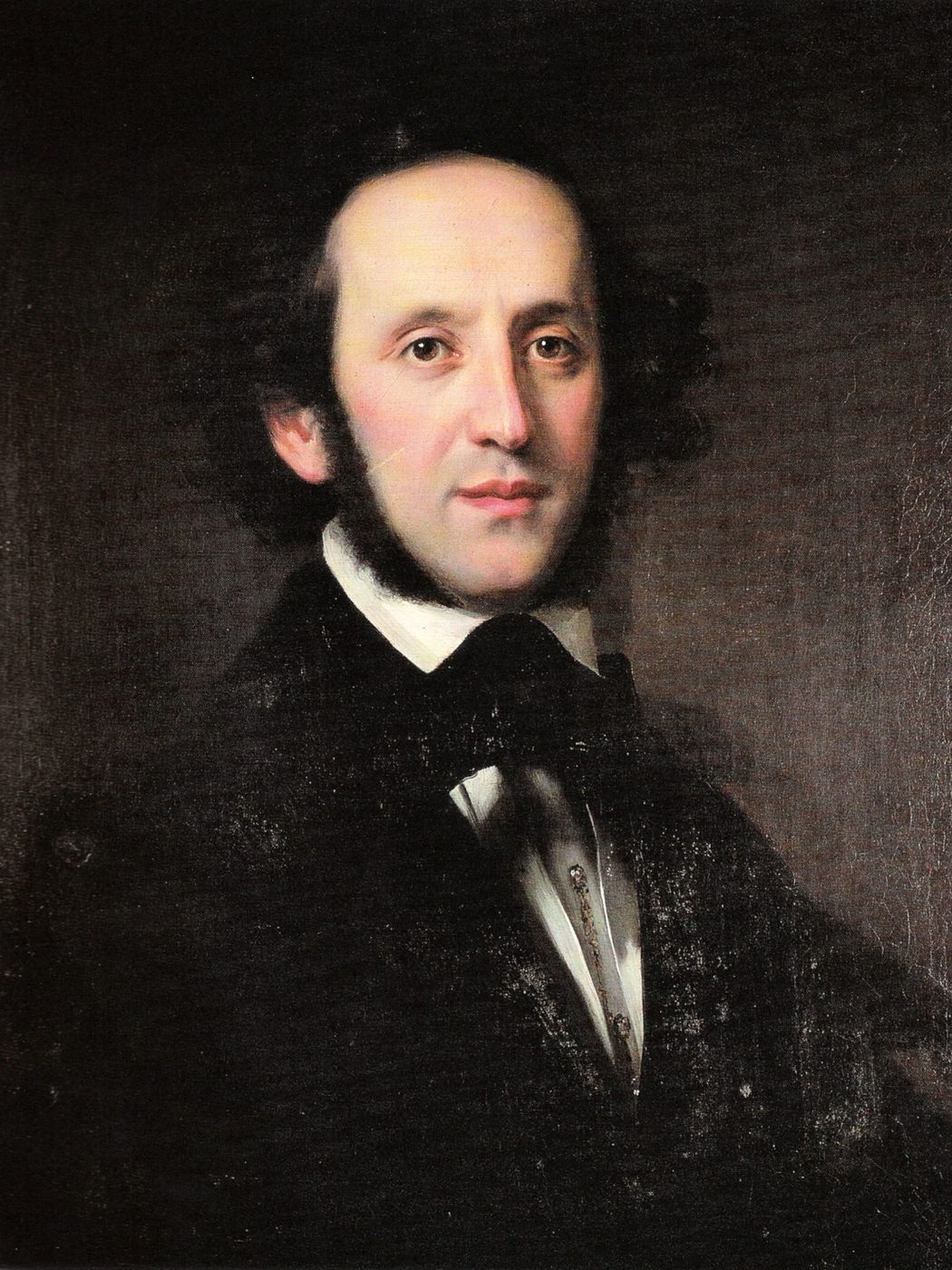
Felix Mendelssohn, 1809–1847 — Music & Image1809–1847
Eduard Magnus · Public domainsource
Music & Image

Felix Mendelssohn

פליקס מנדלסון

Rescued Bach from a century of neglect at the age of twenty.

“It is the ancient time come back again — and to think that it should be an actor and a Jew who give back to the people the greatest Christian music.”

Attributed to Mendelssohn after the 1829 St Matthew Passion revival

Moses Mendelssohn's grandson, baptised as a child, he conducted the first performance of the St Matthew Passion since Bach's death and began the modern Bach revival. He founded the Leipzig Conservatory, wrote the Violin Concerto, the Octet at sixteen, and the Elijah oratorio. The Nazis dynamited his Leipzig monument in 1936; it was rebuilt in 2008.

Hamburg → LeipzigBach revival
Torah

Rabbi Yechiel Michel Epstein

רבי יחיאל מיכל עפשטיין

Rewrote the entire Shulchan Arukh from the Talmud forward, including the laws no one could use.

וכן שנו חכמים במשנה (אבות פרק שלישי): הוי מתפלל בשלומה של מלכות, שאלמלא מוראה – איש את רעהו חיים בלעו. ובזמן בית שני היו נכנעים למלכי פרס ויון, וקסרי רומי. וקודם החורבן צעק בקול גדול אבי התורה שבעל פה, רבן יוחנן בן זכאי, ותלמידיו ר"א ורבי יהושע, למסור את ירושלים ביד קיסר רומי. ואותם האנשים אשר לא רצו בזה – קראום חכמי התלמוד בלשון "בריוני", כלומר: אנשים פראים ורעים, כמבואר בתלמוד גיטין (נו ב).

Arukh HaShulchan, Introduction 6

The Arukh HaShulchan runs each law from its Talmudic source through the rishonim to a ruling, rather than starting from Karo's text — the opposite method to the Mishnah Berurah, written at the same time and in the same language, and still the reference for those who want to see how a ruling was arrived at. He also covered the sections that would only apply again with a Temple.

NovardokArukh HaShulchan
Levi Strauss, 1829–1902 — Trade & Industry1829–1902
UNESCO/Michel Ravassard · CC BY 3.0source
Trade & Industry

Levi Strauss

לוי שטראוס

Put rivets in a pair of work trousers and dressed the next two centuries.

“I do not think large fortunes cause happiness to their owners, for immediately those who possess them become slaves to their wealth.”

Interview, San Francisco, 1895

Löb Strauss of Buttenheim arrived in New York at eighteen and went west with the Gold Rush to sell dry goods to miners. The tailor Jacob Davis had the idea of riveting the stress points; he could not afford the patent, so in 1873 they filed it together. Strauss endowed scholarships at Berkeley that are still awarded.

Buttenheim → San Franciscopatent 1873
Wilhelm Steinitz, 1836–1900 — Games & Play1836–1900
Schumann, Fritz · Public domainsource
Games & Play

Wilhelm Steinitz

וילהלם שטייניץ

First world chess champion, and the first person to treat chess as a science.

“Chess is not for the faint-hearted; it absorbs a person entirely.”

Attributed

The thirteenth child of a Prague hardware dealer in the ghetto, he replaced romantic sacrifice with positional theory — accumulate small advantages, and the attack follows by itself. Every modern player is working inside his framework. He held the title from 1886 to 1894 and died in poverty in a New York asylum.

Prague → New Yorkfirst champion
Torah

The Chofetz Chaim

החפץ חיים

Turned the laws of speech into a discipline, and wrote the halachic reference of the century.

כְּתִיב (משלי כ"א, כ"ג): "שֹׁמֵר פִּיו וּלְשׁוֹנוֹ שֹׁמֵר מִצָּרוֹת נַפְשׁוֹ". וּלְהָבִין הָעִנְיָן מַה שֶּׁפֵּרֵט הַכָּתוּב שְׁמִירַת הַפֶּה וְהַלָּשׁוֹן לִמְנִיעַת צָרָה מֵהַנֶּפֶשׁ, יוֹתֵר מִכָּל הָעִנְיָנִים, אֲשֶׁר צָרִיךְ הָאָדָם הַשָּׁלֵם לִשְׁמֹר בִּימֵי חַיָּיו, עַיֵּן בִּמְפָרְשֵׁי הַפְּשָׁט. וְגַם אֲנִי אֶעֱנֶה אֶת חֶלְקִי אֲשֶׁר חַנַּנִי ה', וּבָזֶה נָבִין גַּם כֵּן מַה שֶּׁכָּתוּב (תהילים ל"ד י"ג): "מִי הָאִישׁ הֶחָפֵץ חַיִּים אֹהֵב יָמִים לִרְאוֹת טוֹב, נְצֹר לְשׁוֹנְךָ מֵרָע" וְגוֹ'.

Shemirat HaLashon, Book I, Introduction 1

“It is written (Proverbs 21:23), "One who keeps an eye on his mouth and tongue protects his life from trouble." In order to comprehend chaperoning the mouth and tongue and preventing life trouble which the Scripture…”

Rabbi Yisrael Meir Kagan ran a grocery in Radin that his wife kept, priced at cost, while he wrote. Sefer Chofetz Chaim (1873) was the first systematic codification of lashon hara; the Mishnah Berurah, twenty-eight years in the writing, is the standard commentary on Orach Chaim wherever Ashkenazim daven. He was ninety-five and still writing on the laws of the Temple, expecting to need them.

RadinMishnah Berurah
Torah

The Sfas Emes

שפת אמת

A weekly Torah of extraordinary compression, delivered for thirty-five years.

במדרש ואהי' אמון כו' אומן הביט בתורה וברא העולם. וודאי הי' יכול הקב"ה לברוא העולם בלי התורה. אך כי כל הבריאה לטובת הנבראים. ולזאת הי' הבריאה באופן שיוכל האדם ללמוד עבודת הש"י מכל דבר. וז"ש הביט בתורה וברא. פי' שבכל דבר מהבריאה יש בו ענין התורה ללמוד איזה הנהגה או סוד. וזה שהתורה מתגאה עצמה שידע האדם שעיקר הכל התורה שהרי כל הבריאה הי' ע"פ התורה מכלל שהיא עיקר טובת האדם כנ"ל:

Sefat Emet, Genesis, Bereshit 3:2

“The Midrash "I will be an Amon" (Bereishis Rabbah 1:1) states: "Just as a builder first has plans, so too HaShem looked at the Torah and created the world." It is clear that HaShem could have created the world without…”

Rabbi Yehuda Aryeh Leib Alter took the Gerrer leadership at twenty-three and spoke each Shabbos in short, tightly built pieces, transcribed after Shabbos from memory. The nekudah penimis — the inner point of Divine vitality inside every created thing and every Jew — is the axis of the whole work. Ger became the largest Chassidus in Poland under him.

Góra KalwariaSfas Emes
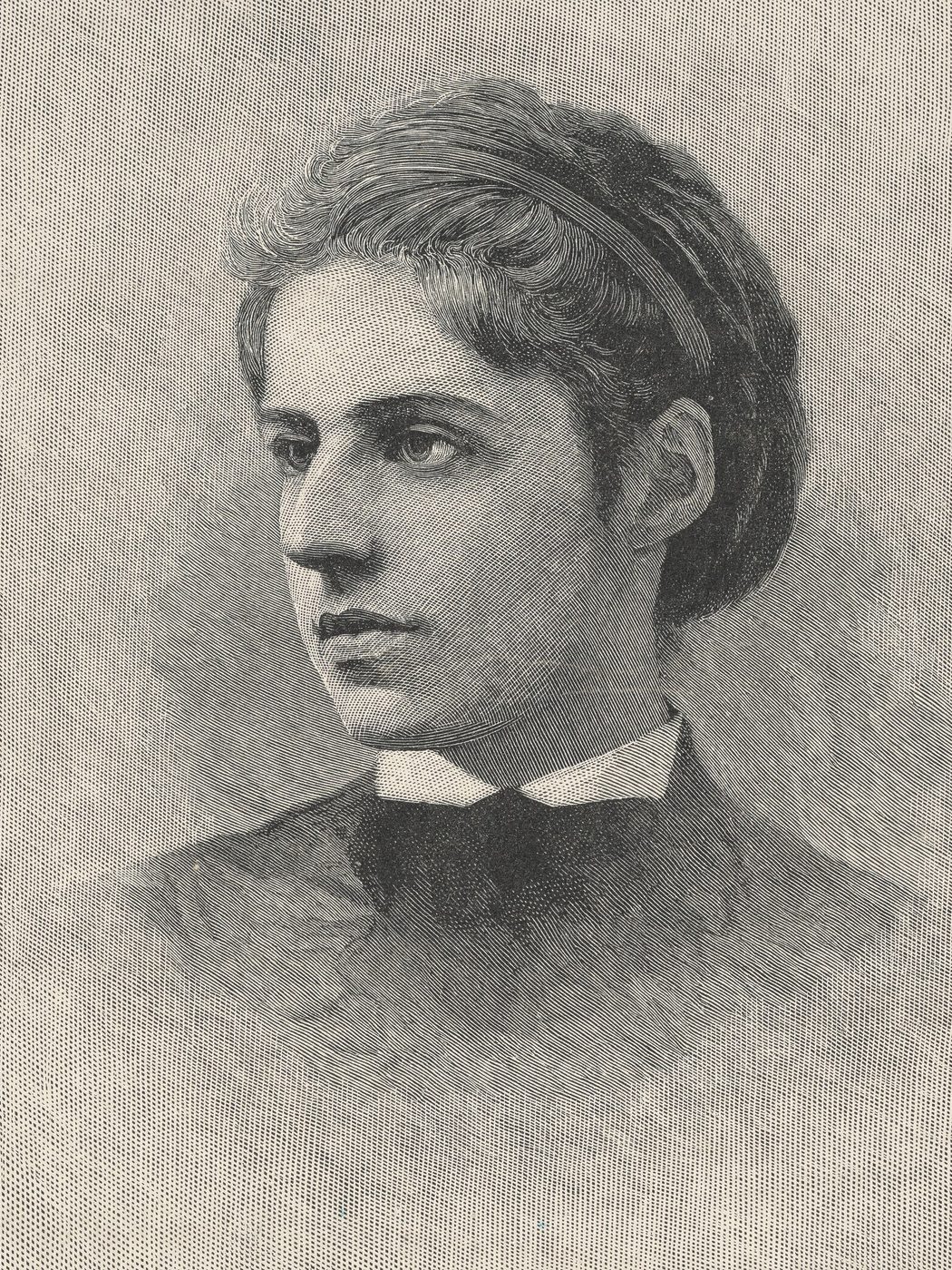
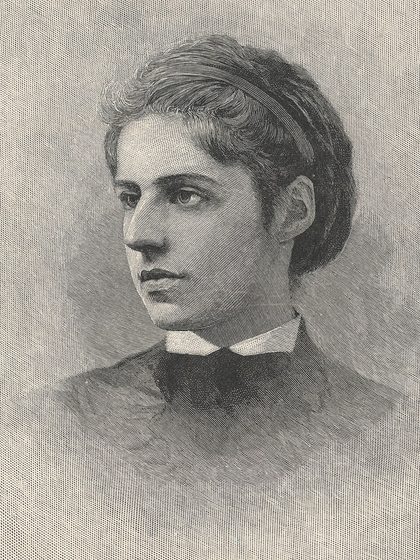
Emma Lazarus, 1849–1887 — Letters & Thought1849–1887
T. Johnson and W. Kurtz · Public domainsource
Letters & Thought

Emma Lazarus

אמה לזרוס

Wrote the fourteen lines that told America what it was for.

“Give me your tired, your poor, your huddled masses yearning to breathe free.”

‘The New Colossus’, 1883

A fourth-generation Sephardic New Yorker, she wrote the sonnet for an auction to fund the Statue of Liberty's pedestal, having spent the previous two years working with refugees from the Russian pogroms on Ward's Island. It was ignored at the unveiling and only mounted inside the pedestal in 1903, sixteen years after she died at thirty-eight.

New YorkThe New Colossus
Paul Ehrlich, 1854–1915 — Medicine & Life1854–1915
Eduard Blum · CC BY 4.0source
Medicine & LifeNobel 1908

Paul Ehrlich

פאול ארליך

Invented chemotherapy: a compound aimed at the pathogen and not the patient.

“Wir müssen zielen lernen — we must learn to aim.”

On the principle of the ‘magic bullet’, c. 1906

He reasoned from staining — if a dye binds selectively to a microbe, a drug can be built to do the same — and worked through 605 failures before compound 606, Salvarsan, became the first effective treatment for syphilis in 1909. The side-chain theory of antibody binding earned the 1908 Nobel and founded immunology as a chemical science.

Nobel 1908Silesia → Frankfurt
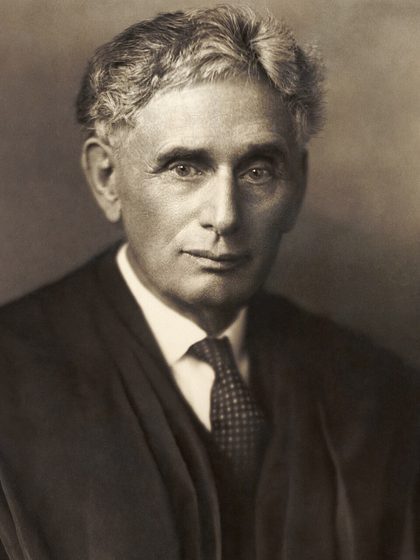
Louis Brandeis, 1856–1941 — Law & Justice1856–1941
Harris & Ewing · Public domainsource
Law & Justice

Louis Brandeis

לואי ברנדייס

Argued facts into constitutional law, and invented the right to privacy.

“Sunlight is said to be the best of disinfectants; electric light the most efficient policeman.”

‘Other People's Money and How the Bankers Use It’, 1914

His 1890 Harvard Law Review article with Samuel Warren argued for ‘the right to be let alone’ and is the origin of American privacy law. The 1908 Brandeis brief in Muller v. Oregon put two pages of law and ninety-five of social data before the Court, changing what an argument could contain. Confirmed in 1916 after four months of hostile hearings, he was the first Jewish Justice.

Louisville → Supreme Courtprivacy
Sigmund Freud, 1856–1939 — The Mind1856–1939
Max Halberstadt · Public domainsource
The Mind

Sigmund Freud

זיגמונד פרויד

Proposed that most of the mind is hidden from the person who has it.

“Wo Es war, soll Ich werden — where id was, there ego shall be.”

‘New Introductory Lectures on Psycho-Analysis’, 1933

Dreams, slips, jokes and symptoms were all read as evidence of a mental life running beneath awareness. Much of the specific apparatus has not survived clinical testing; the frame — that childhood shapes adult character, that defence and repression exist, that talking is treatment — is now so absorbed it is invisible. He escaped Vienna in June 1938; four of his sisters were murdered in the camps.

Freiberg → Vienna → Londonpsychoanalysis
Eliezer Ben-Yehuda, 1858–1922 — Conscience1858–1922
Ya'ackov Ben-Dov · Public domainsource
Conscience

Eliezer Ben-Yehuda

אליעזר בן-יהודה

Brought a liturgical language back into daily speech — the only case on record.

“The Hebrew language can live only if we revive the nation and return it to its fatherland.”

‘A Burning Question’, HaShachar, 1879

He raised his son Ben-Zion as the first child in eighteen centuries to hear only Hebrew at home, compiled a seventeen-volume dictionary, and coined the everyday words the language lacked — glida, ribah, iton, milon. He was imprisoned by the Ottomans and boycotted by parts of the old yishuv who held that the holy tongue should not be used to ask for bread.

Luzhki → Jerusalemmodern Hebrew
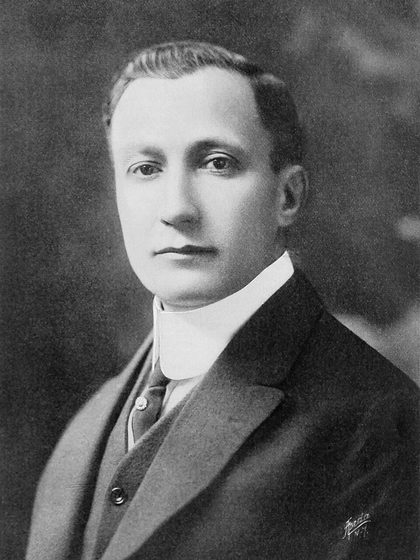
Adolph Ochs, 1858–1935 — Trade & Industry1858–1935
unknown artists · Public domainsource
Trade & Industry

Adolph Ochs

אדולף אוקס

Bought a failing newspaper and made impartiality its selling point.

“All the news that's fit to print.”

Motto adopted for The New York Times, 1896

Son of Bavarian immigrants in Knoxville, a printer's devil at eleven, he bought the near-bankrupt New York Times in 1896 with $75,000 mostly borrowed. Against a market of shouting partisan papers he sold restraint, dropped the price to a penny, and grew circulation tenfold. The paper stayed in the family.

Cincinnati → New YorkThe Times
L. L. Zamenhof, 1859–1917 — Letters & Thought1859–1917
Unknown authorUnknown author · Public domainsource
Letters & Thought

L. L. Zamenhof

אליעזר לודוויג זמנהוף

Invented a language from nothing so that nobody would have to speak somebody else's.

“In Białystok the inhabitants were divided into four peoples… and I was brought up as an idealist.”

Letter to Nikolai Borovko, 1895

An ophthalmologist in Warsaw, he published Esperanto in 1887 under the pen name Doktoro Esperanto — one who hopes. He built it to be learnable in months and owned by nobody, having grown up in a city where four languages met and did not get on. Two million people have learned it. All three of his children were murdered in the Shoah.

Białystok → WarsawEsperanto
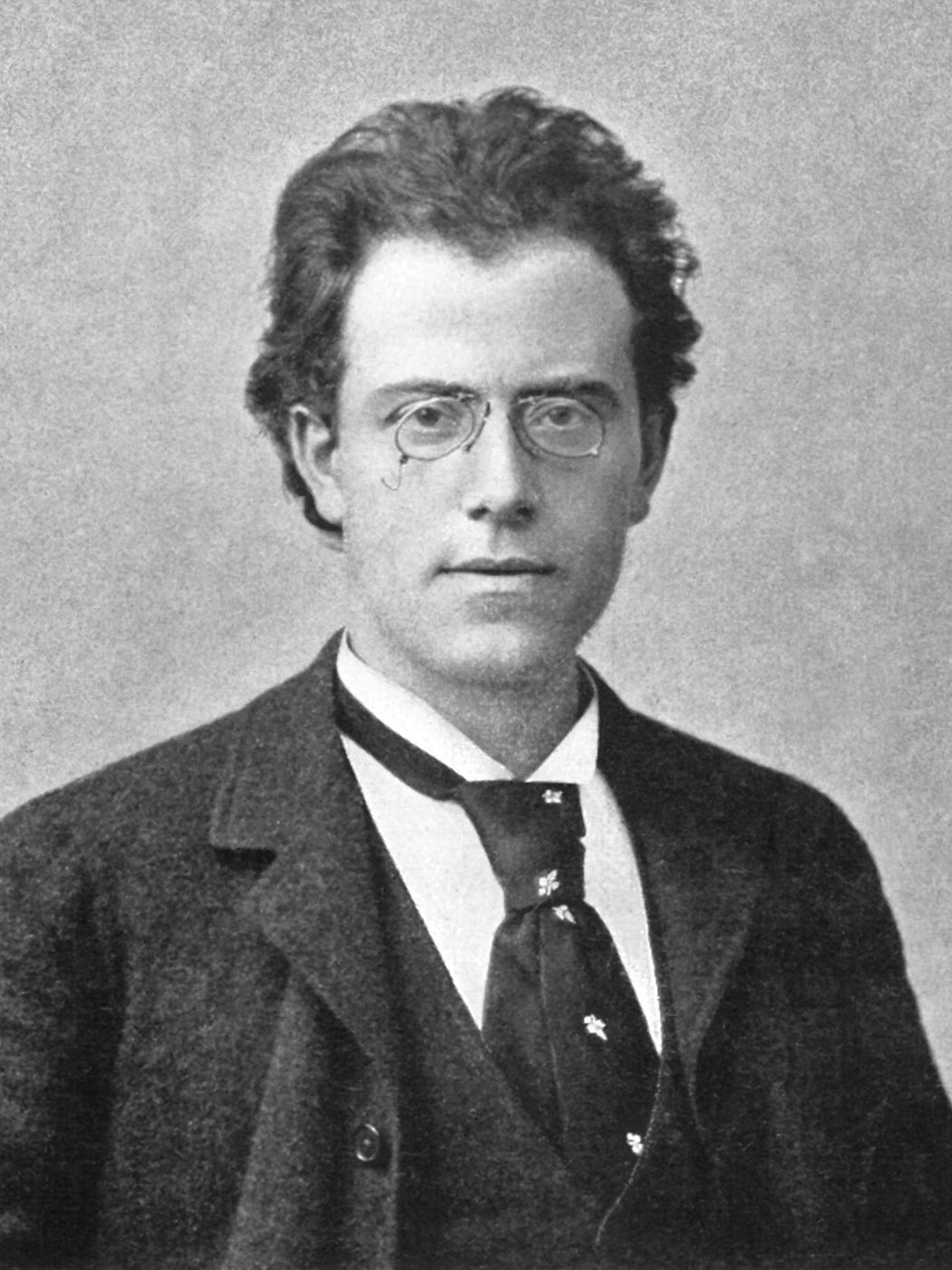
Gustav Mahler, 1860–1911 — Music & Image1860–1911
Leonard Berlin / E. Bieber · Public domainsource
Music & Image

Gustav Mahler

גוסטב מאהלר

Made the symphony hold everything — and was told he could not conduct in Vienna as a Jew.

“A symphony must be like the world. It must contain everything.”

To Jean Sibelius, Helsinki, 1907

Nine completed symphonies and Das Lied von der Erde pulled folk tunes, military bands, birdcall and funeral marches into a form that had refused them. To take the directorship of the Vienna Court Opera in 1897 he converted to Catholicism, and said of himself that he was thrice homeless: a Bohemian in Austria, an Austrian among Germans, and a Jew throughout the world.

Kaliště → Viennanine symphonies
Theodor Herzl, 1860–1904 — Conscience1860–1904
Carl Pietzner · Public domainsource
Conscience

Theodor Herzl

תאודור הרצל

Turned a two-thousand-year prayer into a political programme with a timetable.

“If you will it, it is no dream.”

Epigraph to ‘Altneuland’, 1902

A Viennese journalist covering the Dreyfus trial who concluded that emancipation had failed, he published ‘Der Judenstaat’ in 1896 and convened the First Zionist Congress in Basel a year later. His diary entry afterwards: at Basel I founded the Jewish State — perhaps in five years, certainly in fifty. Israel was declared fifty years and nine months later. He died at forty-four.

Budapest → Basel1897
Alfred Stieglitz, 1864–1946 — Built & Designed1864–1946
Alfred Stieglitz · Public domainsource
Built & Designed

Alfred Stieglitz

אלפרד שטיגליץ

Argued photography into the museum, and lost twenty years doing it.

“In photography there is a reality so subtle that it becomes more real than reality.”

Attributed; consistent with his Camera Work editorials

Through Camera Work and the 291 gallery he insisted a photograph could be art, and while he was at it gave America its first sight of Rodin, Matisse, Cézanne and Picasso. The Steerage (1907) is the picture he considered his best. He married Georgia O'Keeffe and photographed her more than three hundred times.

Hoboken → New YorkCamera Work
Torah

Rav Avraham Yitzchak HaKohen Kook

הרב אברהם יצחק הכהן קוק

Read secular Zionist pioneers as unwitting participants in a holy process.

אֶרֶץ יִשְׂרָאֵל אֵינֶנָּהּ דָּבָר חִיצוֹנִי, קִנְיָן חִיצוֹנִי לָאֻמָּה, רַק בְּתוֹר אֶמְצָעִי לַמַּטָּרָה שֶׁל הַהִתְאַגְּדוּת הַכְּלָלִית וְהַחְזָקָת קִיוּמָהּ הֶחָמְרִי אוֹ אֲפִלּוּ הָרוּחָנִי. אֶרֶץ יִשְׂרָאֵל הִיא חֲטִיבָה עַצְמוּתִית קְשׁוּרָה בְּקֶשֶׁר חַיִּים עִם הָאֻמָּה, חֲבוּקָה בִּסְגֻלוֹת פְּנִימִיּוֹת עִם מְצִיאוּתָהּ.

Orot, Lights from Darkness, Land of Israel 1:1

“The land of Israel is not an external thing, an external national acquisition, a means to the goal of general unity and strengthening of the physical or even spiritual. The land of Israel is an intrinsic section of the…”

First Ashkenazi Chief Rabbi of Mandatory Palestine, a kabbalist writing in ecstatic prose, he insisted that the halachically indifferent chalutzim draining swamps were doing sacred work and that the correct response to heresy was to find the truth inside it. Both the religious-Zionist mainstream and its sharpest critics claim him; the writing is capacious enough for both.

Latvia → JerusalemOrot
Fritz Haber, 1868–1934 — Matter & Chemistry1868–1934
Unknown authorUnknown author · Public domainsource
Matter & ChemistryNobel 1918

Fritz Haber

פריץ הבר

Pulled fertiliser out of thin air, and poison gas with the same hands.

“In peace time a scientist belongs to the world, but in war time he belongs to his country.”

Recorded remark, 1915

Fixing atmospheric nitrogen into ammonia is why roughly half the people alive are fed; the Haber–Bosch process is arguably the most consequential chemical reaction ever industrialised. He also directed Germany's chlorine gas programme at Ypres, over his wife Clara's objection — she shot herself days later. In 1933 the Nazis expelled him anyway. He died in Basel, in transit.

Nobel 1918Breslau → Baselammonia
Emanuel Lasker, 1868–1941 — Games & Play1868–1941
Unknown authorUnknown author · CC BY-SA 3.0 desource
Games & Play

Emanuel Lasker

עמנואל לסקר

Held the world championship for twenty-seven years — nobody has come close since.

“On the chessboard lies and hypocrisy do not survive long.”

‘Lasker's Manual of Chess’, 1925

Also a serious mathematician: the Lasker–Noether theorem in commutative algebra is partly his, and Emmy Noether generalised it. Son of a chazzan in Barlinek, he played the opponent rather than the position, choosing objectively inferior moves that he knew that particular man would handle badly. Driven out by the Nazis at sixty-five, he died in New York.

Barlinek → New York27 years champion
Benjamin Cardozo, 1870–1938 — Law & Justice1870–1938
Harris & Ewing, Inc. · Public domainsource
Law & Justice

Benjamin Cardozo

בנימין קרדוזו

Rebuilt the law of negligence around a duty owed to strangers.

“Danger invites rescue. The cry of distress is the summons to relief.”

Wagner v. International Railway Co., 1921

MacPherson v. Buick (1916) swept away the requirement of a contract before a manufacturer could be sued for a defective product — the foundation of modern product liability. Palsgraf v. Long Island Railroad (1928) defined the outer limit of foreseeable duty and is still the first case American law students argue about. Descended from Sephardic Jews who reached New Amsterdam before the Revolution.

New York → Supreme Courtnegligence
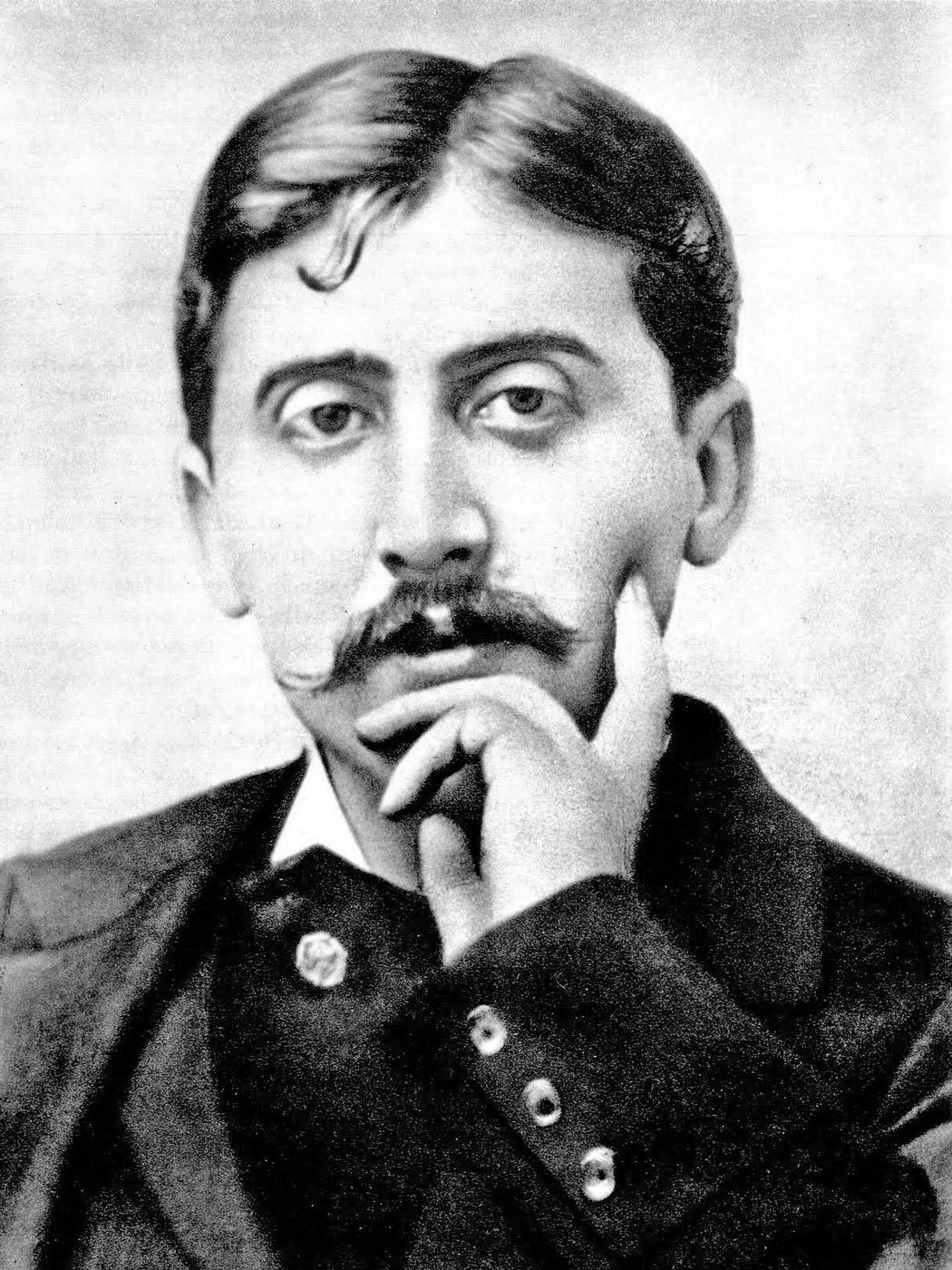
Marcel Proust, 1871–1922 — Letters & Thought1871–1922
Otto Wegener · Public domainsource
Letters & Thought

Marcel Proust

מרסל פרוסט

Three thousand pages on how memory actually works, thirty years before anyone measured it.

“The real voyage of discovery consists not in seeking new landscapes, but in having new eyes.”

‘La Prisonnière’, 1923

Born to a Catholic father and a Jewish mother, Jeanne Weil, to whom the whole book is a monument, he signed the petition for Dreyfus in 1898 and put the Affair through the novel as the thing that splits every drawing room in Paris. The first volume was rejected by Gallimard — André Gide called it the worst mistake of his life — and printed at Proust's own expense.

ParisÀ la recherche
Richard Willstätter, 1872–1942 — Matter & Chemistry1872–1942
Unknown authorUnknown author · Public domainsource
Matter & ChemistryNobel 1915

Richard Willstätter

ריכרד ווילשטטר

Worked out the structure of chlorophyll, then resigned over antisemitism.

“I resign because I can no longer be a party to the exclusion of others for their descent.”

Paraphrase of his 1924 resignation statement, Munich

He established the structure of chlorophyll and of the anthocyanin pigments — why leaves are green and flowers are not. In 1924, when Munich's faculty blocked an appointment on racial grounds, he resigned his chair in protest at the height of his career and never returned to a laboratory. He escaped to Switzerland in 1939 with what he could carry.

Nobel 1915Karlsruhe → Locarnochlorophyll
Adolph Zukor, 1873–1976 — Screen1873–1976
Famous Players Film Company, photograph by Apeda Studio · Public domainsource
Screen

Adolph Zukor

אדולף צוקור

Invented the feature film as a business, and lived to be 103 watching it work.

“The public is never wrong.”

Attributed; his stated operating principle at Paramount

An orphan from Ricse in Hungary who reached New York at sixteen with forty dollars sewn into his waistcoat, he worked as a furrier before buying penny arcades. Famous Players — later Paramount — established that audiences would sit for a full-length story with named stars, which is the entire industry. He ran it into his nineties.

Ricse → HollywoodParamount
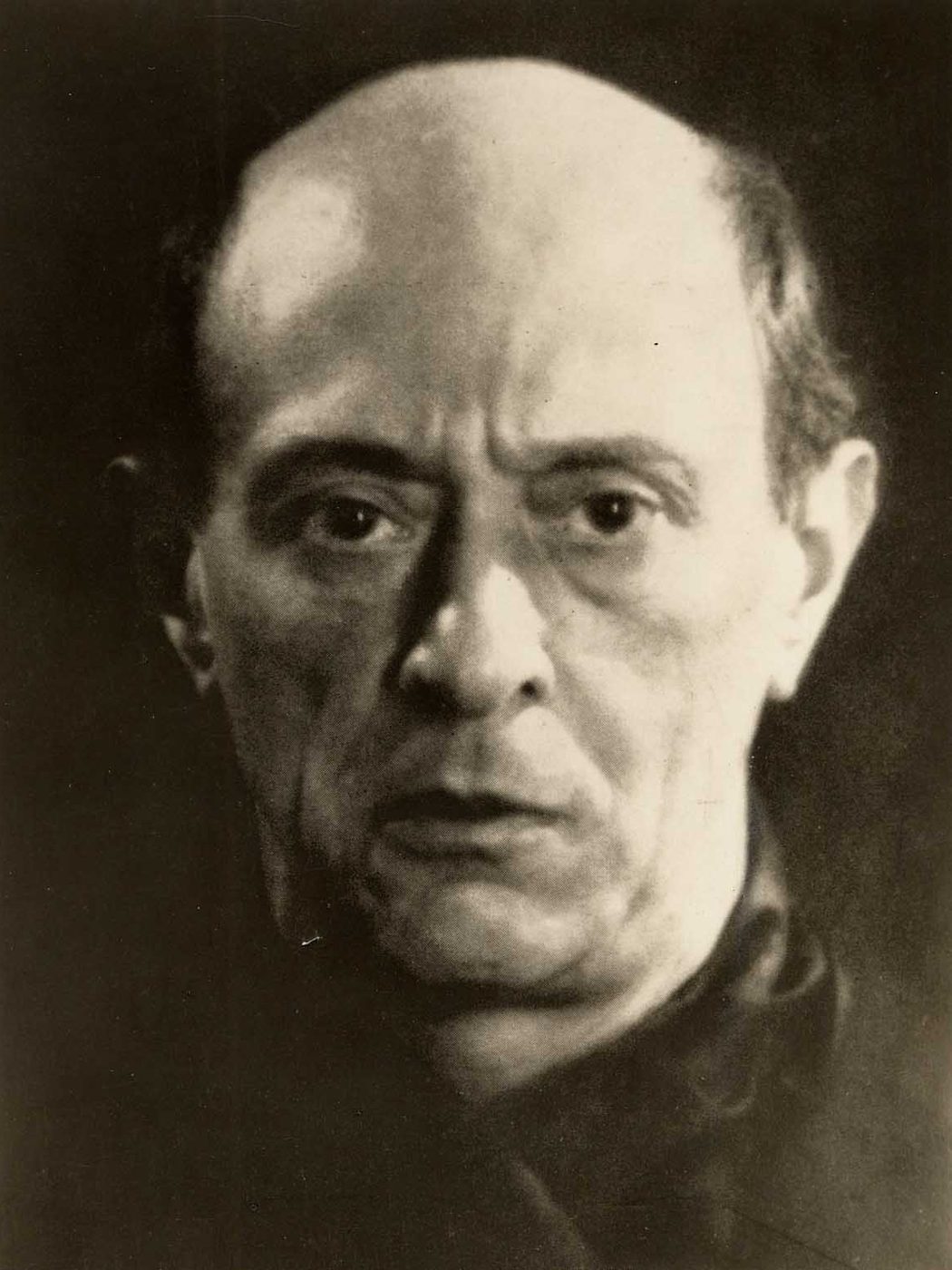
Arnold Schoenberg, 1874–1951 — Music & Image1874–1951
Man Ray · CC BY-SA 2.0source
Music & Image

Arnold Schoenberg

ארנולד שנברג

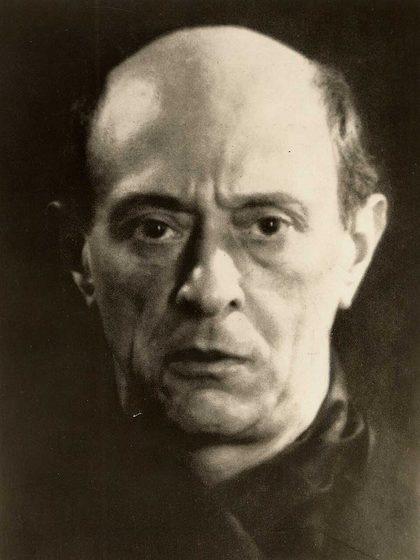
Broke tonality, then built a new law for what replaced it.

“If it is art, it is not for all, and if it is for all, it is not art.”

‘Aphorisms’, Die Musik, 1909

The twelve-tone method gave atonal music a governing structure: all twelve pitches, none privileged, in a fixed row. Driven out of Berlin in 1933, he formally returned to Judaism in a Paris synagogue that year with Marc Chagall as witness, and wrote ‘A Survivor from Warsaw’ in 1947, which ends with the Shema sung by a men's chorus.

Vienna → Los Angelestwelve-tone
Chaim Weizmann, 1874–1952 — Conscience1874–1952
Hugo Mendelson · CC BY-SA 3.0source
Conscience

Chaim Weizmann

חיים ויצמן

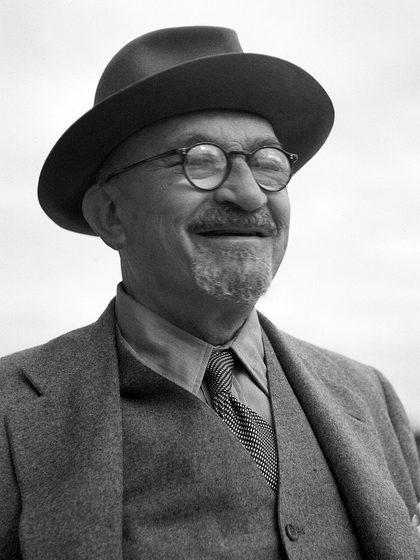
A chemist whose acetone process helped win a war and whose diplomacy produced the Balfour Declaration.

“Miracles sometimes occur, but one has to work terribly hard for them.”

Attributed; consistent with his memoir ‘Trial and Error’, 1949

His bacterial fermentation route to acetone solved Britain's cordite shortage in 1915. The access that gave him in Whitehall was the ground on which the November 1917 Balfour Declaration was negotiated. He founded the research institute at Rehovot that carries his name, and was Israel's first President — a post he described, accurately, as having no power at all.

Motal → RehovotBalfour 1917
Lise Meitner, 1878–1968 — Physics & Cosmos1878–1968
Smithsonian Institution · Public domainsource
Physics & Cosmos

Lise Meitner

ליזה מייטנר

Worked out nuclear fission in exile, and was left off the prize for it.

“Science makes people reach selflessly for truth and objectivity; it teaches people to accept reality, with wonder and admiration.”

Address, 1953

Thirty years of collaboration with Otto Hahn in Berlin ended when the Nuremberg laws forced her out of Germany in 1938. From Sweden, with her nephew Otto Frisch, she read Hahn's puzzling barium result and supplied the explanation: the uranium nucleus had split, releasing the energy her calculation predicted. Hahn alone took the 1944 Nobel. Element 109 is meitnerium.

Vienna → Stockholmmeitnerium
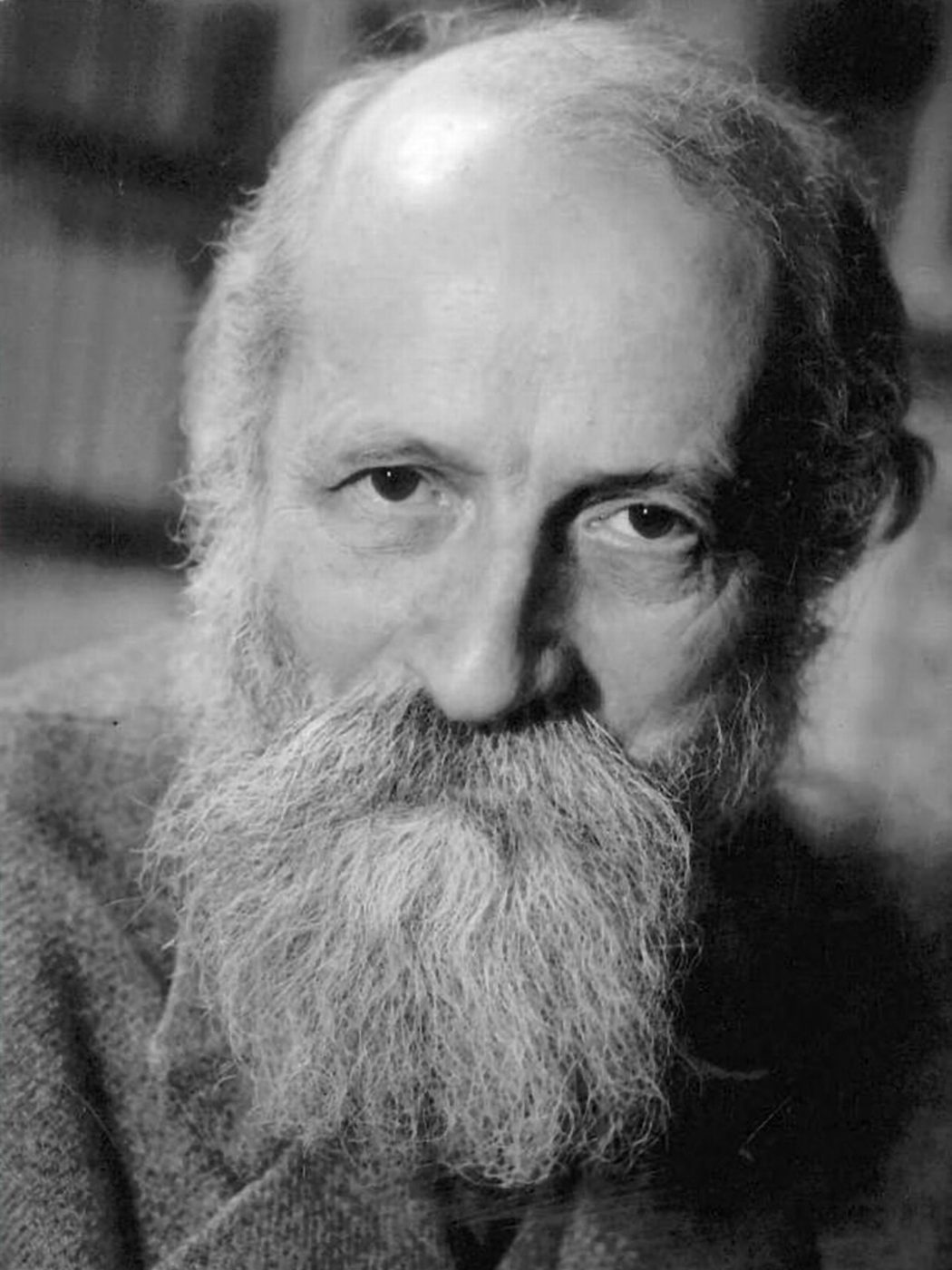
Martin Buber, 1878–1965 — Letters & Thought1878–1965
The David B. Keidan Collection of Digital Images from the Central Zion · Public domainsource
Letters & Thought

Martin Buber

מרטין בובר

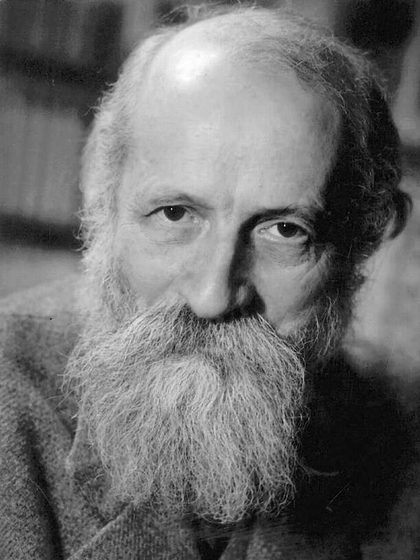
I and Thou: two ways of standing towards everything that exists.

“All real living is meeting.”

‘Ich und Du’, 1923

Raised in Lviv by a grandfather who was a midrash scholar, he collected and retold the Chassidic tales for a German-reading public that had never heard of them, then wrote the small book that distinguished I–It, where the world is used, from I–Thou, where it is met. He left Germany in 1938 for the Hebrew University, and argued for a binational state well past the point where anyone was listening.

Vienna → JerusalemIch und Du
Janusz Korczak, 1878–1942 — Conscience1878–1942
portret bezautorski · Public domainsource
Conscience

Janusz Korczak

יאנוש קורצ'אק

Wrote the children's rights that the UN would adopt fifty years later — and walked with his orphans to the train.

“Children are not the people of tomorrow, but people of today.”

‘How to Love a Child’, 1920

Henryk Goldszmit was a paediatrician, a broadcaster and Poland's best-known children's author, who ran a Warsaw orphanage as a republic with its own parliament, court and newspaper. Offered rescue repeatedly in the ghetto, he refused each time. On 5 August 1942 he led 192 children to the Umschlagplatz and boarded the train to Treblinka with them.

Warsaw5 August 1942
Albert Einstein, 1879–1955 — Physics & Cosmos1879–1955
Ferdinand Schmutzer / Adam Cuerden · Public domainsource
Physics & CosmosNobel 1921

Albert Einstein

אלברט איינשטיין

Rewrote space, time and gravity — and then spent thirty years arguing with what he had started.

“The eternal mystery of the world is its comprehensibility.”

‘Physics and Reality’, Journal of the Franklin Institute, 1936

Four papers in 1905 — the photoelectric effect, Brownian motion, special relativity, E=mc² — were written in his spare hours as a patent clerk in Bern. General relativity followed in 1915: gravity as the curvature of spacetime, confirmed by the 1919 eclipse and again, a century later, by gravitational waves. He was never comfortable with the quantum theory his own photon paper helped begin.

Nobel 1921Ulm → Princeton
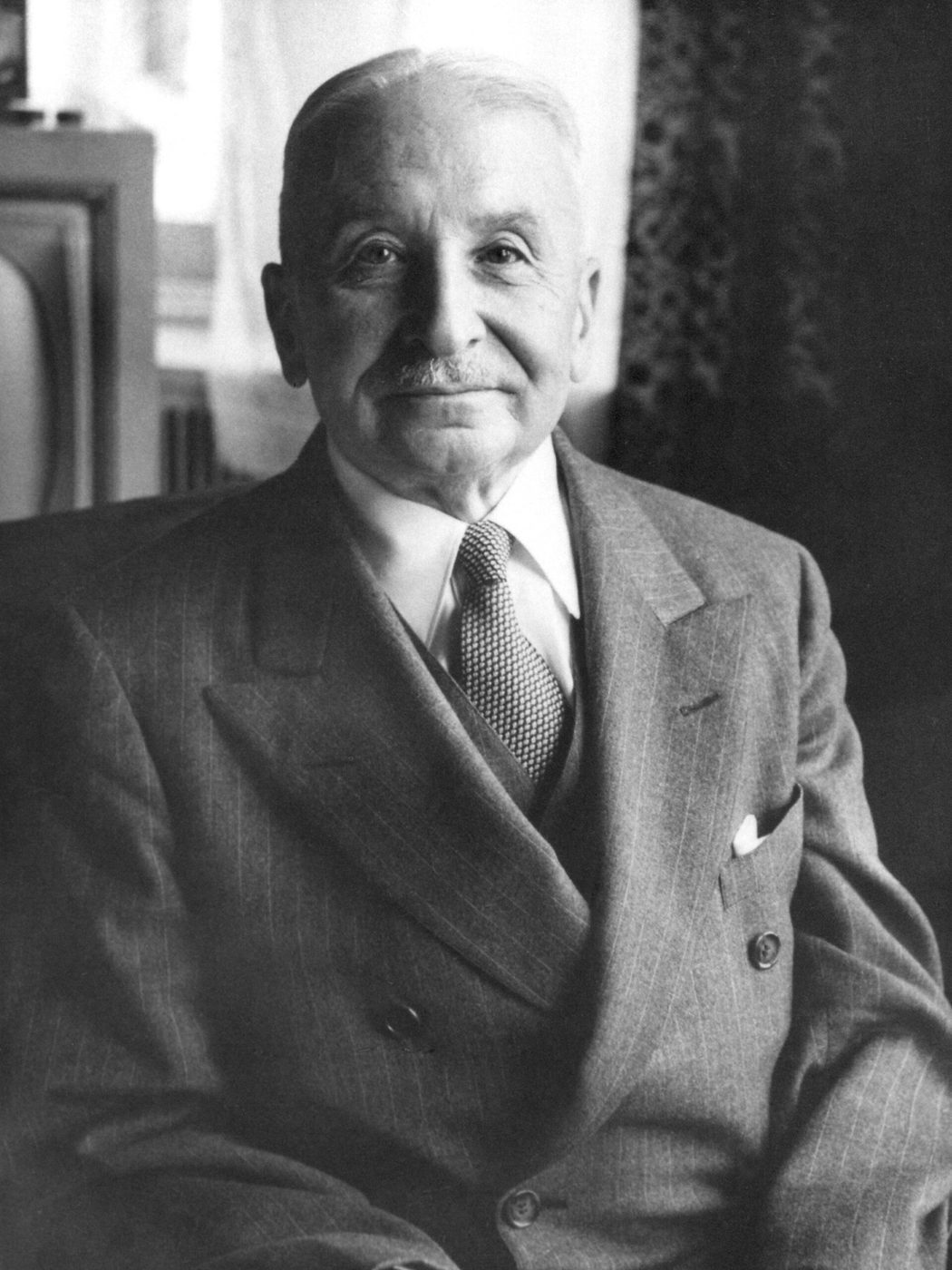
Ludwig von Mises, 1881–1973 — Economics1881–1973
Ludwig von Mises Institute · CC BY-SA 3.0source
Economics

Ludwig von Mises

לודוויג פון מיזס

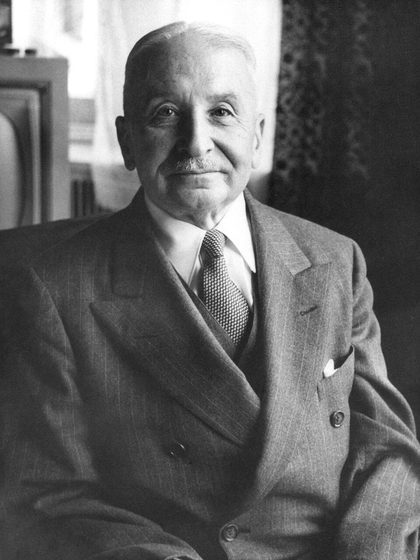
Argued in 1920 that socialism cannot calculate — and set the terms of the century's central economic debate.

“Where there is no free market, there is no pricing mechanism; without a pricing mechanism, there is no economic calculation.”

‘Economic Calculation in the Socialist Commonwealth’, 1920

Without market prices for capital goods, he argued, a planner has no way of knowing which of two production methods wastes less — not a problem of will or information technology but of arithmetic. He left Vienna for Geneva in 1934 and New York in 1940; the Gestapo seized his papers, which surfaced in a Moscow archive in 1996.

Lemberg → New Yorkcalculation debate
Emmy Noether, 1882–1935 — Mathematics & Machines1882–1935
Unknown authorUnknown author Publisher: Mathematical Association of Am · Public domainsource
Mathematics & Machines

Emmy Noether

אמי נתר

Proved that every symmetry in nature hides a conservation law.

“My methods are really methods of working and thinking; this is why they have crept in everywhere anonymously.”

Letter to Helmut Hasse, 1931

Noether's theorem — symmetry in time gives conservation of energy, symmetry in space gives conservation of momentum — is the organising principle beneath modern physics. She lectured for years at Göttingen unpaid and under Hilbert's name because the faculty would not appoint a woman. Dismissed by the Nazis in 1933, she taught at Bryn Mawr until her death two years later.

Erlangen → Bryn Mawrabstract algebra
Max Born, 1882–1970 — Physics & Cosmos1882–1970
Wikimedia Commons · Public domainsource
Physics & CosmosNobel 1954

Max Born

מקס בורן

Read the quantum wave function as a probability — the interpretation that stuck.

“I believe that ideas such as absolute certitude, absolute exactness, final truth, etc., are figments of the imagination which should not be admissible in any field of science.”

‘Natural Philosophy of Cause and Chance’, 1949

The Born rule — that the square of the wave function gives the probability of finding a particle — is the bridge between the mathematics of quantum mechanics and anything a laboratory can measure. It cost him Einstein's agreement and a famous correspondence about God and dice. Driven from Göttingen in 1933, he rebuilt in Edinburgh; the Nobel came twenty-eight years after the work.

Nobel 1954Göttingen → Edinburgh
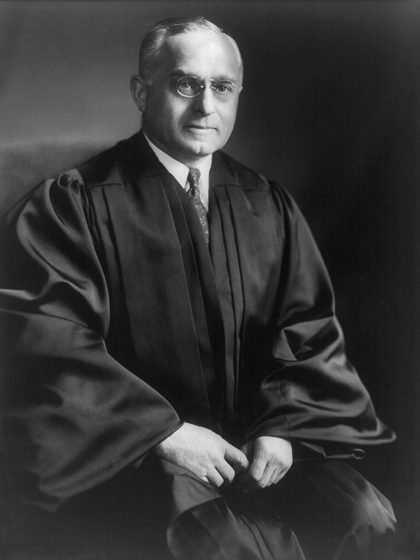
Felix Frankfurter, 1882–1965 — Law & Justice1882–1965
Harris & Ewing · Public domainsource
Law & Justice

Felix Frankfurter

פליקס פרנקפורטר

The immigrant boy who argued for judicial restraint from the bench.

“The history of liberty has largely been the history of the observance of procedural safeguards.”

McNabb v. United States, 1943

He arrived from Vienna at twelve without English, finished top of his class at Harvard Law, co-founded the ACLU, and defended Sacco and Vanzetti in print at real professional cost. On the Court from 1939 he became the leading voice for deference to legislatures — putting him, repeatedly and painfully, on the opposite side from his old allies.

Vienna → Supreme Court
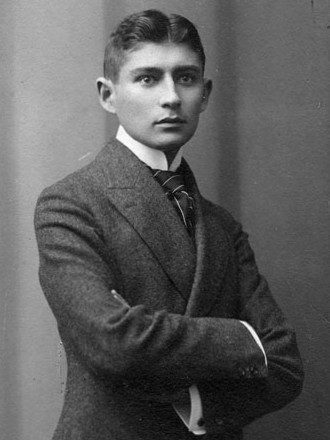
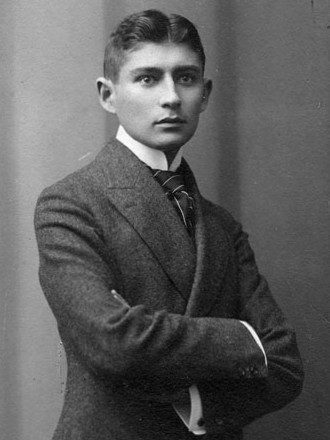
Franz Kafka, 1883–1924 — Letters & Thought1883–1924
Atelier Jacobi: Sigismund Jacobi (1860–1935) · Public domainsource
Letters & Thought

Franz Kafka

פרנץ קפקא

Wrote the twentieth century's bureaucracy before it had happened.

“A book must be the axe for the frozen sea within us.”

Letter to Oskar Pollak, January 1904

An insurance clerk in Prague who published almost nothing and instructed Max Brod to burn the rest. Brod refused, and ‘The Trial’, ‘The Castle’ and ‘Amerika’ appeared posthumously. He studied Hebrew in his last years and planned to move to Palestine. His three sisters were murdered — Elli and Valli at Chełmno, Ottla at Auschwitz, having volunteered to accompany children from Theresienstadt.

Pragueposthumous
Casimir Funk, 1884–1967 — Medicine & Life1884–1967
Unknown photographer · Public domainsource
Medicine & Life

Casimir Funk

קזימיר פונק

Named the vitamins, and identified deficiency itself as a cause of disease.

“The deficiency of these substances is the cause of beriberi, scurvy, pellagra and rickets.”

‘The Etiology of the Deficiency Diseases’, 1912

Isolating an active fraction from rice polishings that cured beriberi in pigeons, he proposed that a class of essential trace compounds existed and coined ‘vitamine’ — vital amine. The final ‘e’ was later dropped when it turned out not all of them are amines. The idea that a disease could be caused by an absence rather than an invader was itself the breakthrough.

Warsaw → New Yorkvitamins
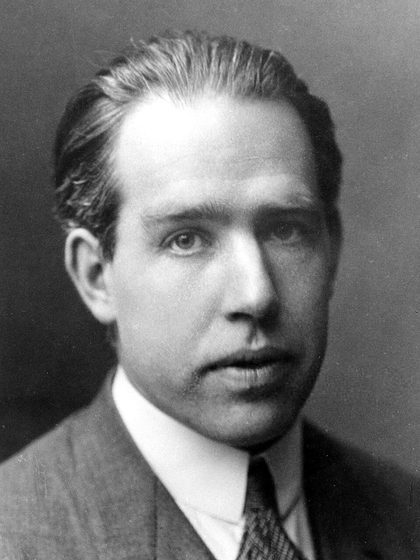
Niels Bohr, 1885–1962 — Physics & Cosmos1885–1962
The American Institute of Physics credits the photo [1] to AB Lagreliu · Public domainsource
Physics & CosmosNobel 1922

Niels Bohr

נילס בוהר

Put the atom together, then built the institute where quantum mechanics was argued into existence.

“The opposite of a correct statement is a false statement. But the opposite of a profound truth may well be another profound truth.”

Quoted by Hans Bohr in ‘My Father’, 1967

His 1913 model quantised the electron's orbit and explained the hydrogen spectrum. His Copenhagen institute became the address for a generation — Heisenberg, Pauli, Gamow. In October 1943, warned of imminent arrest, he was smuggled by fishing boat to Sweden, and refused to leave until the Danish Jewish community's escape was underway.

Nobel 1922Copenhagen
George de Hevesy, 1885–1966 — Matter & Chemistry1885–1966
Unknown authorUnknown author · Public domainsource
Matter & ChemistryNobel 1943

George de Hevesy

גיאורג דה הבשי

Invented the radioactive tracer, and dissolved two Nobel medals to hide them.

“The tracer follows the atom wherever it goes, and reports back.”

Paraphrase of the method described in his 1923 plant-uptake work

Labelling a substance with a radioisotope and following it through a living system is the basis of every PET scan and most of metabolic biology. When the Germans occupied Copenhagen he dissolved the gold Nobel medals of Laue and Franck in aqua regia and left the jar on a shelf; it was still there in 1945, and the gold was recast.

Nobel 1943Budapest → Stockholmtracers
Franz Rosenzweig, 1886–1929 — Letters & Thought1886–1929
Unknown authorUnknown author · Public domainsource
Letters & Thought

Franz Rosenzweig

פרנץ רוזנצוויג

Decided to convert, went to Yom Kippur services first, and never left.

“Nothing needs to be brought to the Jew; everything is already there — it needs only to be uncovered.”

On the founding principle of the Frankfurt Lehrhaus, 1920

‘The Star of Redemption’ was drafted on army postcards from the Balkan front. He founded the Freies Jüdisches Lehrhaus in Frankfurt for adults with no Jewish education, and began the Bible translation with Buber that reads German back towards the Hebrew's own rhythm. Paralysed by ALS from 1922, he dictated by blinking at a letter chart his wife read out, and worked until the day he died.

Kassel → Frankfurtthe Lehrhaus
René Cassin, 1887–1976 — Law & Justice1887–1976
Unknown authorUnknown author · Public domainsource
Law & JusticeNobel 1968

René Cassin

רנה קסן

Principal drafter of the Universal Declaration of Human Rights.

“All human beings are born free and equal in dignity and rights.”

Universal Declaration of Human Rights, Article 1, 1948

Wounded at Verdun, he spent the interwar years on veterans' rights and joined de Gaulle in London in June 1940 as the Free French jurist — the man who wrote the legal case that the Vichy government was illegitimate. Twenty-nine of his relatives were deported and killed. In 1948 he produced the working draft of the Declaration, and structured it, as he put it, like a portico on four columns.

Nobel Peace 1968Bayonne → Paris
S. Y. Agnon, 1887–1970 — Letters & Thought1887–1970
Israeli GPO photographer · Public domainsource
Letters & ThoughtNobel 1966

S. Y. Agnon

ש"י עגנון

The Nobel in Literature, awarded to Hebrew.

“As a result of the historic catastrophe in which Titus of Rome destroyed Jerusalem and Israel was exiled from its land, I was born in one of the cities of the Exile.”

Nobel banquet speech, Stockholm, 1966

Shmuel Yosef Czaczkes wrote a Hebrew saturated in the language of the siddur and the aggadah while narrating a world coming apart — Galician shtetl, Jaffa, Jerusalem. His library burned twice, once in Bad Homburg in 1924 and once in the 1929 riots. He shared the 1966 prize with Nelly Sachs; it remains the only Nobel awarded for writing in Hebrew.

Nobel 1966Buchach → Jerusalem
Marc Chagall, 1887–1985 — Music & Image1887–1985
Pierre Choumoff · Public domainsource
Music & Image

Marc Chagall

מרק שאגאל

Painted the shtetl into the twentieth century's visual language and never let it go.

“In our life there is a single colour, as on an artist's palette, which provides the meaning of life and art. It is the colour of love.”

Quoted in his 1960s writings on painting

Born in Vitebsk to a herring merchant's family of nine, he carried the fiddler, the flying bride and the wooden synagogue through Paris, revolutionary Russia, wartime New York and the south of France. The Jerusalem Windows for Hadassah, the Paris Opera ceiling and the Metropolitan Opera murals are all his. He was smuggled out of Vichy France in 1941 by Varian Fry.

Vitebsk → Saint-PaulJerusalem Windows
Erich Mendelsohn, 1887–1953 — Built & Designed1887–1953
Unknown · CC BY 3.0source
Built & Designed

Erich Mendelsohn

אריך מנדלסון

Drew buildings as a single continuous line, and built them that way.

“Function plus dynamics is the challenge.”

‘Structures and Sketches’, 1924

The Einstein Tower at Potsdam is a single sculptural gesture in concrete and brick, sketched in the trenches. Germany's most-commissioned architect until 1933, he left within weeks of the Nazis taking power and rebuilt three times over — England, Mandatory Palestine, then America. The Hadassah medical centre on Mount Scopus and the Weizmann house are his.

Allenstein → San FranciscoEinstein Tower
Selman Waksman, 1888–1973 — Medicine & Life1888–1973
New York World-Telegram and the Sun staff photographer: Higgins, Roger · Public domainsource
Medicine & LifeNobel 1952

Selman Waksman

זלמן וקסמן

Dug antibiotics out of soil and gave the class its name.

“It is in the soil that the great drama of life and death is played out.”

‘My Life with the Microbes’, 1954

His Rutgers laboratory systematically screened soil actinomycetes for antibacterial activity; in 1943 his student Albert Schatz isolated streptomycin, the first drug effective against tuberculosis. Waksman coined the word ‘antibiotic’ in its modern sense in 1941. The credit dispute with Schatz was settled in court, with royalties shared.

Nobel 1952Ukraine → Rutgers
Irving Berlin, 1888–1989 — Music & Image1888–1989
Pach Brothers · Public domainsource
Music & Image

Irving Berlin

אירווינג ברלין

Wrote fifteen hundred songs, could only play in F sharp, and lived to a hundred and one.

“The song is ended, but the melody lingers on.”

Song title, 1927

Israel Beilin, son of a chazzan from Tolochin, arrived on the Lower East Side at five and was a singing waiter by his teens. God Bless America, White Christmas, Puttin' on the Ritz, Alexander's Ragtime Band. He never learned to read music and used a transposing piano. He assigned the royalties from God Bless America to the Boy and Girl Scouts, permanently.

Tolochin → New York1,500 songs
Kurt Lewin, 1890–1947 — The Mind1890–1947
Pko (photographer) · CC BY-SA 4.0source
The Mind

Kurt Lewin

קורט לוין

Founded social psychology as an experimental science, and action research with it.

“There is nothing so practical as a good theory.”

‘Problems of Research in Social Psychology’, 1943

Behaviour is a function of the person and the environment — B = f(P, E) — was his formula, and it turned group dynamics into something you could measure. He fled Berlin in 1933 and spent his American years studying leadership styles, prejudice and how minority children form self-image; the Commission on Community Interrelations grew directly out of that.

Posen → MITfield theory
David Sarnoff, 1891–1971 — Trade & Industry1891–1971
Wikimedia Commons · Public domainsource
Trade & Industry

David Sarnoff

דוד סרנוף

Saw that radio was not a telephone but a broadcast, and built an industry on the difference.

“A radio music box… the receiver can be designed in the form of a simple box.”

Internal memorandum, American Marconi, 1915

Born in Uzlyany and sent ahead to America at nine, he sold Yiddish newspapers and learned telegraphy. His 1915 memo proposed selling receivers to households rather than charging for point-to-point messages, which is broadcasting. At RCA he then backed television through two decades of losses before it paid.

Uzlyany → New YorkRCA / NBC
Ernst Lubitsch, 1892–1947 — Screen1892–1947
Unknown (George Grantham Bain collection) · Public domainsource
Screen

Ernst Lubitsch

ארנסט לוביטש

The touch — comedy that says everything by showing you a closed door.

“Let the audience add up two plus two. They'll love you forever.”

Quoted by Billy Wilder, who kept the line on his office wall

The son of a Berlin tailor, he brought a European lightness to Hollywood that nobody has successfully copied: Trouble in Paradise, Ninotchka, The Shop Around the Corner. To Be or Not to Be (1942) made a farce out of the occupation of Poland while it was happening, and was attacked for it before being recognised as one of the bravest films of the war.

Berlin → Hollywoodthe Lubitsch touch
Norbert Wiener, 1894–1964 — Mathematics & Machines1894–1964
Konrad Jacobs · CC BY-SA 2.0 desource
Mathematics & Machines

Norbert Wiener

נורברט וינר

Named cybernetics and warned what automation would do to labour.

“We have modified our environment so radically that we must now modify ourselves in order to exist in this new environment.”

‘The Human Use of Human Beings’, 1950

Wartime work on anti-aircraft prediction led him to a general theory of control and communication in animals and machines, published as ‘Cybernetics’ in 1948. He then wrote the first serious public argument that automatic machinery would devalue human labour — and refused further military funding, publishing an open letter declining to work on weapons.

Columbia, Missouri → MITcybernetics
Sir Hersch Lauterpacht 1897–1960 An architect of modern international law and human rights lived here — connected to Hersch Lauterpacht, 1897–1960Plaque · not a likeness1897–1960
Spudgun67 · CC BY-SA 4.0source
Law & Justice

Hersch Lauterpacht

הרש לאוטרפכט

Put ‘crimes against humanity’ into the Nuremberg indictment, and the individual into international law.

“The individual human being… is the ultimate unit of all law.”

‘International Law and Human Rights’, 1950

Born near Lemberg — the same region as Lemkin, whom he opposed on method — he argued that international law should protect persons, not groups, lest it entrench the very categories it condemned. His draft supplied the British prosecution's framing at Nuremberg. His parents and sister were murdered in the Galician killings he was, at that moment, writing the law against.

Galicia → CambridgeNuremberg
Leo Szilard, 1898–1964 — Physics & Cosmos1898–1964
U.S. Department of Energy · Public domainsource
Physics & Cosmos

Leo Szilard

ליאו סילארד

Conceived the nuclear chain reaction at a traffic light, then spent his life trying to contain it.

“The world is not going to be saved by a large number of people doing a little; it will be saved by a small number of people doing a great deal.”

Attributed; a theme he returned to repeatedly in his post-war writing

Crossing Southampton Row in London in 1933, he saw how a neutron-induced chain reaction could work, and patented it to the British Admiralty to keep it out of German hands. He drafted the 1939 letter Einstein signed to Roosevelt. In 1945 he circulated the Szilard petition asking that the bomb not be used on a city without warning; it never reached the President.

Budapest → Chicagochain reaction
Golda Meir, 1898–1978 — Conscience1898–1978
Talmoryair (talk) after Marion S. Trikosko · Public domainsource
Conscience

Golda Meir

גולדה מאיר

From a Kyiv doorway barricaded against a pogrom to signing a state into existence.

“We can forgive you for killing our sons. But we will never forgive you for making us kill yours.”

Remarks widely reported from her later years

Her first memory was her father nailing boards across the door in Kyiv. She taught school in Milwaukee, went to Palestine in 1921, raised the money in American Jewish communities that bought the arms for 1948, was one of two women to sign the Declaration of Independence, and became Prime Minister at seventy. The Yom Kippur War ended her government and she carried its judgment for the rest of her life.

Kyiv → Milwaukee → Jerusalem1948
George Gershwin, 1898–1937 — Music & Image1898–1937
Carl Van Vechten · Public domainsource
Music & Image

George Gershwin

ג'ורג' גרשווין

Put the concert hall and the dance band in the same piece and made it hold.

“True music must repeat the thought and inspirations of the people and the time.”

Interview, 1920s

Jacob Gershwine of Brooklyn, son of immigrants from Odessa, was plugging songs on Tin Pan Alley at fifteen. Rhapsody in Blue was written in three weeks. Porgy and Bess took two years and a summer living on an island off Charleston listening to Gullah singing. He died of a brain tumour at thirty-eight.

Brooklyn → HollywoodRhapsody in Blue
Raphael Lemkin, 1900–1959 — Law & Justice1900–1959
Center for Jewish History, NYC · No restrictionssource
Law & Justice

Raphael Lemkin

רפאל למקין

Gave the crime a name so the law could reach it.

“Genocide is a coordinated plan of different actions aiming at the destruction of the essential foundations of the life of national groups.”

‘Axis Rule in Occupied Europe’, 1944

A Polish-Jewish lawyer who had asked since 1933 why the massacre of a whole people had no legal name, he lost forty-nine relatives in the Shoah and arrived in America with the manuscript that coined ‘genocide’ from the Greek genos and the Latin cide. He then lobbied the new United Nations, delegation by delegation, until the Genocide Convention passed in 1948. He died alone, in debt, aged fifty-nine.

Lwów → New YorkGenocide Convention
Louis Kahn, 1901–1974 — Built & Designed1901–1974
Francalb89 · CC BY-SA 4.0source
Built & Designed

Louis Kahn

לואיס קאהן

Asked a brick what it wanted to be, and built as if the answer mattered.

“You say to a brick, ‘What do you want, brick?’ And brick says to you, ‘I like an arch.’”

Lecture, 1971

Itze-Leib Schmuilowsky, born on Saaremaa and scarred for life by coals at three, produced very few buildings and changed architecture with them: the Salk Institute, the Kimbell Art Museum, the National Assembly of Bangladesh. He died of a heart attack in a lavatory at Penn Station, unidentified for two days, and half a million dollars in debt.

Saaremaa → PhiladelphiaSalk Institute
Jascha Heifetz, 1901–1987 — Music & Image1901–1987
Bain News Service, publisher · Public domainsource
Music & Image

Jascha Heifetz

יאשה חפץ

Reset what a violin was capable of, and every violinist since has been measured against him.

“There is no top. There are always further heights to reach.”

Attributed

He played the Mendelssohn concerto in public at seven and debuted at Carnegie Hall at sixteen, after which Mischa Elman famously asked Godowsky whether it was hot in the hall. He played for Allied troops at the front in both wars, and in 1953 was attacked with an iron bar in Jerusalem for performing Strauss.

Vilnius → Los AngelesCarnegie at 16
Erik Erikson, 1902–1994 — The Mind1902–1994
Unknown authorUnknown author · Public domainsource
The Mind

Erik Erikson

אריק אריקסון

Extended development across the whole lifespan, and named the identity crisis.

“In the social jungle of human existence, there is no feeling of being alive without a sense of identity.”

‘Identity: Youth and Crisis’, 1968

Born in Frankfurt to a Danish Jewish mother, raised by a Jewish paediatrician stepfather, blond among Jews and Jewish among Germans — he later said his eight stages came out of a life spent not fitting either category. He took the surname Erikson, son of himself, on becoming American. The adolescent stage, identity versus role confusion, gave English a permanent phrase.

Frankfurt → Harvardeight stages
Regina Jonas, 1902–1944 — Conscience1902–1944
Regina Jonas · Public domainsource
Conscience

Regina Jonas

רגינה יונס

The first woman ordained as a rabbi, and the fact was lost for fifty years.

“If I confess what motivated me: it was my belief in God's calling and my love of people.”

Personal statement, Berlin, 1930s

Her Berlin seminary thesis argued from halachic sources that a woman may hold rabbinic office; the faculty would not ordain her, so a Liberal rabbi in Offenbach did, privately, in 1935. She served Berlin's remaining community, then taught and counselled in Theresienstadt for two years before being murdered at Auschwitz. Her file surfaced in an East Berlin archive in 1991.

Berlin → Auschwitzordained 1935
John von Neumann, 1903–1957 — Mathematics & Machines1903–1957
Wikimedia Commons · Attributionsource
Mathematics & Machines

John von Neumann

יאנוש פון נוימן

Game theory, the stored-program computer, and the mathematical foundation of quantum mechanics — one lifetime.

“In mathematics you don't understand things. You just get used to them.”

Recalled by Felix Smith, 1955

The 1944 ‘Theory of Games and Economic Behavior’, written with Oskar Morgenstern, created a discipline. The 1945 EDVAC report described the architecture every computer still uses: one memory holding both data and instructions. He also axiomatised quantum mechanics in Hilbert space, worked on implosion lens design at Los Alamos, and invented the merge sort on the side.

Budapest → Princetongame theory
Letters & Thought

Rabbi Joseph B. Soloveitchik

הרב יוסף דב סולובייצ'יק

Brought Brisker analysis and Western philosophy into one argument, and ordained two thousand rabbis.

“The dialectical awareness of man is inseparable from his being created in the image of God.”

Formulation of the argument in ‘The Lonely Man of Faith’, 1965

Grandson of Reb Chaim of Brisk, doctorate on Hermann Cohen in Berlin, he led Yeshiva University's rabbinical school for four decades. ‘Halakhic Man’ and ‘The Lonely Man of Faith’ read Bereishis as two accounts of the human being — majestic and covenantal — and set the terms in which Modern Orthodoxy still describes itself.

Pruzhany → BostonBrisk
Viktor Frankl, 1905–1997 — The Mind1905–1997
Prof. Dr. Franz Vesely · CC BY-SA 3.0 desource
The Mind

Viktor Frankl

ויקטור פרנקל

Wrote the case for meaning as the primary human drive, from inside four camps.

“Everything can be taken from a man but one thing: the last of the human freedoms — to choose one's attitude in any given set of circumstances.”

‘Man's Search for Meaning’, 1946

A Viennese neurologist who turned down a US visa in 1941 rather than leave his parents, he was deported in 1942 and survived Theresienstadt, Auschwitz, Kaufering and Türkheim; his wife, mother, father and brother did not. The manuscript of logotherapy, confiscated on arrival at Auschwitz, was rewritten from memory and published in nine days.

Viennalogotherapy
Conscience

Recha Sternbuch

רחה שטרנבוך

Ran a rescue operation out of Switzerland while the world was still deciding whether to believe the reports.

“Every hour is a life.”

Paraphrase of her recorded appeals to the Vaad Hatzalah, 1942–44

From St. Gallen she smuggled refugees across the Swiss border, bribed officials, was arrested for it, and kept going. She was among the first to get credible reports of the extermination out to America, and her Vaad Hatzalah network helped secure the release of some 1,200 people from Theresienstadt in February 1945.

St. GallenVaad Hatzalah
Albert Sabin, 1906–1993 — Medicine & Life1906–1993
Original uploader was Bobak at the English Wikipedia · Public domainsource
Medicine & Life

Albert Sabin

אלברט סייבין

The oral polio vaccine — two drops on a sugar cube, given away free.

“A lot of people insisted that I should patent the vaccine, but I didn't want to. It's my gift to all the world's children.”

Interview, 1980s

His live attenuated strains conferred gut immunity and spread protection to contacts, which is why they, not Salk's, became the tool of global eradication. Unable to run a US trial, he tested in the Soviet Union in 1959 on ten million children at the height of the Cold War. Wild polio has since been eliminated from all but a handful of districts on earth.

Białystok → Cincinnatioral vaccine
Hannah Arendt, 1906–1975 — The Mind1906–1975
Unknown authorUnknown author · Public domainsource
The Mind

Hannah Arendt

חנה ארנדט

Anatomised totalitarianism, and coined a phrase she spent the rest of her life defending.

“The trouble with Eichmann was precisely that so many were like him, and that the many were neither perverted nor sadistic, but were, and still are, terribly and terrifyingly normal.”

‘Eichmann in Jerusalem’, 1963

Arrested by the Gestapo in 1933 for collecting evidence of antisemitism, interned at Gurs in 1940, she escaped to New York in 1941 and wrote ‘The Origins of Totalitarianism’ — the first sustained attempt to explain the camps as a political form rather than an aberration. ‘The banality of evil’ cost her many of her friendships and none of her readers.

Hannover → New Yorktotalitarianism
Emmanuel Levinas, 1906–1995 — Letters & Thought1906–1995
Bracha L. Ettinger · CC BY-SA 2.5source
Letters & Thought

Emmanuel Levinas

עמנואל לוינס

Put ethics before metaphysics — the face of the other comes first.

“The face of the other is what commands me, before any question of what I am.”

Formulation of the argument in ‘Totalité et Infini’, 1961

A French prisoner of war for five years while his Lithuanian family was murdered, he came out arguing that Western philosophy had made a mistake at the root by starting from being rather than from obligation. He also spent decades giving Talmudic readings in Paris, insisting that the tradition he read on Shabbos and the philosophy he wrote on weekdays were the same subject.

Kaunas → Parisethics first
Billy Wilder, 1906–2002 — Screen1906–2002
Studio · Public domainsource
Screen

Billy Wilder

בילי ויילדר

Wrote and directed the sharpest dialogue Hollywood ever filmed.

“Nobody's perfect.”

Closing line, ‘Some Like It Hot’, 1959

Double Indemnity, Sunset Boulevard, Some Like It Hot, The Apartment — six Academy Awards and a run of films that invented and then dismantled several genres. He left Berlin the day after the Reichstag fire and reached Hollywood with almost no English, learning it from radio and racing forms. His mother, grandmother and stepfather were murdered at Auschwitz.

Sucha → Hollywood6 Oscars
The Mind

Solomon Asch

שלמה אש

Measured how far an ordinary person will follow a room that is plainly wrong.

“The tendency to conformity in our society is so strong that reasonably intelligent and well-meaning young people are willing to call white black.”

‘Opinions and Social Pressure’, Scientific American, 1955

Shown two cards, one with a clear reference line, subjects who had heard six confederates give an obviously wrong answer conformed on about a third of critical trials, and three quarters conformed at least once. He arrived from Warsaw at thirteen and later said the seder question — why is this night different — was the first experiment in perception he ever encountered.

Warsaw → Swarthmoreconformity
Abraham Maslow, 1908–1970 — The Mind1908–1970
William Carter · Public domainsource
The Mind

Abraham Maslow

אברהם מסלו

Argued psychology should study health, not only pathology.

“If the only tool you have is a hammer, you tend to see every problem as a nail.”

‘The Psychology of Science’, 1966

The son of Kyivan immigrants in Brooklyn, he built his theory by studying people he considered exemplary rather than patients he considered ill. The hierarchy of needs — physiological, safety, belonging, esteem, self-actualisation — was never drawn as a pyramid by him, and he later added self-transcendence above the top.

Brooklyn → Brandeisself-actualisation
Simon Wiesenthal, 1908–2005 — Conscience1908–2005
Rob Bogaerts for Anefo · CC BY-SA 3.0source
Conscience

Simon Wiesenthal

שמעון ויזנטל

Spent sixty years making sure the perpetrators were named.

“For your benefit, learn from our tragedy. It is not a written law that the next victims must be Jews.”

Address to the US Congress, 1980s

An architect who survived five camps and weighed 45 kilos at liberation, he opened a documentation office in Linz and worked from files, testimony and correspondence rather than any state authority. Adolf Eichmann's address, Franz Stangl of Treblinka, Karl Silberbauer who arrested Anne Frank: the record runs to about eleven hundred cases. Eighty-nine of his relatives were murdered.

Buchach → Viennadocumentation
Estée Lauder, 1908–2004 — Trade & Industry1908–2004
New York World-Telegram and the Sun staff photographer: Sauro, Bill, p · Public domainsource
Trade & Industry

Estée Lauder

אסתי לאודר

Built a global business on the idea of putting the product on the customer's hand.

“I have never worked a day in my life without selling. If I believe in something, I sell it, and I sell it hard.”

‘Estée: A Success Story’, 1985

Josephine Esther Mentzer, daughter of Hungarian and Czech immigrants above a hardware store in Corona, Queens, learned creams from an uncle who was a chemist. She invented the free sample as a strategy and the gift-with-purchase, and was the only woman on Time's list of the twenty most influential business geniuses of the twentieth century.

Queens → worldwidegift with purchase
Rita Levi-Montalcini, 1909–2012 — Medicine & Life1909–2012
Kurt Hagblom, Firma Hagblom-Foto, restored by Adam Cuerden · Public domainsource
Medicine & LifeNobel 1986

Rita Levi-Montalcini

ריטה לוי-מונטלצ'יני

Discovered nerve growth factor in a bedroom laboratory built to evade the racial laws.

“Above all, don't fear difficult moments. The best comes from them.”

Interview on her 100th birthday, 2009

Barred from academic work by Mussolini's 1938 race laws, she set up an incubator and a microscope in her bedroom in Turin and operated on chick embryos with sharpened sewing needles. The work led, in St Louis with Viktor Hamburger, to nerve growth factor — the first of the growth factors, and the opening of a field. She worked and served in the Italian Senate until she died at 103.

Nobel 1986Turin → St Louis
Isaiah Berlin, 1909–1997 — Letters & Thought1909–1997
Rob C. Croes (ANEFO) · CC0source
Letters & Thought

Isaiah Berlin

ישעיה ברלין

Two concepts of liberty, and the argument that our deepest values genuinely conflict.

“The necessity of choosing between absolute claims is an inescapable characteristic of the human condition.”

‘Two Concepts of Liberty’, 1958

He watched a policeman being dragged to his death by a mob in Petrograd at seven, and spent a career arguing against the belief that all good things are compatible and that a final harmony is available — the belief he thought lay under every utopian slaughter. Negative and positive liberty, the fox and the hedgehog, value pluralism: three durable pieces of vocabulary from one man.

Riga → Oxfordvalue pluralism
Mikhail Botvinnik, 1911–1995 — Games & Play1911–1995
Harry Pot for Anefo ]] · CC BY-SA 3.0 nlsource
Games & Play

Mikhail Botvinnik

מיכאיל בוטבניק

Built the Soviet chess school, and then tried to teach a computer to play.

“Chess is the art of analysis.”

Attributed

World champion three times across fifteen years, an electrical engineer with a doctorate who trained by playing in a smoke-filled room to build tolerance. His school produced Karpov and Kasparov. From the 1970s he spent his energy on Pioneer, a chess program built to think by selective search the way a master does rather than by brute force.

St Petersburg → Moscowthe Soviet school
Hank Greenberg, 1911–1986 — Sport1911–1986
Harris & Ewing · Public domainsource
Sport

Hank Greenberg

הנק גרינברג

Sat out a pennant-race game for Yom Kippur, and became a different kind of famous.

“I came to feel that if I, as a Jew, hit a home run, I was hitting one against Hitler.”

‘The Story of My Life’, 1989

58 home runs in 1938, two MVPs, and four and a half years given to the army — he was the first major leaguer to enlist and among the last to come home. In September 1934, with Detroit chasing the pennant, he went to shul on Yom Kippur instead of playing. The Detroit Free Press ran a front-page headline in Hebrew wishing him a good year.

Bronx → DetroitYom Kippur 1934
Milton Friedman, 1912–2006 — Economics1912–2006
Bachrach Studios · Public domainsource
EconomicsNobel 1976

Milton Friedman

מילטון פרידמן

Made the case that inflation is a monetary phenomenon, and won the argument for a generation.

“Inflation is always and everywhere a monetary phenomenon.”

‘The Counter-Revolution in Monetary Theory’, 1970

‘A Monetary History of the United States’, with Anna Schwartz, argued that the Federal Reserve turned a recession into the Great Depression by letting the money supply collapse by a third. The permanent income hypothesis reshaped consumption theory. He also proposed the negative income tax, school vouchers, and the end of conscription — the last of which he lived to see enacted.

Nobel 1976Brooklyn → Chicago
Paul Erdős, 1913–1996 — Mathematics & Machines1913–1996
Topsy Kretts · CC BY 3.0source
Mathematics & Machines

Paul Erdős

פאול ארדש

Wrote 1,500 papers with 500 collaborators and never kept a home.

“My brain is open.”

His standard greeting on arriving at a colleague's door

He travelled with two suitcases between the houses of mathematicians, working eighteen-hour days on combinatorics, number theory and graph theory, paying for problems he wanted solved with cheques from $25 to $10,000. The Erdős number — degrees of co-authorship separating you from him — is the discipline's private measure of proximity. He called children epsilons and God the Supreme Fascist.

Budapest → everywhereErdős number
Robert Capa, 1913–1954 — Built & Designed1913–1954
Gerda Taro · Public domainsource
Built & Designed

Robert Capa

רוברט קאפה

Went closer than anyone and said that was the whole technique.

“If your pictures aren't good enough, you're not close enough.”

Widely attributed to Capa and consistent with his practice

Endre Friedmann of Budapest invented the persona ‘Robert Capa’ to sell pictures at better rates, then became him. He photographed five wars, landed with the first wave at Omaha Beach, and co-founded Magnum so that photographers would own their negatives. He was killed by a landmine in Indochina at forty, still walking towards it.

Budapest → IndochinaMagnum
Jonas Salk, 1914–1995 — Medicine & Life1914–1995
SAS Scandinavian Airlines · Public domainsource
Medicine & Life

Jonas Salk

יונס סאלק

Ended the polio summers, and refused to own the patent.

“There is no patent. Could you patent the sun?”

Interview with Edward R. Murrow, ‘See It Now’, 1955

The 1954 field trial enrolled 1.8 million children — still the largest medical experiment ever run. His killed-virus vaccine cut US paralytic polio from 58,000 cases a year to under a hundred within a decade. He never patented it, forgoing an estimated seven billion dollars, and spent his later career founding the Salk Institute.

New York → La Jollapolio
Paul Rand, 1914–1996 — Built & Designed1914–1996
Unknown authorUnknown author · Public domainsource
Built & Designed

Paul Rand

פול רנד

Made the corporate logo an act of design rather than decoration.

“Design is so simple. That's why it is so complicated.”

Attributed; a line he used repeatedly in lectures

Peretz Rosenbaum of Brooklyn, raised in an Orthodox home where his father thought art was a waste, gave IBM its striped monogram, ABC its circle, UPS its parcel and NeXT its cube. He charged Steve Jobs $100,000 for one option and no alternatives. His 1947 ‘Thoughts on Design’ is still the shortest good book on the subject.

Brooklyn → ConnecticutIBM
Paul Samuelson, 1915–2009 — Economics1915–2009
Innovation & Business Architectures, Inc. · CC BY 1.0source
EconomicsNobel 1970

Paul Samuelson

פול סמואלסון

Turned economics into mathematics, and taught it to four generations.

“Economics has never been a science — and it is even less now than a few years ago.”

Interview, 2009

‘Foundations of Economic Analysis’ (1947) reformulated the discipline as constrained optimisation and became the template for everything after it. His textbook sold four million copies across nineteen editions. He was the first American to take the economics Nobel, and wrote a Newsweek column for fifteen years arguing with Friedman in alternate weeks.

Nobel 1970Gary, Indiana → MIT
Richard Feynman, 1918–1988 — Physics & Cosmos1918–1988
Copyright Tamiko Thiel 1984 · CC BY-SA 3.0source
Physics & CosmosNobel 1965

Richard Feynman

ריצ'רד פיינמן

Drew quantum electrodynamics as pictures anyone could compute with.

“I would rather have questions that can't be answered than answers that can't be questioned.”

Widely attributed; consistent with his published remarks on doubt

Feynman diagrams turned the most accurate theory in physics into a bookkeeping exercise with lines and vertices. He worked at Los Alamos at twenty-four, taught the Caltech lectures that are still the best physics course ever transcribed, and in 1986 dunked an O-ring in ice water on television to explain why Challenger broke apart.

Nobel 1965Far Rockaway → Caltech
Gertrude Elion, 1918–1999 — Medicine & Life1918–1999
GlaxoSmithKline plc · CC BY 4.0source
Medicine & LifeNobel 1988

Gertrude Elion

גרטרוד אליון

Designed drugs from the biochemistry up, rather than screening blindly — and got 45 patents doing it.

“Don't be afraid of hard work. Nothing worthwhile comes easily.”

Advice to students, quoted in her Nobel biography

Rejected by fifteen graduate programmes because she was a woman, she took a job testing food acidity and eventually joined Burroughs Wellcome. Working out how cancer cells and pathogens differ in purine metabolism, she and George Hitchings produced 6-mercaptopurine for childhood leukaemia, azathioprine for transplant rejection, allopurinol for gout, and acyclovir — the first effective antiviral.

Nobel 1988New Yorkacyclovir
Leonard Bernstein, 1918–1990 — Music & Image1918–1990
Jack Mitchell · CC BY-SA 4.0source
Music & Image

Leonard Bernstein

לאונרד ברנשטיין

Conducted, composed and taught — and refused to choose between the concert hall and Broadway.

“This will be our reply to violence: to make music more intensely, more beautifully, more devotedly than ever before.”

Address at the United Jewish Appeal, 25 November 1963

He took the New York Philharmonic at forty on a few hours' notice in 1943 and never left the public eye: West Side Story, the Young People's Concerts that taught television how to explain music, the Chichester Psalms in Hebrew, Kaddish, and the Mahler advocacy that put those symphonies back into the repertoire. He conducted for Israeli troops at Beersheba in 1948 with the shelling audible.

Lawrence, Mass. → New YorkWest Side Story
Primo Levi, 1919–1987 — Letters & Thought1919–1987
Unknown (Mondadori Publishers) · Public domainsource
Letters & Thought

Primo Levi

פרימו לוי

A chemist's precision turned on Auschwitz, without a raised voice.

“Consider whether this is a man, who labours in the mud, who knows no peace, who fights for half a loaf.”

‘If This Is a Man’, 1947

Arrested as a partisan in December 1943 and sent to Monowitz, he survived because the Buna plant needed a chemist. ‘If This Is a Man’ was turned down by Einaudi and printed in 2,500 copies before becoming one of the essential books of the century. ‘The Periodic Table’ tells his life in twenty-one elements. He died in a fall in the stairwell of the Turin house he was born in.

TurinMonowitz
Rosalind Franklin, 1920–1958 — Medicine & Life1920–1958
MRC Laboratory of Molecular Biology · CC BY-SA 4.0source
Medicine & Life

Rosalind Franklin

רוזלינד פרנקלין

Photograph 51 — the image that made the double helix unarguable.

“Science and everyday life cannot and should not be separated.”

Letter to her father, c. 1940

Her X-ray diffraction work at King's College London established that DNA was helical, measured its dimensions, and located the phosphate backbone on the outside. Photograph 51 was shown to Watson without her knowledge. She died of ovarian cancer at thirty-seven, four years before the Nobel that could not be awarded posthumously, having by then done foundational work on the tobacco mosaic and polio viruses.

LondonPhotograph 51
Saul Bass, 1920–1996 — Built & Designed1920–1996
Rochester Institute of Technology · Public domainsource
Built & Designed

Saul Bass

שאול באס

Turned the opening credits into part of the film.

“Design is thinking made visual.”

Widely attributed

The cut-paper arm in The Man with the Golden Arm, the spiral in Vertigo, the grid in North by Northwest, the shower sequence in Psycho that he storyboarded. He also drew the AT&T bell, the Quaker Oats man and the United Airlines tulip. Son of a Bronx furrier; he never learned to drive.

Bronx → Los Angelestitle sequences
Kenneth Arrow, 1921–2017 — Economics1921–2017
Linda A. Cicero / Stanford News Service · CC BY 3.0source
EconomicsNobel 1972

Kenneth Arrow

קנת אארו

Proved that no voting rule can be fair in every sense at once.

“The individual behaves as if he were maximising, but the social ordering may satisfy no such condition.”

‘Social Choice and Individual Values’, 1951

The impossibility theorem — written as a doctoral student — shows that no method of aggregating individual rankings into a social ranking can simultaneously satisfy a handful of self-evidently reasonable conditions. He also did the founding work on general equilibrium with Debreu, on learning by doing, and on why health care markets fail. At fifty-one he remains the youngest economics laureate.

Nobel 1972New York → Stanford
Ágnes Keleti, 1921–2025 — Sport1921–2025
Róth Tamás · CC BY-SA 4.0source
Sport

Ágnes Keleti

אגנס קלטי

Survived the Shoah on false papers, then won ten Olympic medals starting at thirty-one.

“I did not live to be old. I lived to live.”

Interview on her 100th birthday, 2021

Barred from competing in 1941 for being Jewish, she bought Christian papers and worked as a maid while her father and most of her family were murdered at Auschwitz. She took her first Olympic gold at Helsinki in 1952 aged thirty-one, and four more at Melbourne in 1956 aged thirty-five — the oldest woman ever to win gymnastics gold.

Budapest → Israel10 medals
Hannah Senesh, 1921–1944 — Conscience1921–1944
Unknown authorUnknown author · Public domainsource
Conscience

Hannah Senesh

חנה סנש

Parachuted back into occupied Europe at twenty-two and would not give up the codes.

“Blessed is the match consumed in kindling flame.”

Poem written at Sdot Yam, 2 May 1944

She left Budapest for Palestine in 1939, joined kibbutz Sdot Yam, and volunteered for the British SOE mission to reach Hungarian Jewry. Captured at the border, tortured for months and refusing to reveal her transmitter code, she was executed by firing squad in Budapest at twenty-three, and refused the blindfold. Her poems are sung at ceremonies across Israel.

Budapest → Sdot Yam1944
Diane Arbus Constellation at Park Avenue Armory — connected to Diane Arbus, 1923–1971Document · not a likeness1923–1971
Kenneth C. Zirkel · CC BY-SA 4.0source
Built & Designed

Diane Arbus

דיאן ארבוס

Photographed people the culture preferred not to look at, and made them look back.

“A photograph is a secret about a secret. The more it tells you the less you know.”

‘Diane Arbus: An Aperture Monograph’, 1972

Born Diane Nemerov to the family that owned Russeks department store on Fifth Avenue, she abandoned fashion photography for the street, the circus and the nudist camp. The 1967 New Documents show at MoMA changed what a photograph was allowed to be about. She took her own life at forty-eight.

New YorkNew Documents
Sidney Lumet, 1924–2011 — Screen1924–2011
gdcgraphics at https://www.flickr.com/photos/gdcgraphics/ · CC BY-SA 2.0source
Screen

Sidney Lumet

סידני לומט

Made New York films about institutions failing the people inside them.

“All good work is self-revelation.”

‘Making Movies’, 1995

12 Angry Men, Serpico, Dog Day Afternoon, Network — over forty years and fifty films he kept returning to what happens when a person confronts a system. Son of Yiddish theatre actors on the Lower East Side, he acted on the Yiddish stage as a child. He shot fast, on location, and almost always came in under budget.

Philadelphia → New York12 Angry Men
Baruch Blumberg, 1925–2011 — Medicine & Life1925–2011
Tom Trower (NASA) · Public domainsource
Medicine & LifeNobel 1976

Baruch Blumberg

ברוך בלומברג

Found the hepatitis B virus and turned it into the first anti-cancer vaccine.

“The best way to find something is to look for something else.”

‘Hepatitis B: The Hunt for a Killer Virus’, 2002

He was surveying blood proteins for inherited variation when an Australian aborigine's serum reacted with an antibody from a haemophiliac — the ‘Australia antigen’ turned out to be the surface protein of hepatitis B. The vaccine that followed prevents liver cancer, making it the first vaccine against a human cancer. He learned daf yomi and kept Shabbat throughout.

Nobel 1976Brooklyn → Philadelphia
Trade & Industry

Aaron Feuerstein

אהרן פוירשטיין

His factory burned down and he kept three thousand workers on full pay anyway.

“I have a responsibility to the worker, both blue-collar and white-collar. I have an equal responsibility to the community.”

Press conference, Lawrence, Massachusetts, December 1995

When Malden Mills burned three days before Chanukah 1995 he could have taken the insurance and moved offshore. Instead he paid every employee for months and rebuilt in Lawrence, citing his obligations under halacha and quoting Pirkei Avot to reporters. It cost him control of the company. He was invited to the State of the Union.

MassachusettsDecember 1995
Mel Brooks, b. 1926 — Screenb. 1926
Angela George at https://www.flickr.com/photos/sharongraphics/ · CC BY-SA 3.0source
Screen

Mel Brooks

מל ברוקס

Decided the best weapon against Hitler was ridicule, and used it for sixty years.

“If you stand on a soapbox and trade rhetoric with a dictator you never win. But if you can make people laugh at him, you win.”

Interview, Der Spiegel, 2006

Melvin Kaminsky of Williamsburg, Brooklyn, defused landmines in the Ardennes at nineteen. The Producers, Blazing Saddles, Young Frankenstein — and an EGOT, one of very few. His comedy is built almost entirely out of Yiddish rhythm and an unshakeable conviction that pomposity is the enemy.

Brooklyn → HollywoodEGOT
Elie Wiesel, 1928–2016 — Letters & Thought1928–2016
David Shankbone · CC BY 3.0source
Letters & ThoughtNobel 1986

Elie Wiesel

אליעזר ויזל

Made silence about the Shoah impossible.

“The opposite of love is not hate, it's indifference.”

US News & World Report interview, 1986

Deported from Sighet at fifteen, he lost his mother, father and younger sister, and did not write about it for ten years. ‘Night’ was published in Yiddish in Buenos Aires in 1956 and in French in 1958, and has sold more than ten million copies since. Nobel Peace Prize 1986, cited as a messenger to mankind; he used the platform to speak about Cambodia, Bosnia, Rwanda and Darfur.

Nobel Peace 1986Sighet → New York
Stanley Kubrick, 1928–1999 — Screen1928–1999
Phillip A. Harrington, an American photographer and staffer for Look m · Public domainsource
Screen

Stanley Kubrick

סטנלי קובריק

Thirteen films in forty-six years, and no two of them alike.

“If it can be written, or thought, it can be filmed.”

Interview, 1960s

A Bronx staff photographer for Look magazine at seventeen, he taught himself directing and then controlled every frame of everything he made. 2001 invented the visual language of space on film four years before Apollo; Dr. Strangelove made the unthinkable funny; The Shining is still being argued about. He shot Barry Lyndon by candlelight using a lens NASA had built for satellites.

Bronx → Hertfordshire13 films
Murray Gell-Mann, 1929–2019 — Physics & Cosmos1929–2019
World Economic Forum · CC BY-SA 2.0source
Physics & CosmosNobel 1969

Murray Gell-Mann

מארי גל-מן

Sorted the particle zoo into families and named the pieces underneath quarks.

“Three quarks for Muster Mark!”

James Joyce, ‘Finnegans Wake’ — Gell-Mann's source for the name, 1963

The Eightfold Way arranged the hadrons into geometric patterns and predicted a missing particle, the omega-minus, which duly turned up at Brookhaven in 1964. The pattern implied constituents: three fractionally charged quarks per baryon. He read widely enough that his particles carry names from Joyce and his classification scheme a term from Buddhism.

Nobel 1969Manhattan → Caltech
Frank Gehry, b. 1929 — Built & Designedb. 1929
City of Toronto / Jose San Juan · Attributionsource
Built & Designed

Frank Gehry

פרנק גרי

Made buildings move, and gave a declining port city an economy.

“Architecture should speak of its time and place, but yearn for timelessness.”

Widely attributed; consistent with his published lectures

Born Frank Owen Goldberg in Toronto, he built the titanium Guggenheim in Bilbao and produced an effect economists had to name after it. Disney Hall in Los Angeles took sixteen years. His grandmother used to buy a live carp for gefilte fish and keep it in the bath, and he has said for decades that this is where the fish forms come from.

Toronto → Los AngelesBilbao
Robert Aumann, b. 1930 — Economicsb. 1930
DMY · Attributionsource
EconomicsNobel 2005

Robert Aumann

ישראל אומן

Repeated games, common knowledge — and a Talmudic bankruptcy problem solved after 1,800 years.

“War is not the result of irrationality. It is the result of a rational calculation, and it can be changed by changing the incentives.”

Nobel lecture, ‘War and Peace’, 2005

His folk theorem explains why cooperation is sustainable when a game is played indefinitely, and his 1976 ‘Agreeing to Disagree’ formalised common knowledge. In 1985, with Michael Maschler, he showed that the division rule in Mishnah Ketubot 10:4 — long thought inexplicable — is precisely the nucleolus of the corresponding cooperative game. He fled Frankfurt with his family in 1938 and wears a kippah to the podium.

Nobel 2005Frankfurt → Jerusalem
Ruth Bader Ginsburg, 1933–2020 — Law & Justice1933–2020
Steve Petteway, Collection of the Supreme Court of the United States · Public domainsource
Law & Justice

Ruth Bader Ginsburg

רות ביידר גינסבורג

Dismantled sex discrimination in American law one carefully chosen case at a time.

צֶ֥דֶק צֶ֖דֶק תִּרְדֹּ֑ף לְמַ֤עַן תִּֽחְיֶה֙ וְיָרַשְׁתָּ֣ אֶת־הָאָ֔רֶץ אֲשֶׁר־יְהֹוָ֥ה אֱלֹהֶ֖יךָ נֹתֵ֥ן לָֽךְ׃ {ס}

Deuteronomy 16:20

As director of the ACLU Women's Rights Project she argued six cases before the Supreme Court and won five, often with male plaintiffs, to show the Justices that a sex line cuts both ways. On the Court from 1993, she wrote United States v. Virginia striking down VMI's men-only admission. She hung ‘צדק צדק תרדוף’ — justice, justice shall you pursue — on her chambers wall.

Brooklyn → Supreme Courtצדק צדק תרדוף
Stanley Milgram, 1933–1984 — The Mind1933–1984
Unknown authorUnknown author · Public domainsource
The Mind

Stanley Milgram

סטנלי מילגרם

Asked how ordinary people become instruments of harm, and got an answer nobody wanted.

“Ordinary people, simply doing their jobs, and without any particular hostility on their part, can become agents in a terrible destructive process.”

‘Obedience to Authority’, 1974

Begun in 1961 as Eichmann stood trial in Jerusalem, the experiments found that around 65 per cent of subjects would deliver what they believed was a 450-volt shock on the instruction of a man in a lab coat. The son of Bronx immigrants who lost relatives in the camps, he wrote that he had set out to test whether Germans were different, and never needed to leave New Haven.

Bronx → Yaleobedience
Daniel Kahneman, 1934–2024 — The Mind1934–2024
nrkbeta · CC BY-SA 2.0source
The MindNobel 2002

Daniel Kahneman

דניאל כהנמן

Showed that human judgment is systematically, predictably wrong — and won the economics Nobel for it.

“Nothing in life is as important as you think it is while you are thinking about it.”

‘Thinking, Fast and Slow’, 2011

With Amos Tversky he catalogued the heuristics — availability, anchoring, representativeness — and in 1979 published prospect theory, showing losses loom about twice as large as equivalent gains. A child in occupied France, he once walked home with his sweater turned inside out to hide the yellow star and was stopped by an SS officer who, not seeing it, showed him a photograph of his own son.

Nobel 2002Tel Aviv → Princeton
Sandy Koufax, b. 1935 — Sportb. 1935
publicity still · Public domainsource
Sport

Sandy Koufax

סנדי קופקס

Would not pitch the opening game of the World Series on Yom Kippur.

“There was never any decision to make, because there was never any possibility that I would pitch. Yom Kippur is the holiest day of the Jewish year.”

‘Koufax’, 1966

Four no-hitters including a perfect game, three Cy Youngs in four years, and an ERA nobody in the modern era has matched — all before an arthritic elbow ended it at thirty. On 6 October 1965 he sat out Game 1 in Minnesota. He then pitched shutouts in Games 5 and 7 and took the Series.

Brooklyn → Los Angeles6 October 1965
Andrew Grove, 1936–2016 — Mathematics & Machines1936–2016
World Economic Forum from Cologny, Switzerland · CC BY-SA 2.0source
Mathematics & Machines

Andrew Grove

אנדרש גרוף

Survived the Holocaust and the 1956 revolution, then ran the company that put a processor in everything.

“Success breeds complacency. Complacency breeds failure. Only the paranoid survive.”

‘Only the Paranoid Survive’, 1996

Born András Gróf in Budapest, hidden with false papers as a child, deaf in one ear from scarlet fever, he crossed into Austria at twenty and reached New York with no English. As Intel's third employee and later CEO he made the 1985 decision to abandon memory chips for microprocessors, and drove the company through a hundredfold growth.

Budapest → Silicon ValleyIntel
Aharon Barak, b. 1936 — Law & Justiceb. 1936
Spokesman's Office of The judiciary of Israel · CC BY-SA 4.0source
Law & Justice

Aharon Barak

אהרן ברק

Built Israeli constitutional review out of two Basic Laws — and became the argument itself.

“Nothing falls beyond the purview of judicial review; the world is filled with law.”

HCJ 910/86, Ressler v. Minister of Defence, 1988

Smuggled out of the Kovno ghetto in a sack at six, he became Israel's Attorney General at thirty-eight and President of the Supreme Court in 1995. The 1995 Mizrahi Bank ruling read the 1992 Basic Laws as a constitutional bill of rights that could void Knesset legislation. Half a century of Israeli public argument runs through that decision, in both directions.

Kovno → Jerusalemjudicial review
The Mind

Amos Tversky

עמוס טברסקי

The other half of the partnership that ended rational-actor psychology.

“Whenever there is a simple error that most laymen fall for, there is always a slightly more sophisticated version of the same problem that experts fall for.”

Quoted in Michael Lewis, ‘The Undoing Project’, 2016

A decorated Israeli paratrooper who once pulled a soldier off a live charge, he did the formal work behind the judgment programme and had, by every account, the faster mind in the room. He died of melanoma at fifty-nine, six years before the Nobel — which the committee took the unusual step of describing as work done jointly.

Haifa → Stanfordprospect theory
Avram Hershko, b. 1937 — Matter & Chemistryb. 1937
שרון גבאי · CC BY-SA 3.0source
Matter & ChemistryNobel 2004

Avram Hershko

אברהם הרשקו

Found the system that decides which proteins a cell destroys.

“Degradation turned out to be as regulated, and as interesting, as synthesis.”

Nobel lecture, 2004

With Aaron Ciechanover and Irwin Rose he identified ubiquitin-mediated proteolysis — the cell's labelling system for proteins marked to be broken down. It underlies the cell cycle, immune presentation and a class of cancer drugs. Born Ferenc Herskó in Karcag, he survived the Hungarian deportations as a child and reached Israel in 1950.

Nobel 2004Karcag → Haifaubiquitin
Roald Hoffmann, b. 1937 — Matter & Chemistryb. 1937
. The original uploader was Xtreambar at English Wikipedia. · Public domainsource
Matter & ChemistryNobel 1981

Roald Hoffmann

רואלד הופמן

Gave chemists rules for predicting whether a reaction will go — and writes poetry about it.

“Chemistry is the science of molecules and their transformations. It is not the science of nothing.”

‘The Same and Not the Same’, 1995

The Woodward–Hoffmann rules let a chemist predict from orbital symmetry whether a reaction is allowed. He spent fifteen months as a child hidden in the attic of a Ukrainian schoolhouse with his mother; his father was murdered after helping others escape. He has published several volumes of poetry alongside the chemistry.

Nobel 1981Złoczów → Cornell
Ada Yonath, b. 1939 — Matter & Chemistryb. 1939
Hareesh N. Nampoothiri · CC BY-SA 3.0source
Matter & ChemistryNobel 2009

Ada Yonath

עדה יונת

Mapped the ribosome — the machine that reads the genetic code — when the field said it was impossible.

“I was told it could not be done. That is usually the interesting part.”

Interview after the 2009 prize

Crystallising the ribosome took two decades and a technique she invented, flash-freezing crystals to survive the X-ray beam. She grew up in a one-room flat in Geula, Jerusalem, sharing it with two other families; her father died when she was eleven. The structures she solved show exactly how most antibiotics work.

Nobel 2009Jerusalem → Rehovotribosome
Bob Dylan, b. 1941 — Music & Imageb. 1941
Raph_PH · CC BY 2.0source
Music & ImageNobel 2016

Bob Dylan

בוב דילן

The Nobel in Literature, awarded to a songwriter for the first time.

“How many roads must a man walk down before you call him a man?”

‘Blowin' in the Wind’, 1962

Robert Zimmerman of Hibbing, Minnesota, grandson of immigrants from Odessa and Lithuania, bar mitzvah in 1954. He wrote the songs the American civil rights movement marched to, then plugged in at Newport and lost half his audience for it. The Swedish Academy cited new poetic expressions within the great American song tradition. He has recorded fifty studio albums.

Nobel 2016Hibbing → everywhere
Joseph Stiglitz, b. 1943 — Economicsb. 1943
Jérémy Barande · CC BY-SA 2.0source
EconomicsNobel 2001

Joseph Stiglitz

ג'וזף שטיגליץ

Showed what happens to markets when one side knows more than the other.

“Whenever information is imperfect and markets incomplete… the invisible hand works most imperfectly.”

‘Whither Socialism?’, 1994

Asymmetric information explains why used cars are cheap, why insurers screen, why credit is rationed rather than simply priced — and why the first welfare theorem does not describe any real economy. Chief economist at the World Bank until he broke publicly with its crisis policy, he has spent the years since on inequality and on what the standard model leaves out.

Nobel 2001Gary, Indiana → Columbia
Itzhak Perlman, b. 1945 — Music & Imageb. 1945
Kenneth C. Zirkel · CC BY-SA 4.0source
Music & Image

Itzhak Perlman

יצחק פרלמן

Contracted polio at four and became the most recognisable violinist of the age.

“Our task is to make music that touches people. Everything else is secondary.”

Interview, 2000s

Born in Tel Aviv to parents from Poland, he appeared on the Ed Sullivan Show at thirteen and has played on crutches or seated ever since. Sixteen Grammys and four Emmys, the Schindler's List solo, and decades of teaching. He has used his standing to argue in public for physical access to concert halls, which were built as though he did not exist.

Tel Aviv → New YorkSchindler's List
Steven Spielberg, b. 1946 — Screenb. 1946
Raph_PH · CC BY 4.0source
Screen

Steven Spielberg

סטיבן שפילברג

Rebuilt popular cinema, then used the credit to film the Shoah.

כֵּיצַד מְאַיְּמִין אֶת הָעֵדִים עַל עֵדֵי נְפָשׁוֹת, הָיוּ מַכְנִיסִין אוֹתָן וּמְאַיְּמִין עֲלֵיהֶן. שֶׁמָּא תֹאמְרוּ מֵאֹמֶד, וּמִשְּׁמוּעָה, עֵד מִפִּי עֵד וּמִפִּי אָדָם נֶאֱמָן שָׁמַעְנוּ, אוֹ שֶׁמָּא אִי אַתֶּם יוֹדְעִין שֶׁסּוֹפֵנוּ לִבְדֹּק אֶתְכֶם בִּדְרִישָׁה וּבַחֲקִירָה. הֱווּ יוֹדְעִין שֶׁלֹּא כְדִינֵי מָמוֹנוֹת דִּינֵי נְפָשׁוֹת. דִּינֵי מָמוֹנוֹת, אָדָם נוֹתֵן מָמוֹן וּמִתְכַּפֵּר לוֹ. דִּינֵי נְפָשׁוֹת, דָּמוֹ וְדַם זַרְעִיּוֹתָיו תְּלוּיִין בּוֹ עַד סוֹף הָעוֹלָם, שֶׁכֵּן מָצִינוּ בְקַיִן שֶׁהָרַג אֶת אָחִיו, שֶׁנֶּאֱמַר (בראשית ד) דְּמֵי אָחִיךָ צֹעֲקִים, אֵינוֹ אוֹמֵר דַּם אָחִיךָ אֶלָּא דְּמֵי אָחִיךָ, דָּמוֹ וְדַם זַרְעִיּוֹתָיו. דָּבָר אַחֵר, דְּמֵי אָחִיךָ, שֶׁהָיָה דָמוֹ מֻשְׁלָךְ עַל הָעֵצִים וְעַל הָאֲבָנִים. לְפִיכָךְ נִבְרָא אָדָם יְחִידִי, לְלַמֶּדְךָ, שֶׁכָּל הַמְאַבֵּד נֶפֶשׁ אַחַת מִיִּשְׂרָאֵל, מַעֲלֶה עָלָיו הַכָּתוּב כְּאִלּוּ אִבֵּד עוֹלָם מָלֵא. וְכָל הַמְקַיֵּם נֶפֶשׁ אַחַת מִיִּשְׂרָאֵל, מַעֲלֶה עָלָיו הַכָּתוּב כְּאִלּוּ קִיֵּם עוֹלָם מָלֵא. וּמִפְּנֵי שְׁלוֹם הַבְּרִיּוֹת, שֶׁלֹּא יֹאמַר אָדָם לַחֲבֵרוֹ אַבָּא גָדוֹל מֵאָבִיךָ. וְשֶׁלֹּא יְהוּ מִינִין אוֹמְרִים, הַרְבֵּה רָשֻׁיּוֹת בַּשָּׁמָיִם. וּלְהַגִּיד גְּדֻלָּתוֹ שֶׁל הַקָּדוֹשׁ בָּרוּךְ הוּא, שֶׁאָדָם טוֹבֵעַ כַּמָּה מַטְבְּעוֹת בְּחוֹתָם אֶחָד וְכֻלָּן דּוֹמִין זֶה לָזֶה, וּמֶלֶךְ מַלְכֵי הַמְּלָכִים הַקָּדוֹשׁ בָּרוּךְ הוּא טָבַע כָּל אָדָם בְּחוֹתָמוֹ שֶׁל אָדָם הָרִאשׁוֹן וְאֵין אֶחָד מֵהֶן דּוֹמֶה לַחֲבֵרוֹ. לְפִיכָךְ כָּל אֶחָד וְאֶחָד חַיָּב לוֹמַר, בִּשְׁבִילִי נִבְרָא הָעוֹלָם. וְשֶׁמָּא תֹאמְרוּ מַה לָּנוּ וְלַצָּרָה הַזֹּאת, וַהֲלֹא כְבָר נֶאֱמַר (ויקרא ה) וְהוּא עֵד אוֹ רָאָה אוֹ יָדָע אִם לוֹא יַגִּיד וְגוֹ'. וְשֶׁמָּא תֹאמְרוּ מַה לָּנוּ לָחוּב בְּדָמוֹ שֶׁל זֶה, וַהֲלֹא כְבָר נֶאֱמַר (משלי יא) וּבַאֲבֹד רְשָׁעִים רִנָּה:

Mishnah Sanhedrin 4:5

“How does the court intimidate the witnesses in giving testimony for cases of capital law? They would bring the witnesses in and intimidate them by saying to them: Perhaps what you say in your testimony is based on…”

Jaws invented the summer blockbuster and E.T. perfected it. He shot Schindler's List in black and white, took no salary, and used the proceeds to found the Shoah Foundation, which has recorded more than 55,000 survivor testimonies in 65 countries — the largest oral-history archive ever assembled.

Cincinnati → HollywoodShoah Foundation
Jacob Bekenstein, 1947–2015 — Physics & Cosmos1947–2015
Bekenstein · Public domainsource
Physics & Cosmos

Jacob Bekenstein

יעקב בקנשטיין

Showed a black hole has entropy — and that information is written on its surface.

“Ask what a black hole looks like from the outside, and the answer is: it looks like the information you have lost.”

Paraphrase of the argument in ‘Black Holes and Entropy’, 1973

As a graduate student he argued that a black hole's entropy is proportional to the area of its horizon, not its volume — resolving an apparent violation of the second law of thermodynamics. Hawking initially objected, then derived the radiation that proved it. The Bekenstein bound and the holographic principle both descend from that student paper. An observant Jew, he taught at the Hebrew University for thirty years.

Mexico City → Jerusalemholography
Aaron Ciechanover, b. 1947 — Matter & Chemistryb. 1947
שרון גבאי · CC BY-SA 3.0source
Matter & ChemistryNobel 2004

Aaron Ciechanover

אהרן צ'חנובר

First Israeli to win a science Nobel, for how the cell takes out its rubbish.

“The cell must destroy proteins as precisely as it makes them.”

Nobel lecture, 2004

Born in Haifa a year before the state, orphaned as a teenager and raised by his brother. As Hershko's doctoral student he did the bench work that identified the ubiquitin system, and the two shared the 2004 prize with Irwin Rose. He has since argued loudly that Israel is living off scientific capital it stopped reinvesting in.

Nobel 2004Haifaubiquitin
Natan Sharansky, b. 1948 — Conscienceb. 1948
Source by Kika Sso. This image bt SegalHe (talk) · CC BY 2.0source
Conscience

Natan Sharansky

נתן שרנסקי

Nine years in the Gulag for asking to leave, and he walked across the bridge refusing to walk straight.

“I am happy… I lived in a free world among a free people while all around me was tyranny.”

Statement to the Soviet court at his 1978 trial

A computer scientist and Andrei Sakharov's translator, he was refused an exit visa in 1973 and arrested in 1977 on a treason charge carrying death. He read the Psalms in prison from a small book his wife Avital sent, spent 405 days in punishment cells, and on 11 February 1986 was released at the Glienicke Bridge — where, ordered to walk straight to the car, he zigzagged.

Donetsk → Jerusalem11 February 1986
Mark Spitz, b. 1950 — Sportb. 1950
Doha Stadium Plus Qatar Photograph: Vinod Divakaran (www.dohastadiumpl · CC BY 2.0source
Sport

Mark Spitz

מארק ספיץ

Seven golds in seven world records — and had to be flown out of Munich under guard.

“I never said I was the greatest. I said I was the fastest.”

Interview, 1970s

At Munich in 1972 he won every event he entered and set a world record in each, a record that stood for thirty-six years. Days later eleven Israeli team members were murdered in the Olympic Village. As the most prominent Jew at the Games he was considered a target and was removed from Germany before the closing ceremony.

Modesto → MunichMunich 1972
Ilan Ramon, 1954–2003 — Space1954–2003
NASA · Public domainsource
Space

Ilan Ramon

אילן רמון

First Israeli in space, and he took a Torah scroll from Bergen-Belsen with him.

“I feel I am representing all Jews and all Israelis.”

From orbit aboard Columbia, January 2003

A fighter pilot and the youngest of the eight who flew the 1981 Osirak raid, son of a mother who survived Auschwitz. Aboard Columbia he carried a small Torah scroll that a rabbi had smuggled through Bergen-Belsen and used for a bar mitzvah in the camp, and he asked a rabbi how to keep Shabbos in orbit where the sun rises sixteen times a day. Columbia broke up on re-entry.

Ramat Gan → orbitSTS-107
Drew Weissman, b. 1959 — Medicine & Lifeb. 1959
Thorne Media at 0:08 and 0:28, cropped, brightened · CC BY 3.0source
Medicine & LifeNobel 2023

Drew Weissman

דרו ווייסמן

Made messenger RNA safe to inject — the platform behind the COVID vaccines.

“We had our own little world, and nobody was interested in what we were doing.”

On the years before recognition, interview, 2021

For two decades he and Katalin Karikó could not get grants: injected mRNA provoked a lethal inflammatory response. Their 2005 solution — substituting the modified nucleoside pseudouridine — made mRNA invisible to the innate immune system while still translatable. Fifteen years later that fix underwrote billions of vaccine doses inside a year.

Nobel 2023PennmRNA
Grigori Perelman, b. 1966 — Mathematics & Machinesb. 1966
George Bergman · CC BY-SA 4.0source
Mathematics & Machines

Grigori Perelman

גריגורי פרלמן

Solved the Poincaré conjecture and turned down a million dollars for it.

“I'm not interested in money or fame; I don't want to be on display like an animal in a zoo.”

To reporters in St Petersburg, 2006

In 2002–03 he posted three preprints to arXiv completing Hamilton's Ricci flow programme and proving Thurston's geometrization conjecture — with the century-old Poincaré conjecture as a corollary. He never submitted them to a journal. He refused the Fields Medal in 2006 and the Clay Millennium Prize in 2010, and withdrew from mathematics entirely.

St PetersburgPoincaré conjecture
Sergey Brin & Larry Page, b. 1973 / b. 1973 — Mathematics & Machinesb. 1973 / b. 1973
Steve Jurvetson · CC BY 2.0source
Mathematics & Machines

Sergey Brin & Larry Page

סרגיי ברין ולארי פייג'

Ranked the web by who links to what, and rebuilt how the world finds anything.

“The perfect search engine would understand exactly what you mean and give back exactly what you want.”

Larry Page, Google company statement, c. 1999

PageRank treated a hyperlink as a vote and computed the eigenvector of the whole web's link matrix — a linear algebra answer to a librarian's problem. Brin's family left Moscow in 1979 after his mathematician father was blocked from physics as a Jew; he arrived in Maryland at six. The 1998 Stanford paper became the most-used piece of software on earth.

Moscow → StanfordPageRank
Judit Polgár, b. 1976 — Games & Playb. 1976
This photo was taken by Przemysław JahrAutorem zdjęcia jest Przemysław · CC BY-SA 3.0source
Games & Play

Judit Polgár

יהודית פולגר

The strongest female chess player who has ever lived, and she refused to play in women's events.

“I always say that women should have the self-confidence that they are as good as male players, but only if they are willing to work and take it seriously.”

Interview, 2014

Youngest of the three Polgár sisters, raised in Budapest as her father László's deliberate experiment in whether genius can be trained. She broke Bobby Fischer's record for youngest grandmaster at fifteen, reached world number eight, and beat eleven current or former world champions including Kasparov and Karpov.

BudapestGM at 15

The Torah line

Taken verbatim,
never retyped

Every Hebrew line below was pulled from an owned corpus of 6,166 works by ref, tags stripped and nothing else touched. Where a ref did not resolve it was dropped rather than approximated.

Pirkei Avot

הוּא הָיָה אוֹמֵר, אִם אֵין אֲנִי לִי, מִי לִי. וּכְשֶׁאֲנִי לְעַצְמִי, מָה אֲנִי. וְאִם לֹא עַכְשָׁיו, אֵימָתָי:

He [also] used to say: If I am not for myself, who is for me? But if I am for my own self [only], what am I? And if not now, when?

Pirkei Avot 1:14

Pirkei Avot

הִלֵּל וְשַׁמַּאי קִבְּלוּ מֵהֶם. הִלֵּל אוֹמֵר, הֱוֵי מִתַּלְמִידָיו שֶׁל אַהֲרֹן, אוֹהֵב שָׁלוֹם וְרוֹדֵף שָׁלוֹם, אוֹהֵב אֶת הַבְּרִיּוֹת וּמְקָרְבָן לַתּוֹרָה:

Hillel and Shammai received [the oral tradition] from them. Hillel used to say: be of the disciples of Aaron, loving peace and pursuing peace, loving mankind and drawing them close to the Torah.

Pirkei Avot 1:12

Pirkei Avot

רַבָּן יוֹחָנָן בֶּן זַכַּאי קִבֵּל מֵהִלֵּל וּמִשַּׁמָּאי. הוּא הָיָה אוֹמֵר, אִם לָמַדְתָּ תוֹרָה הַרְבֵּה, אַל תַּחֲזִיק טוֹבָה לְעַצְמְךָ, כִּי לְכָךְ נוֹצָרְתָּ. חֲמִשָּׁה תַלְמִידִים הָיוּ לוֹ לְרַבָּן יוֹחָנָן בֶּן זַכַּאי, וְאֵלּוּ הֵן, רַבִּי אֱלִיעֶזֶר בֶּן הוֹרְקְנוֹס, וְרַבִּי יְהוֹשֻׁעַ בֶּן חֲנַנְיָה, וְרַבִּי יוֹסֵי הַכֹּהֵן, וְרַבִּי שִׁמְעוֹן בֶּן נְתַנְאֵל, וְרַבִּי אֶלְעָזָר בֶּן עֲרָךְ. הוּא הָיָה מוֹנֶה שִׁבְחָן. רַבִּי אֱלִיעֶזֶר בֶּן הוֹרְקְנוֹס, בּוֹר סוּד שֶׁאֵינוֹ מְאַבֵּד טִפָּה. רַבִּי יְהוֹשֻׁעַ בֶּן חֲנַנְיָה, אַשְׁרֵי יוֹלַדְתּוֹ. רַבִּי יוֹסֵי הַכֹּהֵן, חָסִיד. רַבִּי שִׁמְעוֹן בֶּן נְתַנְאֵל, יְרֵא חֵטְא. וְרַבִּי אֶלְעָזָר בֶּן עֲרָךְ, מַעְיָן הַמִּתְגַּבֵּר. הוּא הָיָה אוֹמֵר, אִם יִהְיוּ כָל חַכְמֵי יִשְׂרָאֵל בְּכַף מֹאזְנַיִם, וֶאֱלִיעֶזֶר בֶּן הוֹרְקְנוֹס בְּכַף שְׁנִיָּה, מַכְרִיעַ אֶת כֻּלָּם. אַבָּא שָׁאוּל אוֹמֵר מִשְּׁמוֹ, אִם יִהְיוּ כָל חַכְמֵי יִשְׂרָאֵל בְּכַף מֹאזְנַיִם וְרַבִּי אֱלִיעֶזֶר בֶּן הוֹרְקְנוֹס אַף עִמָּהֶם, וְרַבִּי אֶלְעָזָר בֶּן עֲרָךְ בְּכַף שְׁנִיָּה, מַכְרִיעַ אֶת כֻּלָּם:

Rabban Yohanan ben Zakkai received [the oral tradition] from Hillel and Shammai. He used to say: if you have learned much Torah, do not claim credit for yourself, because for such a purpose were you created. Rabban Yohanan ben Zakkai had five disciples and they were these: Rabbi Eliezer ben Hyrcanus, Rabbi Joshua ben Hananiah, Rabbi Yose, the priest, Rabbi Shimon ben Nethaneel and Rabbi Eleazar ben Arach. He [Rabbi…

Pirkei Avot 2:8

Pirkei Avot

הוּא הָיָה אוֹמֵר, חָבִיב אָדָם שֶׁנִּבְרָא בְצֶלֶם. חִבָּה יְתֵרָה נוֹדַעַת לוֹ שֶׁנִּבְרָא בְצֶלֶם, שֶׁנֶּאֱמַר (בראשית ט) כִּי בְּצֶלֶם אֱלֹהִים עָשָׂה אֶת הָאָדָם. חֲבִיבִין יִשְׂרָאֵל שֶׁנִּקְרְאוּ בָנִים לַמָּקוֹם. חִבָּה יְתֵרָה נוֹדַעַת לָהֶם שֶׁנִּקְרְאוּ בָנִים לַמָּקוֹם, שֶׁנֶּאֱמַר (דברים יד) בָּנִים אַתֶּם לַה' אֱלֹהֵיכֶם. חֲבִיבִין יִשְׂרָאֵל שֶׁנִּתַּן לָהֶם כְּלִי חֶמְדָּה. חִבָּה יְתֵרָה נוֹדַעַת לָהֶם שֶׁנִּתַּן לָהֶם כְּלִי חֶמְדָּה שֶׁבּוֹ נִבְרָא הָעוֹלָם, שֶׁנֶּאֱמַר (משלי ד) כִּי לֶקַח טוֹב נָתַתִּי לָכֶם, תּוֹרָתִי אַל תַּעֲזֹבוּ:

He used to say: Beloved is man for he was created in the image [of God]. Especially beloved is he for it was made known to him that he had been created in the image [of God], as it is said: “for in the image of God He made man” (Genesis 9:6). Beloved are Israel in that they were called children to the All-Present. Especially beloved are they for it was made known to them that they are called children of the…

Pirkei Avot 3:14

Pirkei Avot

הוּא הָיָה אוֹמֵר, לֹא עָלֶיךָ הַמְּלָאכָה לִגְמֹר, וְלֹא אַתָּה בֶן חוֹרִין לִבָּטֵל מִמֶּנָּה. אִם לָמַדְתָּ תוֹרָה הַרְבֵּה, נוֹתְנִים לְךָ שָׂכָר הַרְבֵּה. וְנֶאֱמָן הוּא בַעַל מְלַאכְתְּךָ שֶׁיְּשַׁלֵּם לְךָ שְׂכַר פְּעֻלָּתֶךָ. וְדַע מַתַּן שְׂכָרָן שֶׁל צַדִּיקִים לֶעָתִיד לָבֹא:

He [Rabbi Tarfon] used to say: It is not your duty to finish the work, but neither are you at liberty to neglect it; If you have studied much Torah, you shall be given much reward. Faithful is your employer to pay you the reward of your labor; And know that the grant of reward unto the righteous is in the age to come.

Pirkei Avot 2:16

Pirkei Avot

בֶּן זוֹמָא אוֹמֵר, אֵיזֶהוּ חָכָם, הַלּוֹמֵד מִכָּל אָדָם, שֶׁנֶּאֱמַר (תהלים קיט) מִכָּל מְלַמְּדַי הִשְׂכַּלְתִּי כִּי עֵדְוֹתֶיךָ שִׂיחָה לִּי. אֵיזֶהוּ גִבּוֹר, הַכּוֹבֵשׁ אֶת יִצְרוֹ, שֶׁנֶּאֱמַר (משלי טז) טוֹב אֶרֶךְ אַפַּיִם מִגִּבּוֹר וּמשֵׁל בְּרוּחוֹ מִלֹּכֵד עִיר. אֵיזֶהוּ עָשִׁיר, הַשָּׂמֵחַ בְּחֶלְקוֹ, שֶׁנֶּאֱמַר (תהלים קכח) יְגִיעַ כַּפֶּיךָ כִּי תֹאכֵל אַשְׁרֶיךָ וְטוֹב לָךְ. אַשְׁרֶיךָ, בָּעוֹלָם הַזֶּה. וְטוֹב לָךְ, לָעוֹלָם הַבָּא. אֵיזֶהוּ מְכֻבָּד, הַמְכַבֵּד אֶת הַבְּרִיּוֹת, שֶׁנֶּאֱמַר (שמואל א ב) כִּי מְכַבְּדַי אֲכַבֵּד וּבֹזַי יֵקָלּוּ:

Ben Zoma said: Who is wise? He who learns from every man, as it is said: “From all who taught me have I gained understanding” (Psalms 119:99). Who is mighty? He who subdues his [evil] inclination, as it is said: “He that is slow to anger is better than the mighty; and he that rules his spirit than he that takes a city” (Proverbs 16:32). Who is rich? He who rejoices in his lot, as it is said: “You shall enjoy the…

Pirkei Avot 4:1

Mishneh Torah, Repentance

רְשׁוּת לְכָל אָדָם נְתוּנָה. אִם רָצָה לְהַטּוֹת עַצְמוֹ לְדֶרֶךְ טוֹבָה וְלִהְיוֹת צַדִּיק הָרְשׁוּת בְּיָדוֹ. וְאִם רָצָה לְהַטּוֹת עַצְמוֹ לְדֶרֶךְ רָעָה וְלִהְיוֹת רָשָׁע הָרְשׁוּת בְּיָדוֹ. הוּא שֶׁכָּתוּב בַּתּוֹרָה (בראשית ג כב) "הֵן הָאָדָם הָיָה כְּאַחַד מִמֶּנּוּ לָדַעַת טוֹב וָרָע". כְּלוֹמַר הֵן מִין זֶה שֶׁל אָדָם הָיָה יָחִיד בָּעוֹלָם וְאֵין מִין שֵׁנִי דּוֹמֶה לוֹ בְּזֶה הָעִנְיָן שֶׁיְּהֵא הוּא מֵעַצְמוֹ בְּדַעְתּוֹ וּבְמַחֲשַׁבְתּוֹ יוֹדֵעַ הַטּוֹב וְהָרַע וְעוֹשֶׂה כָּל מַה שֶּׁהוּא חָפֵץ וְאֵין מִי שֶׁיְּעַכֵּב בְּיָדוֹ מִלַּעֲשׂוֹת הַטּוֹב אוֹ הָרַע. וְכֵיוָן שֶׁכֵּן הוּא פֶּן יִשְׁלַח יָדוֹ:

Free will is granted to all men. If one desires to turn himself to the path of good and be righteous, the choice is his. Should he desire to turn to the path of evil and be wicked, the choice is his.This is [the intent of] the Torah's statement (Genesis 3:22 : "Behold, man has become unique as ourselves, knowing good and evil," i.e., the human species became singular in the world with no other species resembling it…

Mishneh Torah, Repentance 5:1

Mishneh Torah, Gifts to the Poor

שְׁמוֹנֶה מַעֲלוֹת יֵשׁ בַּצְּדָקָה זוֹ לְמַעְלָה מִזּוֹ. מַעֲלָה גְּדוֹלָה שֶׁאֵין לְמַעְלָה מִמֶּנָּה זֶה הַמַּחֲזִיק בְּיַד יִשְׂרָאֵל שֶׁמָּךְ וְנוֹתֵן לוֹ מַתָּנָה אוֹ הַלְוָאָה אוֹ עוֹשֶׂה עִמּוֹ שֻׁתָּפוּת אוֹ מַמְצִיא לוֹ מְלָאכָה כְּדֵי לְחַזֵּק אֶת יָדוֹ עַד שֶׁלֹּא יִצְטָרֵךְ לַבְּרִיּוֹת לִשְׁאל. וְעַל זֶה נֶאֱמַר (ויקרא כה לה) "וְהֶחֱזַקְתָּ בּוֹ גֵּר וְתוֹשָׁב וָחַי עִמָּךְ" כְּלוֹמַר הַחֲזֵק בּוֹ עַד שֶׁלֹּא יִפּל וְיִצְטָרֵךְ:

There are eight levels in charity, each level surpassing the other. The highest level beyond which there is none is a person who supports a Jew who has fallen into poverty [by] giving him a present or a loan, entering into partnership with him,10The Siftei Cohen 249:7 states that this is the most preferable way of helping a person. or finding him work so that his hand will be fortified so that he will not have to…

Mishneh Torah, Gifts to the Poor 10:7

Rashi on Genesis

בראשית. אָמַר רַבִּי יִצְחָק לֹֹֹֹֹא הָיָה צָרִיךְ לְהַתְחִיל אֶת הַתּוֹרָה אֶלָּא מֵהַחֹדֶשׁ הַזֶּה לָכֶם, שֶׁהִיא מִצְוָה רִאשׁוֹנָה שֶׁנִּצְטַוּוּ בָּהּ יִשׂרָאֵל, וּמַה טַּעַם פָּתַח בִּבְרֵאשִׁית? מִשׁוּם כֹּחַ מַעֲשָׂיו הִגִּיד לְעַמּוֹ לָתֵת לָהֶם נַחֲלַת גּוֹיִם (תהילים קי"א), שֶׁאִם יֹאמְרוּ אֻמּוֹת הָעוֹלָם לְיִשְׁרָאֵל לִסְטִים אַתֶּם, שֶׁכְּבַשְׁתֶּם אַרְצוֹת שִׁבְעָה גוֹיִם, הֵם אוֹמְרִים לָהֶם כָּל הָאָרֶץ שֶׁל הַקָּבָּ"ה הִיא, הוּא בְרָאָהּ וּנְתָנָהּ לַאֲשֶׁר יָשַׁר בְּעֵינָיו, בִּרְצוֹנוֹ נְתָנָהּ לָהֶם, וּבִרְצוֹנוֹ נְטָלָהּ מֵהֶם וּנְתָנָהּ לָנוּ:

Rashi on Genesis 1:1:1

Ramban on Leviticus

אֶל כָּל עֲדַת בְּנֵי יִשְׂרָאֵל כְּבָר אָמְרוּ רַבּוֹתֵינוּ (תו"כ ריש הפרשה) שֶׁהַפָּרָשָׁה הַזּוֹ נֶאֶמְרָה בְּהַקְהֵל מִפְּנֵי שֶׁרֹב גּוּפֵי תוֹרָה תְּלוּיִין בָּהּ, וְזֶה טַעַם "אֶל כָּל עֲדַת בְּנֵי יִשְׂרָאֵל". אֲבָל הֻזְכְּרָה כָּאן בְּתוֹרַת הַכֹּהֲנִים מִפְּנֵי שֶׁיְּדַבֵּר בָּהּ עַל קָרְבַּן הַשְּׁלָמִים, וּמִפְּנֵי שֶׁיַּזְכִּיר בָּהּ הַמִּשְׁפָּט שֶׁיְּצַוֶּה לַעֲשׂוֹת בְּעוֹשֵׂי הַתּוֹעֵבוֹת הַנִּזְכָּרוֹת. וְהָעֲרָיוֹת וְהַתּוֹעֵבוֹת הֻזְכְּרוּ בַּסֵּפֶר הַזֶּה מִפְּנֵי הַטַּעַם שֶׁכָּתַבְנוּ בִּתְחִלַּת הַסֵּפֶר:

Ramban on Leviticus 19:2:1

Shulchan Arukh, Orach Chayim

דין השכמת הבוקר. ובו ט סעיפים:יתגבר כארי לעמוד בבוקר לעבודת בוראו שיהא הוא מעורר השחר: הגה ועכ"פ לא יאחר זמן התפלה שהצבור מתפללין (טור). הגה שויתי ה' לנגדי תמיד הוא כלל גדול בתורה ובמעלות הצדיקים אשר הולכים לפני האלהים כי אין ישיבת האדם ותנועותיו ועסקיו והוא לבדו בביתו כישיבתו ותנועותיו ועסקיו והוא לפני מלך גדול ולא דבורו והרחבת פיו כרצונו והוא עם אנשי ביתו וקרוביו כדבורו במושב המלך כ"ש כשישים האדם אל לבו שהמלך הגדול הקב"ה אשר מלא כל הארץ כבודו עומד עליו ורואה במעשיו כמו שנאמר אם יסתר איש במסתרים ואני לא אראנו נאום ה' מיד יגיע אליו הירא' וההכנעה בפחד הש"י ובושתו ממנו תמיד (מורה נבוכים ח"ג פ' נ"ב) ולא יתבייש מפני בני אדם המלעיגים עליו בעבודת הש"י גם בהצנע לכת ובשכבו על משכבו ידע לפני מי הוא שוכב ומיד כשיעור משנתו יקום בזריזות לעבודת בוראו יתברך ויתעלה (טור):

One should strengthen himself like a lion to get up in the morning to serve his creator. He should get up early enough to welcome in the dawn. [And at least not after the Z'man Tefilah (time for praying) in which the congregation prays. Scripture says, "I placed Hashem before me always". This is a great concept in the Torah and is a paramount attribute for the Tzadikim (righteous people) who walk in the way of G-d.…

Shulchan Arukh, Orach Chayim 1:1

Tanya

וְהִנֵּה, עַל יְדֵי קִיּוּם הַדְּבָרִים הַנִּזְכָּרִים לְעֵיל, לִהְיוֹת גּוּפוֹ נִבְזֶה וְנִמְאָס בְּעֵינָיו, רַק שִׂמְחָתוֹ תִּהְיֶה שִׂמְחַת הַנֶּפֶשׁ לְבַדָּהּ, הֲרֵי זוֹ דֶּרֶךְ יְשָׁרָה וְקַלָּה לָבֹא לִידֵי קִיּוּם מִצְוַת ״וְאָהַבְתָּ לְרֵעֲךָ כָּמוֹךָ״ לְכָל נֶפֶשׁ מִיִּשְׂרָאֵל – לְמִגָּדוֹל וְעַד קָטָן.

Acting on the suggestion mentioned above—to view one’s body with scorn and contempt and finding joy only in the joy of the soul alone—is a direct and easy way to attain the fulfillment of the commandment “You shall love your fellow as yourself”1 Leviticus 19:18. toward every soul of Israel, both great and small.

Tanya, Part I; Likkutei Amarim 32:1

Keter Shem Tov

מהבעש"ט ביאר הלואי אותי עזבו ותורתי שמרו (ירושלמי חגיגה א, ז). פי' כי הידיעה שלא נדע. אמנם יש ב' סוגים שלא נדע. א' מיד שאינו נכנס לחקור ולידע מאחר דא"א לידע. ב' שחוקר ודורש עד שידע שא"א לידע. והפרש בין זה לזה מלה"ד שנים שרוצים לידע את המלך וא' נכנס בכל חדרי המלך ונהנה מאוצרי והיכלי המלך ואח"כ לא יוכל לידע המלך והשני אמר מאחר שא"א לידע המלך לא נכנס כלל לחדרי המלך ולא נדע מיד. ובזה יובן ודאי בשני סוגים הנ"ל. אותי עזבו מלידע שא"א מ"מ הלואי אותי עזבו מתוך החקירה והידיעה אחר שתורתי שמרו:

From the Besht there is an explanation (to Midrash: Eicha Rabba Pesichta Beis) "If only they would abandon me and [they] would watch my Torah". The explanation: For true knowledge is that one does not know. However, there are two types of not knowing. One is that one immediately doesn't enter to probe and to know after [the fact is] that is impossible to know. The second [way of not knowing] is that one probes and…

Keter Shem Tov 1:1:1

Nefesh HaChayim

כתיב ויברא אלקים את האדם בצלמו בצלם אלקים ברא אותו וכן כתיב כי בצלם אלקים עשה את האדם.

It is written (Bereshit 1:27): “God-Elohi”m84While the English translation of all these names is usually rendered simply as “God,” in Hebrew God has many names, each of which denotes a specific Godly attribute or way of manifesting in the world. We will therefore include the Hebrew form of the Name, for later in the text the author will address the meanings of a few specific Names. [thus] created man with His…

Nefesh HaChayim, Gate I 1:1

Orot

אֶרֶץ יִשְׂרָאֵל אֵינֶנָּהּ דָּבָר חִיצוֹנִי, קִנְיָן חִיצוֹנִי לָאֻמָּה, רַק בְּתוֹר אֶמְצָעִי לַמַּטָּרָה שֶׁל הַהִתְאַגְּדוּת הַכְּלָלִית וְהַחְזָקָת קִיוּמָהּ הֶחָמְרִי אוֹ אֲפִלּוּ הָרוּחָנִי. אֶרֶץ יִשְׂרָאֵל הִיא חֲטִיבָה עַצְמוּתִית קְשׁוּרָה בְּקֶשֶׁר חַיִּים עִם הָאֻמָּה, חֲבוּקָה בִּסְגֻלוֹת פְּנִימִיּוֹת עִם מְצִיאוּתָהּ.

The land of Israel is not an external thing, an external national acquisition, a means to the goal of general unity and strengthening of the physical or even spiritual. The land of Israel is an intrinsic section of the nation, attached to it with a living bond, entwined with its existence in internal uniqueness.

Orot, Lights from Darkness, Land of Israel 1:1

Orot HaTeshuvah

בתשובה הטבעית יש שני חלקים: תשובה טבעית גופנית ותשובה טבעית נפשית. הגופנית סובבת את כל העבירות נגד חוקי הטבע, המוסר והתורה, המקושרים עם חוקי הטבע. שסוף כל הנהגה רעה הוא להביא מחלות ומכאובים, והרבה סובל מזה האדם הפרטי והכללי. ואחרי הבירור שמתברר אצלו הדבר, שהוא בעצמו בהנהגתו הרעה אשם הוא בכל אותו דלדול החיים שבא לו - הרי הוא שם לב לתקן את המצב, לשוב לחוקי החיים, לשמור את חוקי הטבע המוסר והתורה, למען ישוב ויחיה וישובו אליו החיים בכל רעננותם.

Natural teshuva has two aspects: that of the physical nature and that of the spiritual nature. "Physical" encompasses all of the sins against natural statutes, against ethics, and against the Torah (which are connected to natural statutes). For any evil act will result in affliction and pain, and a person suffers in specific and general ways from this. And after it becomes clear to someone that they themself are…

Orot HaTeshuvah 1:3

Kuzari

(א) אָמַר יְהוּדָה בֶן שָׁאוּל ז"ל, אָמַר הַמְחַבֵּר: שָׁאוֹל שָׁאֲלוּ אוֹתִי עַל מַה שֶּׁיֵשׁ אִתִּי מִן הַטְּעָנוֹת וְהַתְּשׁוּבוֹת עַל הַחוֹלְקִים עָלֵינוּ מִן הַפִּילוֹסוֹפִים וְאַנְשֵׁי הַתּוֹרוֹת, וְעַל הַמִּינִים הַחוֹלְקִים עַל הֲמוֹן יִשְׂרָאֵל, וְזָכַרְתִּי מַה שֶּׁשְּׁמַעְתִּיו כְּבַר מִטַּעֲנוֹת הֶחָבֵר אֲשֶׁר הָיָה אֵצֶל מֶלֶךְ כּוּזָר הַנִּכְנַס בְּדַת הַיְּהוּדִים הַיּוֹם כְּאַרְבַּע מֵאוֹת שָׁנָה כַּאֲשֶׁר נִזְכָּר וְנוֹדָע בְּסִפְרֵי דִבְרֵי הַיָּמִים, כִּי נִשְׁנָה עָלָיו חֲלוֹם פְּעָמִים רַבּוֹת כְּאִלּוּ מַלְאָךְ מְדַבֵּר עִמּוֹ וְאוֹמֵר לוֹ: "כַּוָּנָתְךָ רְצוּיָה אֵצֶל הַבּוֹרֶא אֲבָל מַעַשְׂךָ אֵינָנּוּ רָצוּי". וְהוּא הָיָה מִשְׁתַּדֵּל מְאֹד בְּתוֹרַת הַכּוּזָר עַד שֶׁהָיָה מְשַׁמֵּש בַּעֲבוֹדַת הַהֵיכָל וְהַקָּרְבָּנוֹת בְּעַצְמוֹ בְּלֵב שָׁלֵם, וְכָל אֲשֶׁר הָיָה מִשְׁתַּדֵּל בַּמַּעֲשִׂים הָהֵם, הָיָה הַמַּלְאָךְ בָּא אֵלָיו בַּלַּיְלָה וְאוֹמֵר לוֹ: "כַּוָּנָתְךָ רְצוּיָה וּמַעַשְׂךָ אֵינֶנּוּ רָצוּי", וְגָרַם לוֹ זֶה לַחֲקֹר עַל הָאֱמוּנוֹת וְהַדָּתוֹת וְהִתְיַהֵד בַּסּוֹף הוּא וְעַם רָב מֵהַכּוּזָרִים, וְהָיוּ מִטַּעֲנוֹת הֶחָבֵר מַה שֶּׁנִּתְיַשְּׁבָה נַפְשִׁי עֲלֵיהֶם וְהִסְכִּימוּ לְדַעְתִּי. וְרָאִיתִי לִכְתֹּב הַדְּבָרִים הָהֵם כַּאֲשֶׁר נָפְלוּ וְהַמַּשְׂכִּילִים יָבִינוּ. – אָמְרוּ כִּי כַאֲשֶׁר רָאָה מֶלֶךְ כּוּזָר בַּחֲלוֹמוֹ כִּי כַוָּנָתוֹ רְצוּיָה אֵצֶל הַבּוֹרֵא אֲבָל מַעֲשֵׂהוּ אֵינוֹ נִרְצֶה וְצִוָּהוּ בַחֲלוֹם לְבַקֵּשׁ הַמַּעֲשֶׂה הַנִּרְצֶה אֵצֶל הַבּוֹרֵא, שָׁאַל פִּילוֹסוֹף אֶחָד עַל אֱמוּנָתוֹ.

Introduction: I WAS asked to state what arguments and replies I could bring to bear against the attacks of philosophers and followers of other religions, and also against [Jewish] sectarians who attacked the rest of Israel. This reminded me of something I had once heard concerning the arguments of a Rabbi who sojourned with the King of the Khazars. The latter, as we know from historical records, became a convert to…

Kuzari 1:1

Duties of the Heart

אָמַר הַמְחַבֵּר בָּרוּךְ ה׳ אֱלֹהֵי יִשְׂרָאֵל אֲשֶׁר לוֹ יֵאוֹת עִנְיַן הָאֶחָד הָאֲמִתִּי. הַקַּדְמוֹן בִּמְצִיאוּתוֹ הַמַּתְמִיד טוֹבָתוֹ. אֲשֶׁר בָּרָא כָּל הַנִּמְצָאוֹת לְאוֹת עַל אַחְדוּתוֹ. וְיָצַר יְצִירוֹת לְעֵד עַל גְּבוּרָתוֹ. וְהֵחֵל חֲדָשׁוֹת לְהָעִיד עַל חָכְמָתוֹ וְגֹדֶל טוּבוֹ. כְּדִכְתִיב (תהלים קמה) דּוֹר לְדוֹר יְשַׁבַּח מַעֲשֶׂיךָ וּגְבוּרֹתֶיךָ יַגִּידוּ. וּכְתִיב (שם) יוֹדוּךָ ה׳ כָּל מַעֲשֶׂיךָ וַחֲסִידֶיךָ יְבָרֲכוּכָה. כְּבוֹד מַלְכוּתְךָ יֹאמֵרוּ וּגְבוּרָתְךָ יְדַבֵּרוּ. לְהוֹדִיעַ לִבְנֵי הָאָדָם גְּבוּרֹתָיו כוּ׳.

Blessed be the L-ord, G-d of Israel, to Whom true Unity can be fittingly ascribed, whose existence is Eternal, whose beneficence is unceasing, who created all that is found as a sign of His Unity, who formed beings to serve as witnesses of His power and brought new things into existence to testify to His wisdom and great benevolence, as written "one generation shall praise your works to another, and shall declare…

Duties of the Heart, Introduction of the Author 1

Mesillat Yesharim

בְּבֵאוּר כְּלַל חוֹבַת הָאָדָם בְּעוֹלָמוֹיְסוֹד הַחֲסִידוּת וְשֹׁרֶשׁ הָעֲבוֹדָה הַתְּמִימָה הוּא שֶׁיִּתְבָּרֵר וְיִתְאַמֵּת אֵצֶל הָאָדָם מָה חוֹבָתוֹ בְּעוֹלָמוֹ וּלְמָה צָרִיךְ שֶׁיָּשִׂים מַבָּטוֹ וּמְגַמָּתוֹ בְּכָל אֲשֶׁר הוּא עָמֵל כָּל יְמֵי חַיָּיו.

The foundation of piety and the root of perfect service [of G-d] is for a man to clarify and come to realize as truth what is his obligation in his world and to what he needs to direct his gaze and his aspiration in all that he toils all the days of his life.

Mesillat Yesharim 1:1

Sefer HaChinukh

מִצְוַת פְּרִיָּה וּרְבִיָּה – בְּרֵאשִׁית יֵשׁ בָּהּ מִצְוַת עֲשֵׂה אַחַת, וְהִיא מִצְוַת פְּרִיָּה וּרְבִיָּה, שֶׁנֶּאֱמַר: (בראשית א כח) וַיְבָרֶךְ אֹתָם אֱלֹהִים וַיֹּאמֶר לָהֶם אֱלֹהִים פְּרוּ וּרְבוּ.

The commandment of procreation: [Parashat] Bereshit has one positive commandment and that is the commandment of procreation, as it is stated (Genesis 1:28), “And God blessed them and told them to procreate.”

Sefer HaChinukh 1:1

Mivchar HaPeninim

ואמר אם בני אדם יכבדוך לעושר או לשררה. אל יערב לך. כי הכבוד ההוא יפנה בפנותם. אבל יערב לך אם יכבדוך בשביל החכמה או בעבור יראה או בעבור מוסר:

34. Let not the honour bestowed on thy wealth and power elate thee, for that honour vanishes when they disappear; but gratifying indeed is that honour elicited by wisdom, fear of the Lord, and morality.

Mivchar HaPeninim 1:34

Tomer Devorah

הֲרֵי זוֹ מִדָּה שֶׁצָּרִיךְ הָאָדָם לְהִתְנַהֵג בָּהּ רְצוֹנִי הַסַּבְלָנוּת וְכֵן הֱיוֹתוֹ נֶעֱלַב אֲפִלּוּ לְמַדְרֵגָה זוֹ וְעִם כָּל זֹאת לֹא יֶאֱסֹף טוֹבָתוֹ מִן הַמְּקַבֵּל:

Behold, this is a ‎trait that a person must practice - I mean tolerance; and, so, to be insulted, even to this extent, and nonetheless not to ‎withhold one’s goodness from the recipient.‎

Tomer Devorah 1:3

Mei HaShiloach

אֶעֱשֶׂה לוֹ עֵזֶר כְּנֶגְדּוֹ. בֵּיאֵר הָעִנְיָן, כִּי כֵן הוּא רְצוֹן הַבּוֹרֵא יִתְ' שֶׁיִּצְמַח לָאָדָם עֵזֶר וְסִיַּעְתָּא מִדָּבָר שֶׁהוּא כְּנֶגְדּוֹ, וְהַיְינוּ כְּמוֹ הַתַּלְמִיד לְהָרַב, כְּמוֹ שֶׁמָּצִינוּ (בבא מציעא פ"ד.) עַל ר"ש בֶּן לָקִישׁ נֶגֶד ר' יוֹחָנָן דְּהָוֵי מַקְשֵׁי לֵיהּ כ"ד קוּשְׁיָתָא וּמְפָרֵק לֵיהּ כ"ד פְּרִיקִין וּמִמֵּילָא רַוְוחָא שְׁמַעְתָּא וְלֹא כְּר"א דְּאָמַר לֵיהּ תַּנְיָא דִּמְסַיֵּיעַ לָךְ, כִּי ע"י שֶׁהָאָדָם יִרְאֶה מַה שֶׁמַּקְשִׁין לוֹ אָז יְחַזֵּק דְּבָרָיו בְּיוֹתֵר רְאָיוֹת וְיֵצְאוּ דְּבָרָיו הֵיטֵב לָאוֹר.

“… I will make him a helper opposite him.” (Bereshit, 2:18)It is the Creator’s will that salvation comes to man from that which opposes him, like the challenges of a student to a teacher.12From the thoughtful criticisms and challenges of the teacher the student may strengthen his position. We find this in the Gemara (Baba Metsia, 84b) with R. Shimon ben Lakish offered twenty-four challenges to every argument of Reb…

Mei HaShiloach, Volume I, Genesis, Bereshit 9

Sefat Emet

במדרש ואהי' אמון כו' אומן הביט בתורה וברא העולם. וודאי הי' יכול הקב"ה לברוא העולם בלי התורה. אך כי כל הבריאה לטובת הנבראים. ולזאת הי' הבריאה באופן שיוכל האדם ללמוד עבודת הש"י מכל דבר. וז"ש הביט בתורה וברא. פי' שבכל דבר מהבריאה יש בו ענין התורה ללמוד איזה הנהגה או סוד. וזה שהתורה מתגאה עצמה שידע האדם שעיקר הכל התורה שהרי כל הבריאה הי' ע"פ התורה מכלל שהיא עיקר טובת האדם כנ"ל:

The Midrash "I will be an Amon" (Bereishis Rabbah 1:1) states: "Just as a builder first has plans, so too HaShem looked at the Torah and created the world." It is clear that HaShem could have created the world without the Torah, but the entire creation is for the benefit of the created beings. Therefore, the creation was done in such a way that man can learn the service of HaShem from everything. This is the meaning…

Sefat Emet, Genesis, Bereshit 3:2

Sefer HaBahir

ומפני מה התחיל התורה בבי"ת כמה דאתחיל ברכה ומנלן דהתורה נקראת ברכה, שנאמר (דברים ל"ג כ"ג) ומלא ברכת ה' ים ודרום ירשה, ואין ים אלא תורה שנאמר (איוב י"א ט) ורחבה מני ים, מאי ומלא ברכת ה' אלא כל מקום שנאמר בי"ת הוא לשון ברכה כדאמרינן בראשית, ואין ראשית אלא חכמה שנאמר (תהלים קי"א) ראשית חכמה יראת ה', ואין חכמה אלא ברכה שנאמר ויברך אלהים את שלמה וכתיב (מלכים א ה כו) וה' נתן חכמה לשלמה, משל למלך שהשיא את בתו לבנו ונתנה לו בחתונה ואמר לו עשה בה כרצונך:

[Rabbi Berechiah continued,] "And why does the Torah begin with [the letter] Bet? To start with a blessing [b'racha]. From this, we learn that the Torah is called a blessing, as it is said, 'Full [with the] blessing of YHVH, possess the sea and the south' (Deuteronomy 33:23). There is no sea other than Torah, as it is said, 'And broader than the sea' (Job 11:9). And what is 'Full with the blessing of God'? It means…

Sefer HaBahir 3

Sichot HaRan

דָּוִד הַמֶּלֶךְ ע"ה אָמַר: "כִּי אֲנִי יָדַעְתִּי", "אֲנִי יָדַעְתִּי" דַּיְקָא, כִּי גְּדֻלַּת הַבּוֹרֵא יִתְבָּרַךְ אִי אֶפְשָׁר לוֹמַר לַחֲבֵרוֹ, וַאֲפִלּוּ לְעַצְמוֹ אִי אֶפְשָׁר לְסַפֵּר מִיּוֹם לְיוֹם לְפִי מַה שֶּׁמַּזְרִיחַ לוֹ וּמִתְנוֹצֵץ לוֹ בְּאוֹתוֹ הַיּוֹם – אֵינוֹ יָכוֹל לְסַפֵּר לְעַצְמוֹ לְיוֹם שֵׁנִי הַזְּרִיחָה וְהַהִתְנוֹצְצוּת שֶׁל גְּדֻלַּת הַבּוֹרֵא יִתְבָּרַךְ שֶׁהָיָה לוֹ אֶתְמוֹל. וְעַל־כֵּן אָמַר: "כִּי אֲנִי יָדַעְתִּי", "אֲנִי יָדַעְתִּי" דַּיְקָא, כִּי אִי אֶפְשָׁר לְסַפֵּר כְּלָל.

These are King David’s words. “I know": I alone — for the vision of God’s greatness cannot be shared (cf. Alim LeTerufah #135). You may have a vision, but even with yourself you cannot share it. Today you may be inspired and see a new light. But tomorrow you will no longer be able to communicate it, even to yourself. “I know” – I as I am now. For the vision cannot be brought back.

Sichot HaRan 1:2

Kad HaKemach

וכבר הודיענו דוד המע"ה בפסוק אחר כי בשכר התמימות יזכה האדם להיותו קיים נצחי לעולם לפני השם ית' הוא שאמר (תהלים עא) ואני בתומי תמכת בי ותציבני לפניך לעולם, וידוע שאין אומה בעולם ראויה להמשך אחר האמת כמו ישראל לפי שהתורה שהיא תורת אמת לא נתנה אלא לישראל שכן כתוב (תהילים קמ״ז:י״ט-כ׳) מגיד דבריו ליעקב חקיו ומשפטיו לישראל לא עשה כן לכל גוי:

Kad HaKemach, Faith 1:2

Shemirat HaLashon

כְּתִיב (משלי כ"א, כ"ג): "שֹׁמֵר פִּיו וּלְשׁוֹנוֹ שֹׁמֵר מִצָּרוֹת נַפְשׁוֹ". וּלְהָבִין הָעִנְיָן מַה שֶּׁפֵּרֵט הַכָּתוּב שְׁמִירַת הַפֶּה וְהַלָּשׁוֹן לִמְנִיעַת צָרָה מֵהַנֶּפֶשׁ, יוֹתֵר מִכָּל הָעִנְיָנִים, אֲשֶׁר צָרִיךְ הָאָדָם הַשָּׁלֵם לִשְׁמֹר בִּימֵי חַיָּיו, עַיֵּן בִּמְפָרְשֵׁי הַפְּשָׁט. וְגַם אֲנִי אֶעֱנֶה אֶת חֶלְקִי אֲשֶׁר חַנַּנִי ה', וּבָזֶה נָבִין גַּם כֵּן מַה שֶּׁכָּתוּב (תהילים ל"ד י"ג): "מִי הָאִישׁ הֶחָפֵץ חַיִּים אֹהֵב יָמִים לִרְאוֹת טוֹב, נְצֹר לְשׁוֹנְךָ מֵרָע" וְגוֹ'.

It is written (Proverbs 21:23), "One who keeps an eye on his mouth and tongue protects his life from trouble." In order to comprehend chaperoning the mouth and tongue and preventing life trouble which the Scripture defines, even more than all other ideas, that the perfect man needs to watch during the days, look in the basic commentaries. And I too shall speak over my part which Hashem has granted me, and with this…

Shemirat HaLashon, Book I, Introduction 1

Pele Yoetz

ואליכם אישים אקרא: אחי ועמי, לקוח את ספר התורה הזה ובזה וכזה למדו היטב לטוב לכם, שמעו ותחי נפשכם, ששון ושמחה תשיגו בעולם הזה ובעולם הבא גילה אחר גילה. חזק ונתחזק בעד אלקינו, נחוס על כבוד קונינו אשר בעונותינו הוא עומד בתוך הגולה. לכו ונשובה אל ה', נעבוד אותו בששון ושמחה כמשוש חתן על כלה. לעורר את האהבה ולחבר הדודים יחדיו בגילה. אולי יתעשת האלקים ויחיש לנו הגאולה. כן יהי רצון במהרה בימנו אמן:

Pele Yoetz, Introduction 3

Netivot Olam

ושם החבור הזה "נתיבות עולם", כי ההולך נתיבות אלו אל מות יגיע לו. וחלקנו אותו אל* ל"ב נתיבות, והם כולם מן דברי מוסר. ועוד נתיב אחד בהנהגת למוד התורה, כי "אם אין תורה אין דרך ארץ" (אבות פ"ג מי"ז), ובכללם הם שלשים ושלשה נתיבות. הוא יתברך יאיר עינינו, וידריך אותנו בנתיב אמת ויושר, אמן.

Netivot Olam, Introduction to Netivot Olam 9

Sefer HaIkkarim

למה שהיתה ההצלחה האנושית נתלת בעיון ובמעשה כמו שבאר הפילוסוף בספר הנפש, והיו הדעות האמתיות והמעשים המשובחים אי אפשר שיושגו על נכון מצד השכל האנושי, להיות שכל האדם לואה מהשיג הדברים על אמתתם כמו שיבא, חוייב בהכרח שימצא דבר הוא למעלה מהשכל האנושי על ידו יוגבלו המעשים המשובחים ויושכלו הדעות האמתיות בענין שלא יהיה בהם שום ספק כלל, וזה לא יהיה אלא בהישרה אלהית, ועל כן היה ראוי ומחוייב על כל אדם להכיר הדת האלהית המישרת לזה מזולתה מן הדתות, וזה לא יתכן אלא בידיעת העקרים שאי אפשר שתמצא הדת האלהית זולתם. והיא היתה כוונת החבור הזה לבאר העקרים ההכרחיים לדת האלהית כמה הם, ובעבור זה נקרא שמו ספר העקרים. ויחלק להקדמה וארבעה מאמרים:

Human happiness depends upon theoretical knowledge and practical conduct, as the Philosopher explains in the book On the Soul. But it is not possible by the human intellect alone to arrive at a proper knowledge of the true and the good, because human reason is not capable of comprehending things as they are in reality, as will be explained later. There must therefore be something higher than the human intellect by…

Sefer HaIkkarim, Forward 1

Guide for the Perplexed

שיר של פגעים27 התבונן ב'שיר שֶׁלִּפגעים' (=תהילים צא) ותמצא שהוא מתאר את אותה השגחה גדולה, ואת השמירה וההגנה מכל הפגעים הגופניים, הן הכלליים הן המיוחדים לאדם מסוים דווקא; הן אלה הנובעים מטבע המציאות הן אלה הנגרמים מנכלי בני אדם. הגנה מפגעי הטבע) הוא אמר: "כִּי הוּא יַצִּילְךָ מִפַּח יָקוּשׁ, מִדֶּבֶר הַוּוֹת. בְּאֶבְרָתוֹ יָסֶךְ לָךְ וְתַחַת כְּנָפָיו תֶּחְסֶה, צִנָּה וְסֹחֵרָה אֲמִתּוֹ. לֹא תִירָא מִפַּחַד לָיְלָה, מֵחֵץ יָעוּף יוֹמָם. מִדֶּבֶר בָּאֹפֶל יַהֲלֹךְ, מִקֶּטֶב יָשׁוּד צָהֳרָיִם" (תהילים צא,ג-ו). הגנה מפגעי האדם) ואז הגיע לתיאור ההגנה מנכלי בני אדם, ואמר: אתה, אם יזדמן לך לעבור בשדה קרב נרחב כשאתה בדרכך – אפילו ייהרגו אלף משמאלך ועשרת אלפים מימינך, לא יפגע בך רע כלל, אלא תביט ותראה בעיניך את משפט ה' וגמולו לרשעים האלה שנהרגו, ואתה שלום. והם דבריו "יִפֹּל מִצִּדְּךָ אֶלֶף וּרְבָבָה מִימִינֶךָ, אֵלֶיךָ לֹא יִגָּשׁ. רַק בְּעֵינֶיךָ תַבִּיט, וְשִׁלֻּמַת רְשָׁעִים תִּרְאֶה" (שם,ז-ח). סיבת ההגנה) אחר כך המשיך ואמר את מה שאמר על השמירה, ואז נתן את הטעם להגנה הגדולה הזאת ואמר שהסיבה להשגחה הגדולה הזאת על אדם זה היא: "כִּי בִי חָשַׁק וַאֲפַלְּטֵהוּ, אֲשַׂגְּבֵהוּ כִּי יָדַע שְׁמִי" (שם,יד). וכבר ביארנו בפרקים שקדמו (א,סא-סג) שמשמעות ידיעת השם היא השגתו. והרי הוא כאילו אומר: "אדם זה זכה להגנה זו משום שהוא ידע אותי, וחשק בי אחר כך". ידוע לך ההבדל בין 'אוהב' ו'חושק', שהאהבה המופלגת עד שלא תישאר מחשבה על דבר אחר מלבד אותו אהוב, היא החשק.

Consider the Psalm on mishaps, and see how the author describes that great Providence, the protection and defence from all mishaps that concern the body, both from those that are common to all people, and those that concern only one certain individual; from those that are due to the laws of Nature, and those that are caused by our fellow-men. The Psalmist says: “Surely he will deliver thee from the snare of the…

Guide for the Perplexed, Part 3 51:20

Kli Yakar on Genesis

נַעֲשֶׂה אָדָם בְּצַלְמֵנוּ כִּדְמוּתֵנוּ. הָרַמְבַּ״ן כָּתַב בְּשֵׁם רַבִּי דָּוִד קִמְחִי שֶׁהַקָּדוֹשׁ בָּרוּךְ הוּא אָמַר לָאָרֶץ ״נַעֲשֶׂה אֲנִי וְאַתְּ״, כִּי הָאָרֶץ נָתְנָה יְבוּל חָמְרָהּ כְּמוֹ שֶׁנָּתְנָה לִשְׁאָר בַּעֲלֵי חַיִּים, וְהַקָּדוֹשׁ בָּרוּךְ הוּא נָתַן בּוֹ הַחֵלֶק הָרוּחָנִי, וּ״בְצַלְמֵנוּ כִּדְמוּתֵנוּ״ הַיְנוּ שֶׁיִּדְמֶה לִשְׁנֵיהֶם – בְּגוּפוֹ לָאָרֶץ וּבְנִשְׁמָתוֹ לָעֶלְיוֹנִים.

Kli Yakar on Genesis 1:26:1

Malbim on Genesis

והיו למאורות ברקיע השמים. וגם שכולם יהיו מאורות ברקיע השמים שיתנו אור זל"ז שכל כוכב משליך מאורו שקבל מן השמש על כוכב המקבל לו, כמו שתשליך הירח ניצוציו על הארץ, ותכלית כולם הוא להאיר על הארץ שהוא התכלית בבריאת כולם, וכמו שהתבאר באורך בפי' תהלות סי' ח' שע"ז אמר מה אדיר שמך בכל הארץ. ויהי כן טבע זו נשאר במאורות שלא ישנו מהלכם ותפקודתם כל ימי עולם, וכבר נמצאו רשימות מחכמי מצרים ומחינא מאלפים שנים, ונתברר שלא שנה שום כוכב את מעגלו מאז עד עתה אף כחוט השערה:

Malbim on Genesis 1:15:1

HaEmunot veHaDeot

ואחר מה שפתחנו בו מתהלת אלהינו ושבחו במאמר קצר, אני מקדים לספר הזה אשר כוונתי לחברו, הודעת סבת נפילת הספקות לבני אדם בדרושיהם ואופני הסרתם, עד שתשלם הגעתם אל הדרוש ושלוט קצתם על קצתם, עד אשר קיימו אותו אמתית כפי מחשבתם וסברתם. ובאלהים אעזר לגלותם מעלי עד אשר ישלם לי מה שאגיע בו אל עבודתו, כאשר שאל אותו חסידו באמרו (תהלים קי"ט י"ח) גל עיני ואביטה נפלאות מתורתך. ורצוני לשום את זה עם דברי הספר כלו מאמר קרוב ולא רחוק, מהדברים הקלים ולא הקשים, משרשי הראיות והטעם ולא מסעפותם, לבעבור יקרב דרכו ויקל טרחו ויישר למודו ויגיע בו מבקשו אל הצדק והאמת, כמו שאמר החכם על החכמה כשהיא קרובה (משלי ב' ט') אז תבין צדק ומשפט ומישרים כל מעגל טוב:

After having opened with praise and lauding for our God in a short expression [of such]; I will preface this book that I intend to author by making known the causes of doubts among men in their searches and the causes for their defection [in which] they search for the truth and [mistakenly think they] come to it ever gradually until it comes to be regarded as true according to their thoughts and views. With God’s…

HaEmunot veHaDeot, Introduction 2:1

Arukh HaShulchan

וכן שנו חכמים במשנה (אבות פרק שלישי): הוי מתפלל בשלומה של מלכות, שאלמלא מוראה – איש את רעהו חיים בלעו. ובזמן בית שני היו נכנעים למלכי פרס ויון, וקסרי רומי. וקודם החורבן צעק בקול גדול אבי התורה שבעל פה, רבן יוחנן בן זכאי, ותלמידיו ר"א ורבי יהושע, למסור את ירושלים ביד קיסר רומי. ואותם האנשים אשר לא רצו בזה – קראום חכמי התלמוד בלשון "בריוני", כלומר: אנשים פראים ורעים, כמבואר בתלמוד גיטין (נו ב).

Arukh HaShulchan, Introduction 6

Mishnah Berurah

והנה אף שלימוד התורה הוא שכל מה שהאדם לומד אפי' בקדשים ובטהרות הוא מקיים מ"ע דת"ת מ"מ עיקר לימוד האדם צריך להיות בלימוד המביא לידי מעשה וע"כ אחז"ל (ברכות ח) אוהב ה' שערי ציון מכל משכנות יעקב אוהב ה' שערים המצויינים בהלכה יותר מבתי כנסיות ובתי מדרשות שביעקב ועיין ביו"ד (סי' רמ"ו) בש"ך שם שהביא בשם הפרישה דצריך כל אדם ללמוד הלכות בכל יום כדי שהלימוד יביאנו לידי מעשה, וע"י לימוד ההלכות מובטח האדם לידי חיי עוה"ב אך שיזהר ללמוד בכל יום כדאיתא בגמרא תד"א כל השונה הלכות בכל יום כו' ואיתא במדרש שוח"ט בר קפרא אומר למד אדם תרי הלכות בצפרא ותרי ברמשא קיים בזה ובתורתו יהגה יומם ולילה.

Mishnah Berurah, Introduction 7

Mishnah Sanhedrin

כֵּיצַד מְאַיְּמִין אֶת הָעֵדִים עַל עֵדֵי נְפָשׁוֹת, הָיוּ מַכְנִיסִין אוֹתָן וּמְאַיְּמִין עֲלֵיהֶן. שֶׁמָּא תֹאמְרוּ מֵאֹמֶד, וּמִשְּׁמוּעָה, עֵד מִפִּי עֵד וּמִפִּי אָדָם נֶאֱמָן שָׁמַעְנוּ, אוֹ שֶׁמָּא אִי אַתֶּם יוֹדְעִין שֶׁסּוֹפֵנוּ לִבְדֹּק אֶתְכֶם בִּדְרִישָׁה וּבַחֲקִירָה. הֱווּ יוֹדְעִין שֶׁלֹּא כְדִינֵי מָמוֹנוֹת דִּינֵי נְפָשׁוֹת. דִּינֵי מָמוֹנוֹת, אָדָם נוֹתֵן מָמוֹן וּמִתְכַּפֵּר לוֹ. דִּינֵי נְפָשׁוֹת, דָּמוֹ וְדַם זַרְעִיּוֹתָיו תְּלוּיִין בּוֹ עַד סוֹף הָעוֹלָם, שֶׁכֵּן מָצִינוּ בְקַיִן שֶׁהָרַג אֶת אָחִיו, שֶׁנֶּאֱמַר (בראשית ד) דְּמֵי אָחִיךָ צֹעֲקִים, אֵינוֹ אוֹמֵר דַּם אָחִיךָ אֶלָּא דְּמֵי אָחִיךָ, דָּמוֹ וְדַם זַרְעִיּוֹתָיו. דָּבָר אַחֵר, דְּמֵי אָחִיךָ, שֶׁהָיָה דָמוֹ מֻשְׁלָךְ עַל הָעֵצִים וְעַל הָאֲבָנִים. לְפִיכָךְ נִבְרָא אָדָם יְחִידִי, לְלַמֶּדְךָ, שֶׁכָּל הַמְאַבֵּד נֶפֶשׁ אַחַת מִיִּשְׂרָאֵל, מַעֲלֶה עָלָיו הַכָּתוּב כְּאִלּוּ אִבֵּד עוֹלָם מָלֵא. וְכָל הַמְקַיֵּם נֶפֶשׁ אַחַת מִיִּשְׂרָאֵל, מַעֲלֶה עָלָיו הַכָּתוּב כְּאִלּוּ קִיֵּם עוֹלָם מָלֵא. וּמִפְּנֵי שְׁלוֹם הַבְּרִיּוֹת, שֶׁלֹּא יֹאמַר אָדָם לַחֲבֵרוֹ אַבָּא גָדוֹל מֵאָבִיךָ. וְשֶׁלֹּא יְהוּ מִינִין אוֹמְרִים, הַרְבֵּה רָשֻׁיּוֹת בַּשָּׁמָיִם. וּלְהַגִּיד גְּדֻלָּתוֹ שֶׁל הַקָּדוֹשׁ בָּרוּךְ הוּא, שֶׁאָדָם טוֹבֵעַ כַּמָּה מַטְבְּעוֹת בְּחוֹתָם אֶחָד וְכֻלָּן דּוֹמִין זֶה לָזֶה, וּמֶלֶךְ מַלְכֵי הַמְּלָכִים הַקָּדוֹשׁ בָּרוּךְ הוּא טָבַע כָּל אָדָם בְּחוֹתָמוֹ שֶׁל אָדָם הָרִאשׁוֹן וְאֵין אֶחָד מֵהֶן דּוֹמֶה לַחֲבֵרוֹ. לְפִיכָךְ כָּל אֶחָד וְאֶחָד חַיָּב לוֹמַר, בִּשְׁבִילִי נִבְרָא הָעוֹלָם. וְשֶׁמָּא תֹאמְרוּ מַה לָּנוּ וְלַצָּרָה הַזֹּאת, וַהֲלֹא כְבָר נֶאֱמַר (ויקרא ה) וְהוּא עֵד אוֹ רָאָה אוֹ יָדָע אִם לוֹא יַגִּיד וְגוֹ'. וְשֶׁמָּא תֹאמְרוּ מַה לָּנוּ לָחוּב בְּדָמוֹ שֶׁל זֶה, וַהֲלֹא כְבָר נֶאֱמַר (משלי יא) וּבַאֲבֹד רְשָׁעִים רִנָּה:

How does the court intimidate the witnesses in giving testimony for cases of capital law? They would bring the witnesses in and intimidate them by saying to them: Perhaps what you say in your testimony is based on conjecture, or perhaps it is based on a rumor, perhaps it is testimony based on hearsay, e.g., you heard a witness testify to this in a different court, or perhaps it is based on the statement of a trusted…

Mishnah Sanhedrin 4:5

Bava Kamma

תָּנוּ רַבָּנַן: מִנַּיִן שֶׁאִם עָלוּ בּוֹ צְמָחִים מֵחֲמַת הַמַּכָּה וְנִסְתְּרָה הַמַּכָּה, שֶׁחַיָּיב לְרַפּאוֹתוֹ, וְחַיָּיב לִיתֵּן לוֹ שִׁבְתּוֹ? תַּלְמוּד לוֹמַר: ״רַק שִׁבְתּוֹ יִתֵּן, וְרַפֹּא יְרַפֵּא״. יָכוֹל אֲפִילּוּ שֶׁלֹּא מֵחֲמַת הַמַּכָּה? תַּלְמוּד לוֹמַר: ״רַק״. רַבִּי יוֹסֵי בַּר יְהוּדָה אוֹמֵר: אַף מֵחֲמַת הַמַּכָּה פָּטוּר, שֶׁנֶּאֱמַר: ״רַק״.

§ The Sages taught in a baraita: From where is it derived that if growths appeared due to the injury, and the wound reopened, then the one who caused the injury is again liable to heal him by covering his medical costs, and is liable to give him the value of his loss of livelihood while he recovers from the reopened wound? The verse states: “And he shall cause him to be thoroughly healed” (Exodus 21:19). One might…

Bava Kamma 85a:16

Berakhot

מַאי ״כִּימָה״? אָמַר שְׁמוּאֵל: כִּמְאָה כֹּכְבֵי. אָמְרִי לַהּ דִּמְכַנְּפִי, וְאָמְרִי לַהּ דִּמְבַדְּרָן.

With regard to Pleiades, the Gemara asks: What is Pleiades [Kima]? Why is it called by that name? Shmuel said: Because it is approximately a hundred [keme’a] stars, as that is the number of stars in that constellation; some say that they are concentrated and some say that they are dispersed.

Berakhot 58b:14

Deuteronomy

צֶ֥דֶק צֶ֖דֶק תִּרְדֹּ֑ף לְמַ֤עַן תִּֽחְיֶה֙ וְיָרַשְׁתָּ֣ אֶת־הָאָ֔רֶץ אֲשֶׁר־יְהֹוָ֥ה אֱלֹהֶ֖יךָ נֹתֵ֥ן לָֽךְ׃ {ס}

Deuteronomy 16:20

Genesis

וַיִּבְרָ֨א אֱלֹהִ֤ים ׀ אֶת־הָֽאָדָם֙ בְּצַלְמ֔וֹ בְּצֶ֥לֶם אֱלֹהִ֖ים בָּרָ֣א אֹת֑וֹ זָכָ֥ר וּנְקֵבָ֖ה בָּרָ֥א אֹתָֽם׃

Genesis 1:27

Leviticus

לֹֽא־תִקֹּ֤ם וְלֹֽא־תִטֹּר֙ אֶת־בְּנֵ֣י עַמֶּ֔ךָ וְאָֽהַבְתָּ֥ לְרֵעֲךָ֖ כָּמ֑וֹךָ אֲנִ֖י יְהֹוָֽה׃

Leviticus 19:18

Micah

הִגִּ֥יד לְךָ֛ אָדָ֖ם מַה־טּ֑וֹב וּמָֽה־יְהֹוָ֞ה דּוֹרֵ֣שׁ מִמְּךָ֗ כִּ֣י אִם־עֲשׂ֤וֹת מִשְׁפָּט֙ וְאַ֣הֲבַת חֶ֔סֶד וְהַצְנֵ֥עַ לֶ֖כֶת עִם־אֱלֹהֶֽיךָ׃ {ס}

Micah 6:8

Deuteronomy

לֹ֥א בַשָּׁמַ֖יִם הִ֑וא לֵאמֹ֗ר מִ֣י יַעֲלֶה־לָּ֤נוּ הַשָּׁמַ֙יְמָה֙ וְיִקָּחֶ֣הָ לָּ֔נוּ וְיַשְׁמִעֵ֥נוּ אֹתָ֖הּ וְנַעֲשֶֽׂנָּה׃

Deuteronomy 30:12

Proverbs

רֵאשִׁ֣ית חׇ֭כְמָה קְנֵ֣ה חׇכְמָ֑ה וּבְכׇל־קִ֝נְיָנְךָ֗ קְנֵ֣ה בִינָֽה׃

Proverbs 4:7
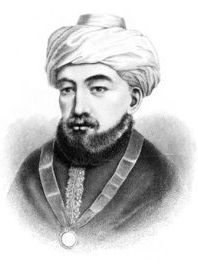
The disproportion

Two tenths
of one
per cent.

That is the share of the world that is Jewish. The rest of this section is what happens when you put that number next to the others.

115×over-represented among Nobel laureates, against share of world population

Share of world population0.19%
Share of Nobel laureates21.9%

Both bars on the same scale. The first one is not an error — it is 0.19% of the width.

By category · 1901–2024, individual laureates

Economic Sciences38.5%37 of 96
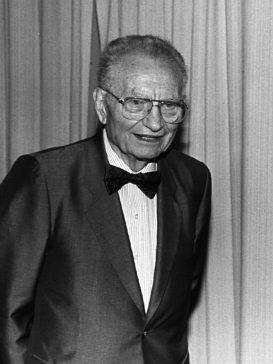
Physiology / Medicine25.8%59 of 229
Physics25.2%57 of 226
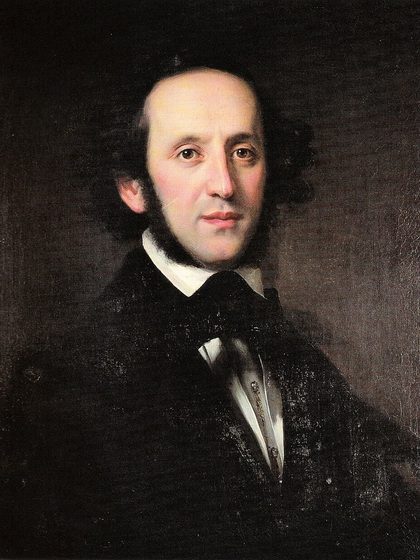
Chemistry20.0%39 of 195
Literature13.3%16 of 120
Peace8.2%9 of 110

Elsewhere

  • 29.7%Fields Medal19 of 64 · mathematics, awarded every four years
  • 31.2%Turing Award24 of 77 · computing
  • 34.2%Wolf Prize130 of 380 · science and arts, Israeli-awarded

Read this carefully. Every figure here is approximate and definition-dependent. Published tallies of Jewish laureates count patrilineal descent, people who converted out, and people who never identified as Jewish — this archive does not. So the outside numbers below are the commonly cited ones, and they are LARGER than what this archive's own inclusion rule would produce. They are shown because the order of magnitude is the point, not the third significant figure.

Population: Jewish Agency / DellaPergola annual estimates. Laureate counts: the standard published compilations, which disagree with one another by roughly ±10 in every category.

Inside this archive

Where the weight sits

Torah34
Letters & Thought13
Music & Image10
Medicine & Life10
The Mind10
Conscience10
Law & Justice8
Built & Designed8
Physics & Cosmos8
Economics7
Matter & Chemistry7
Screen7
Mathematics & Machines7
Trade & Industry5
Games & Play4
Sport4
Space1

Counts describe this archive, not the world. It is a curated selection and every selection argues something; the argument here is that the Torah line and the laboratory line are one line, so both are counted on the same axis.

One century at a time

2C BCE to 20C